3D Printer Manufacturer, Builder, Announces New Color Mixing Feature

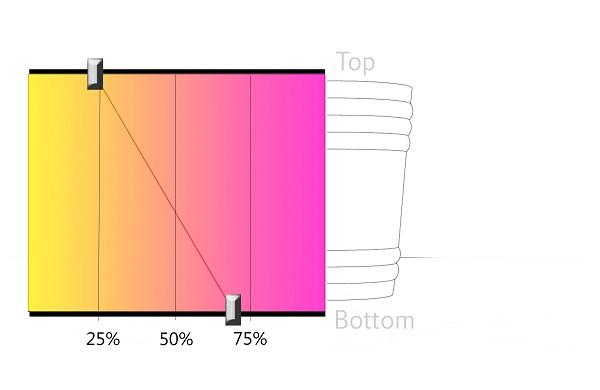 There are your traditional FDM based 3D printers that feature a single extruder, capable of printing in one color per print (unless you switch filaments mid print). Then there are your dual extruder FDM 3D printers that are capable of using more than one color/type of filament for the same print. These dual-extruder 3D printers are able to print items with more than one color, however, there are many limitations to this process. There is no ability to mix colors to form customized looks for individual objects, meaning there is always a sharp cut-off point within the print.
One company, Builder, has just announced a new ‘Color Mixing’ technology. This new technology allows for the printing of more than one color simultaneously, out of a single extruder nozzle. This allows for the mixing of 2 colors, to create cutom colors and unique patterns on printed objects.
The Color Mixer
“I am very enthusiastic about this unique feature,” explained Builder CEO Paul Hunck. “It shows that Builder 3D Printers [are] all about innovation [and] developing, and we will continue to grow in the consumer and business to business market.”
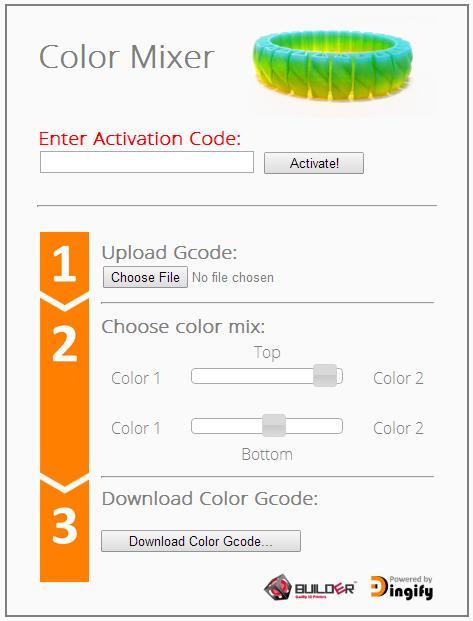
This new feature will work on either of Builder’s dual-feed 3D printers; the Small Builder or the Big Builder. Using the new ‘Color Mixing’ feature on Builder’s website, customers can now customize the colors of their 3D prints.
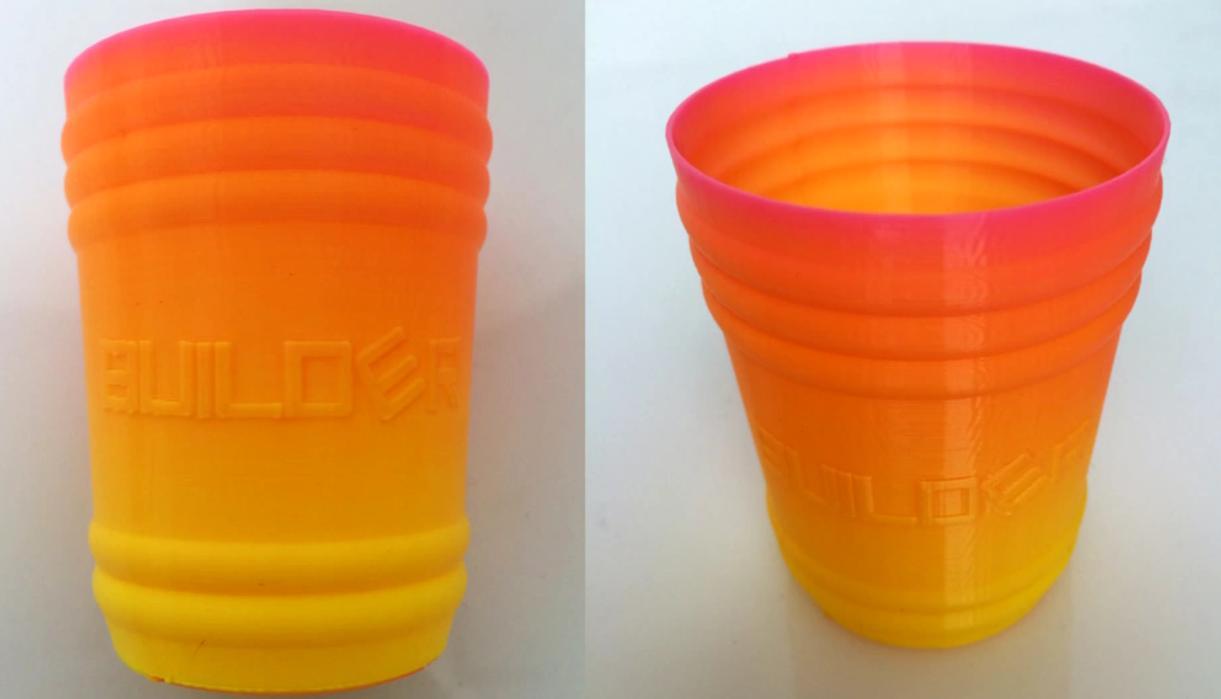
“With color mixing you are able to mix 2 PLA colors with each other,” explains the company on their webiste. “When mixing 2 colors [of] PLA, there will arise a nice overflow of those 2 colors, and the color mixing will create a third color.”
Builder’s Dual-Feed extruder system was announced last November, at the 3D Print Show in London. It allows for 2 materials to be printed out of a single print nozzle. Up until now, it was only able to print in one color at a time. With this new color mixing technology, owners of the Builder 3D printers with the Dual-Feed extuder can now start mixing. To start, all users have to do is access the Color Mixer online, enter their activation code and then start mixing colors. Users simply upload their G-code, mix the colors, and then download the updated G-code. It will then be ready to be sent to their 3D printer for printing.
We have seen other companies attempt the mixing of colors in the past. BotObjects has done this with their ProDesk 3D printer, although many people are still awaiting the full reviews of this printer, as well as delivery.
Have you had a chance to try out the new Color Mixer from Builder? Discuss this new technology in the Build Color Mixing thread on 3DPB.com. Check out the video demonstration below.
Subscribe to Our Email Newsletter
Stay up-to-date on all the latest news from the 3D printing industry and receive information and offers from third party vendors.
Print Services
Upload your 3D Models and get them printed quickly and efficiently.













You May Also Like
3DPOD 316: Beehive’s Gordie Follin on 3D Printed Engines and More
Gordie Folin had deep experience in engineering at Pratt & Whitney, GE, and GE Aviation before becoming the Chief Product Officer at Beehive Industries. Among his achievements, he served as the...
3DPOD 315: Dirk Simon, from BASF to Farsoon to FKM, and now Square New Business
Dirk Simon had already spent years in the chemicals industry before joining and pioneering BASF‘s 3D printing effort. We get to hear how that firm looked at 3D printing and...
Printing Money Episode 42: Q2 2026 Public Markets 3D Printing Earnings Analysis with Troy Jensen, Cantor
Welcome to Printing Money Episode 42. Troy Jensen (Managing Director, Cantor) returns, joining Danny Piper (Managing Partner, NewCap) to review Q2 2026 publicly traded 3DP/AM company earnings reports. Troy’s quarterly...
3DPOD 314: Debinding, Sintering, and Metal Binder Jetting with Stefan Joens, Elnik Systems and DSH Technologies
Stefan Joens of Elnik Systems sells ovens. Their debind and sintering equipment powers a lot of high-volume binder jet and MIM production. We learn about Elnik and its origins. But...