Materialise 3D Prints Huge Jaguar for Jacksonville Jaguars Owner’s Superyacht


In the world of very, very rich people, Shahid “Shad” Khan is very near the top of the pecking order. Khan, the Pakistani-American billionaire who owns NFL team the Jacksonville Jaguars, former English Premier League team Fulham F.C., and automobile parts manufacturer Flex-N-Gate, is very wealthy indeed.
So when he needed a fitting decoration for the bowsprit of his 312-foot superyacht, Kismet, Khan looked to additive manufacturing pioneers Materialise.
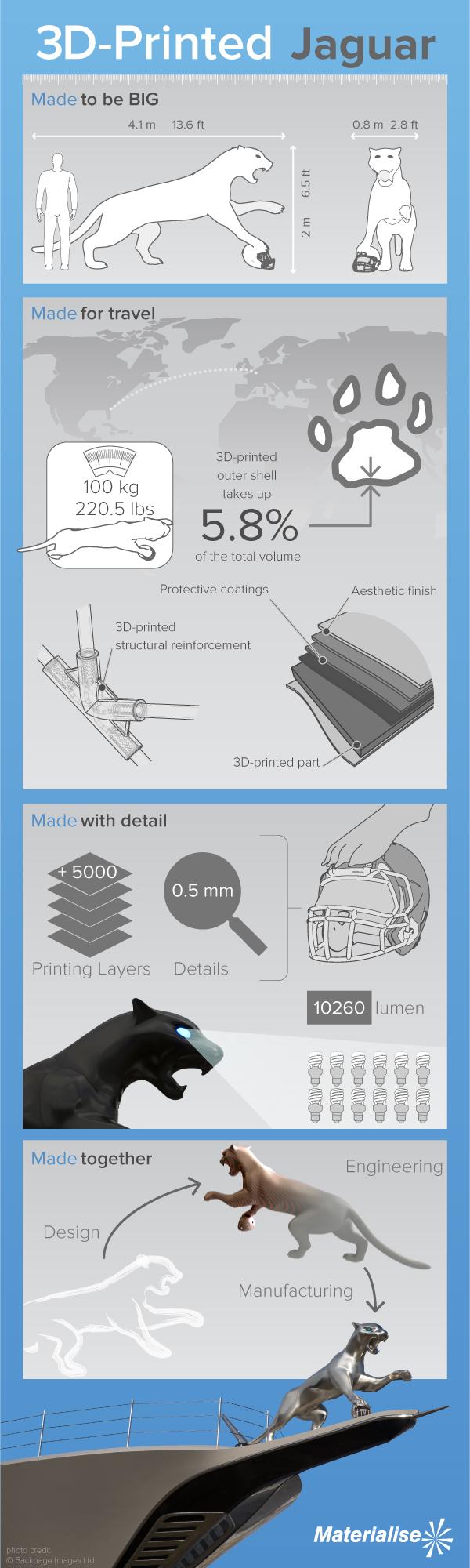
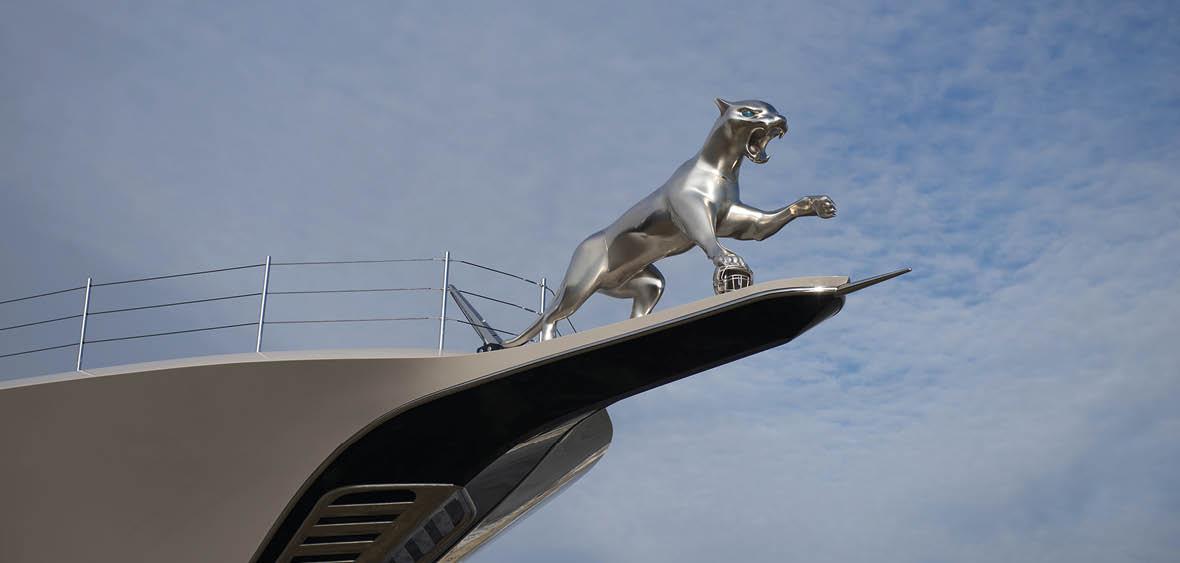 The bowsprit is a likely location for displaying the trappings of success, and Khan selected a piece that would summarize his passions. So he chose a mammoth model of a jaguar: 13.5 feet long and 6 feet tall, positioned with one paw in the air and the other resting on a Jacksonville Jaguars helmet.
And it looks mighty majestic, adding a striking styling cue to the front of Khan’s enormous, Espen Oeino-designed megayacht. The jaguar was printed on Materialise’s huge stereolithography machine and then covered with a metallic outer coating to help protect it from the elements at sea.
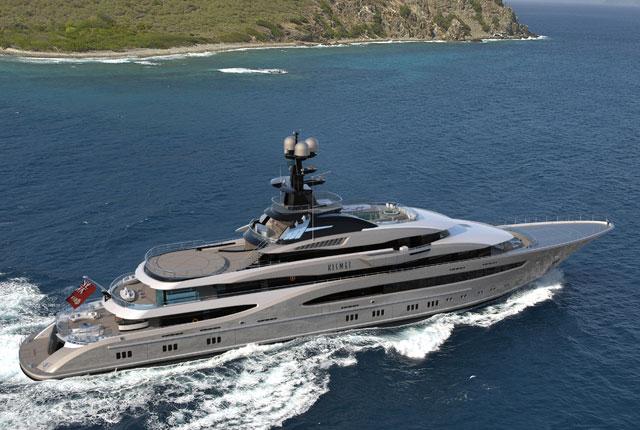
Launched in September, Khan’s outlandish ship includes six staterooms, three decks, a helicopter landing pad, and a private sundeck with a pool — and if you’re a person of considerable means, you can charter it for you and your pals. You’ll only need $1.47 million for a week’s ocean-going fun, so there’s that to consider.
The jaguar bowsprit statue weighs in at 220+ pounds, and was created with 5000+ layers of material at .5 millimeters per layer. It also includes more than 10,000 lumens of lighting power shining out through a pair of openings behind the statue’s eyes.
The big cat was built in a single-piece via Materialise’ unique Mammoth Stereolithography technology. Well-known in the automotive industry for producing large prototypes, Materialise now has 10 years of experience in the rapid prototyping business, and the unique machine features a build area of more than 2 meters. The company says Materialise Machine Park houses several such machines capable of producing these mammoth parts.
This system can do more than just print very large parts, it’s also extremely fast and uses a patented “curtain recoating technology” aimed at minimizing “dead time” between the production of each layer.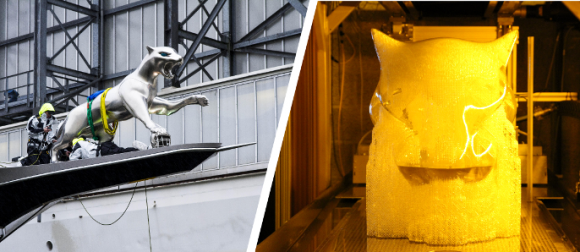
Parts are constructed layer by layer in a liquid polymer that hardens when struck by a laser beam, and after each layer is complete, a small reservoir moves across the material tank and deposits a film of liquid polymer across the entirety of the vessel.
Can you think of any other ostentatious displays of additive manufactured art which can compete with this enormous jaguar? Let us know in the Shiny Jaguar Superyacht Bowsprit forum thread on 3DPB.com. Check out the video and infographic, below, detailing the jaguar’s construction:
Subscribe to Our Email Newsletter
Stay up-to-date on all the latest news from the 3D printing industry and receive information and offers from third party vendors.
Print Services
Upload your 3D Models and get them printed quickly and efficiently.













You May Also Like
The Drone Economy Needed a Scalable Manufacturing Backbone. ADDMAN Built One
When ADDMAN closed its acquisition of Forecast 3D in January 2026, the headlines focused on fleet size and Southern California footprint. Six months later, those metrics feel almost beside the...
The Drone Industry is Showing Where 3D Printing Delivers Real Value, AM Research Report Finds
The rapid rise of drones is creating one of the biggest opportunities for additive manufacturing (AM). Whether they’re used on battlefields, inspecting bridges or crops, or delivering supplies, drones need...
The Longevity Economy Needs a Factory
Longevity has become one of the biggest stories in healthcare. Every week seems to add a new announcement about an anti-aging therapy, an AI-powered drug discovery platform, or a startup...
The SLS Market: Game of Trucks
This is truly an exciting moment in the SLS market. With HP‘s release of the 1200 and Formlabs‘ release of the X1, we can see the SLS market heating up....