The Drone Economy Needed a Scalable Manufacturing Backbone. ADDMAN Built One



When ADDMAN closed its acquisition of Forecast 3D in January 2026, the headlines focused on fleet size and Southern California footprint. Six months later, those metrics feel almost beside the point. What’s actually happening inside ADDMAN is something harder to quantify, but far more significant: the company scaled to become a critical manufacturing artery for the fastest-growing segment in defense: unmanned systems.
The drone economy isn’t coming. It’s here. From loitering munitions and tactical ISR platforms to autonomous resupply vehicles, the U.S. defense establishment is fielding affordable unmanned systems at a pace that has left traditional manufacturing pipelines gasping. Program timelines that once stretched years are now measured in months. Part geometries that couldn’t exist in traditional manufacturing are being printed overnight in high-performance polymers. And the manufacturers who can move at that tempo – who can go from CAD file to flight-ready component without a supplier handoff – are the ones getting the calls.
The Drone Economy calls, ADDMAN is answering
The integration of Forecast 3D’s Carlsbad operations added more than MJF and SLS capacity. It created a continuous production environment in Southern California where drone OEMs and defense primes can prototype, iterate, bridge-produce, and affordably scale under a single program relationship. That continuity, rare in a fragmented AM services market, is proving decisive for customers who can’t afford the friction of supplier transitions mid-program.
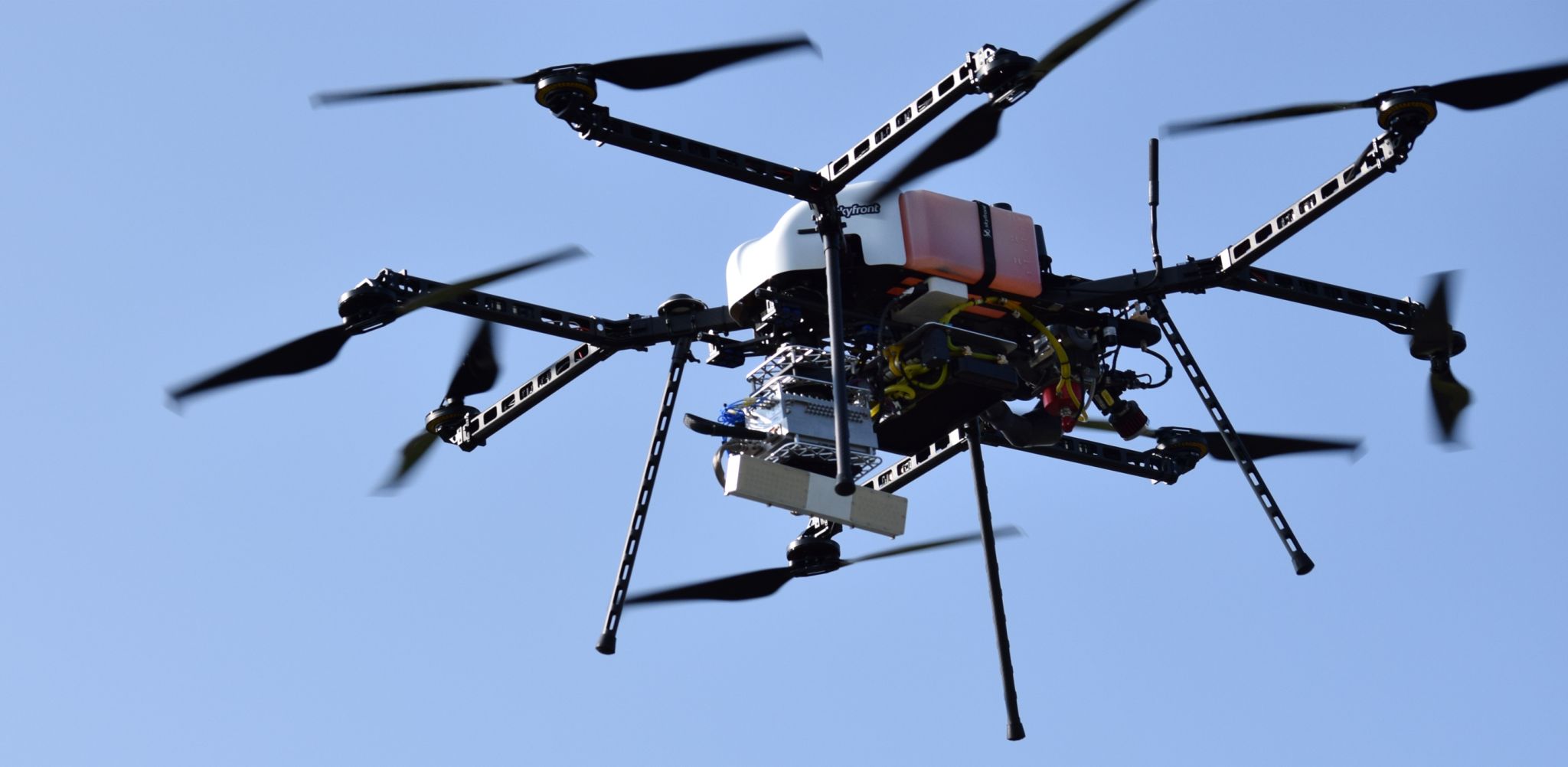
Close-up of a multirotor unmanned aircraft equipped with a payload, representative of the rapidly expanding drone platforms driving demand for additive manufacturing. Image courtesy of ADDMAN.
Drone Programs Can’t Afford Bottlenecks
That continuity also carries significant supply chain implications. Defense programs for unmanned systems have long been vulnerable to single-source dependencies and long lead times for specialized components, vulnerabilities that adversaries and auditors alike have flagged as strategic risks. ADDMAN’s integrated model directly addresses this exposure. By consolidating prototyping, bridge production, and volume manufacturing under one roof, the company reduces the number of handoffs where schedules slip and quality escapes. For drone OEMs managing aggressive fielding timelines, that compression of the supply chain isn’t a convenience — it’s a mission-critical requirement. As the Department of War continues pushing primes to demonstrate supply chain resilience, manufacturers like ADDMAN that can serve as a stable, domestic, single-source node for complex additive components are increasingly viewed not just as vendors, but as strategic partners.
From Prototype Supplier to Production Partner
What’s changed in six months isn’t just operational. The nature of the demand has shifted. ADDMAN is no longer quoting one-off prototype runs for defense customers. It’s embedded in production programs, printing structural housings, thermal management components, and payload enclosures that are going directly into fielded systems. The volume is growing exponentially, and the part complexity is growing with it.
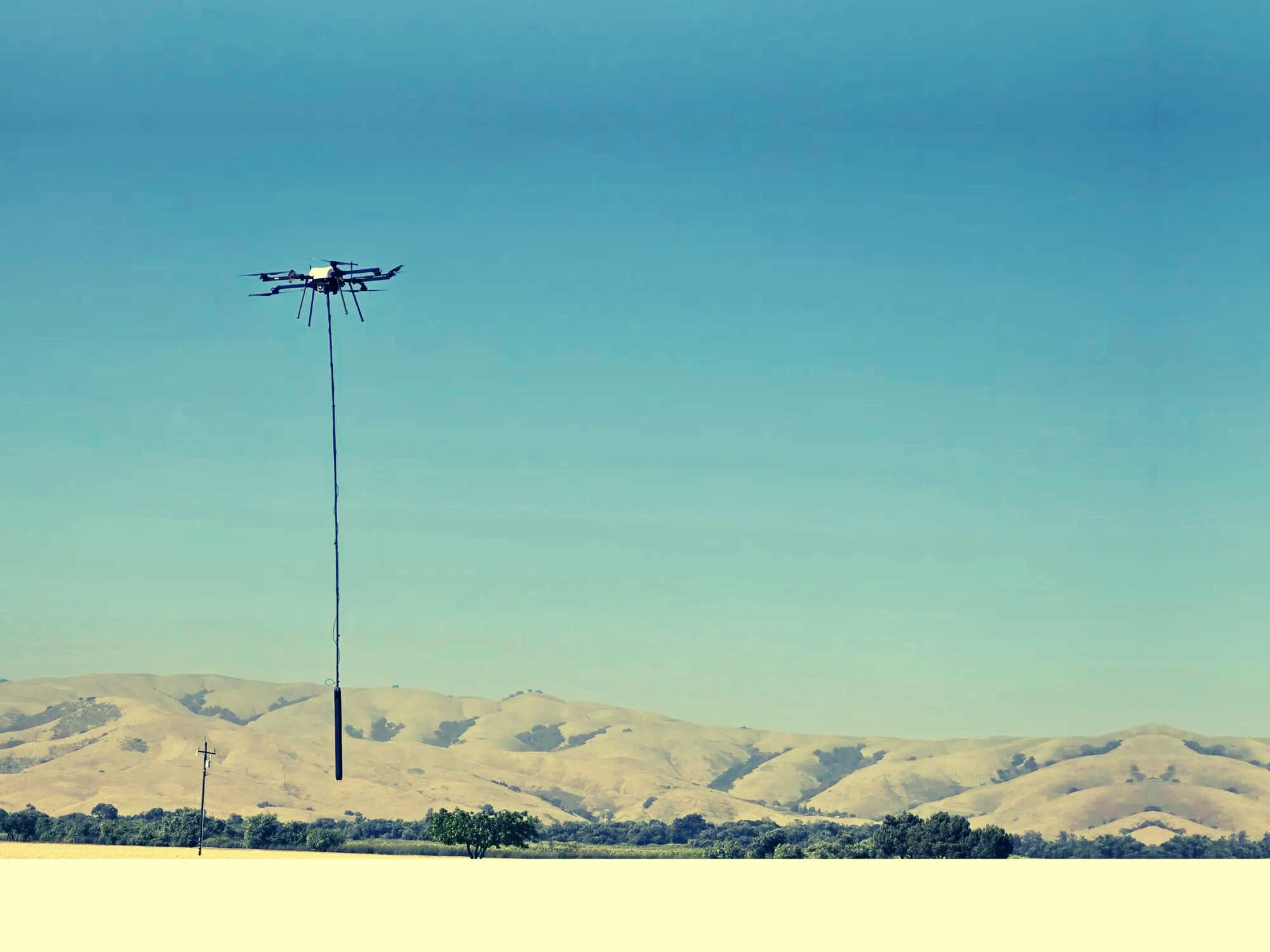
A drone transports a suspended payload during testing, illustrating the type of unmanned systems increasingly supported by ADDMAN’s additive manufacturing capabilities. Image courtesy of ADDMAN.
Building Capacity For What’s Next
CEO Joe Calmese is unwavering in his vision for where this is heading: ADDMAN isn’t building toward a finish line; it’s building infrastructure for a manufacturing era that’s still accelerating.
With over 550 employees operating across a network of 8 sites nationwide – delivering on 170+ additive systems. 120+ CNC assets, and 26 injection molding machines – ADDMAN’s Forecast 3D bet looks less like an acquisition and more like a foundation.
Subscribe to Our Email Newsletter
Stay up-to-date on all the latest news from the 3D printing industry and receive information and offers from third party vendors.
Print Services
Upload your 3D Models and get them printed quickly and efficiently.













You May Also Like
Russia’s 3D Printed Missiles & Can NATO Get Its Act Together?
For most of US history, however much the two major parties differed on domestic policy (in some cases a lot, overall less than you’d think), there was always essentially a...
3D Printing News Briefs, October 21, 2026: Digital Twins, AI CAD Service, AR Smart Glasses, & More
In today’s 3D Printing News Briefs, America Makes announced the winners of its MIAMI Project Call, and AM Europe released a new report. Artec 3D launched its new Artec Twins...
3D Printing News Briefs, October 10, 2026: Drones, WAAM, Ceramics, & More
We have a packed 3D Printing News Briefs for you this weekend! First, America Makes celebrated the recent National Manufacturing Day with 3D printed drones, and then it’s on to...
The Manufacturing Race Behind the Drone Revolution
We are in the middle of a major manufacturing shift focused on the production speed and payload capacity of uncrewed aerial systems (UAS), or drones. A recent Manufacturing Dive article...