
Spanish Tech Company BQ Releases Open Source Horus Software to Complement Their Ciclop 3D Scanner

Spanish tech firm BQ manufactures smartphones, tablets, e-readers, and 3D printers, but it’s their entry into the 3D scanner market that’s turning heads. The company’s new Ciclop 3D scanner uses laser triangulation technology and a rotating turntable, and it’s billed as “the first DIY 3D scanner.”
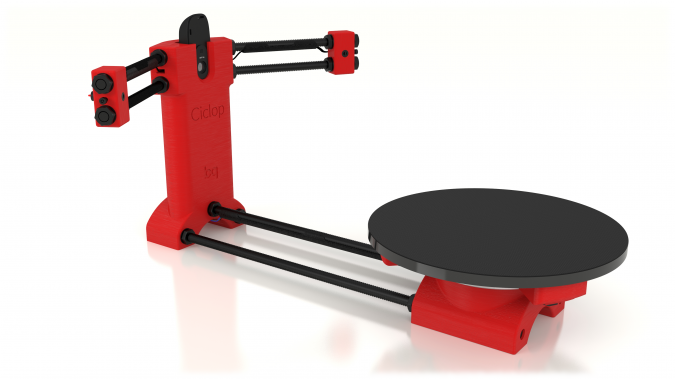 The parts kits for the Ciclop are available for download now, and the company says you should be able to build one cheap – for under $500.
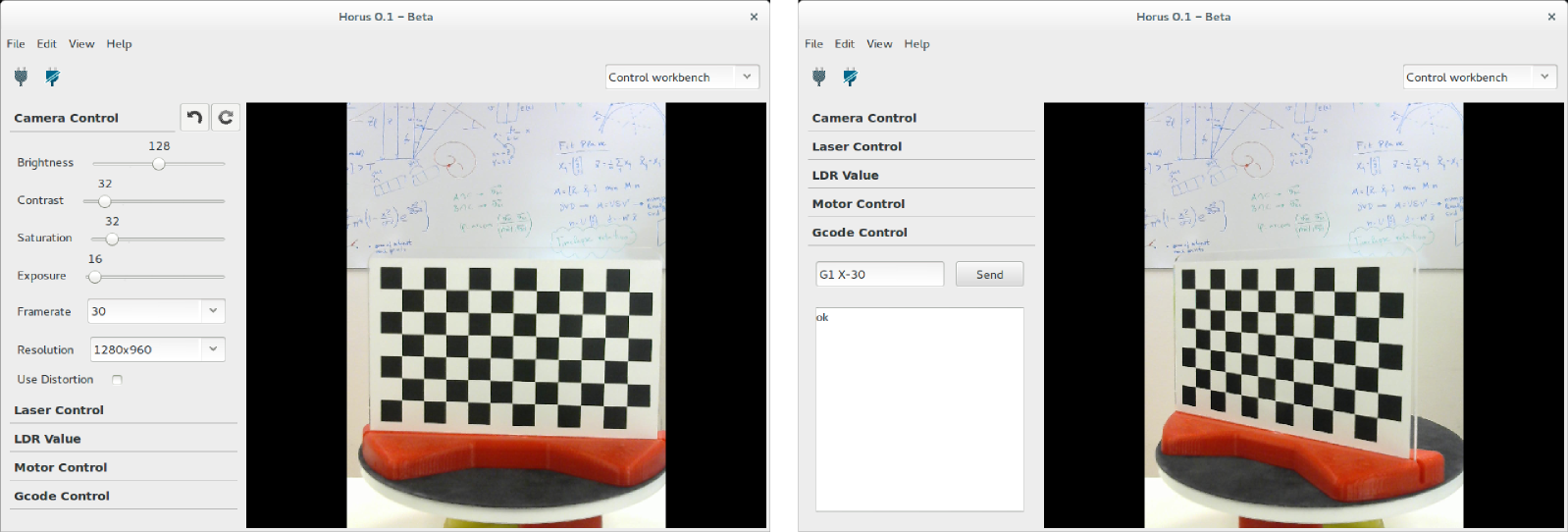 Ciclop will also run their software, Horus, which has just been released via a free license. The Horus software is also open source in regard to its mechanical design, electronics, software, and algorithms, and BQ says the open source status of the software and the scanner means a community of developers will be free to make modifications, improvements, and additions to the development of their devices.
Horus is multi-platform software to control open source 3D scanners, and it includes “a graphical interface to manage communications, data capture and synchronization, image processing, calibration processes and the generation and visualization of point clouds.”
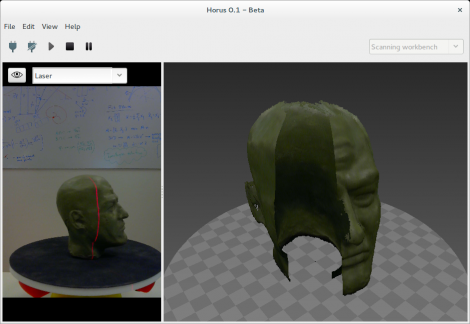 The developer, Jesús Arroyo, says Horus has been tested for Windows and Mac, and that the package was coded in Python. The source code has been published on GitHub and released under a GPL v2 license.
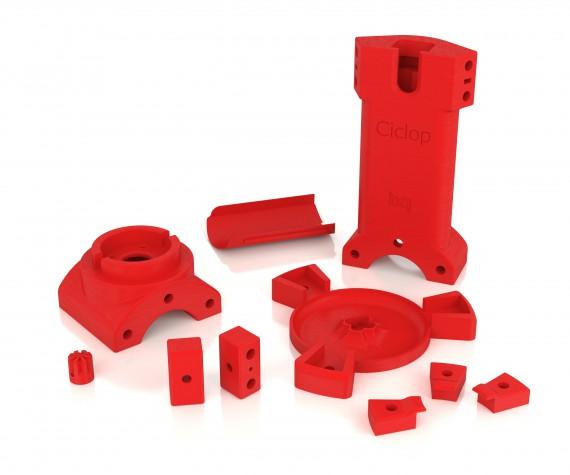
Supported by major projects in the open source community like GNU/Linux, Python, Reprap, and Arduino, the files to 3D print the main components of the scanner are also available online free of charge.
That’s right, anyone with a 3D printer — and a bit of mechanical skill — should be able to build their own Ciclop scanner within a few hours and by purchasing a few electronic components.
“Since our creation we have continued to grow both within and beyond Spain thanks to our focus on two basic principles: offering latest-generation devices at incredibly competitive prices, and ensuring total commitment to our users with the provision of integrated support services,” says Antonio Quirós, the Vice President of BQ.
 And it appears to be a very useful device which includes a scanner volume area of 205 x 205 mm, features precision scanning down to 0.5, 5 mm, a scanning speed of 3-4 minutes, and a high level of steps per rotation.
The scanner uses a sensor made by Logitech, the C270 HD webcam, and a pair of Class 17 laser line modules on the sides driven by the ZUM BT-328 8 controller board. A Nema Bipolar stepper motor drives a turntable with a non-slip surface via threaded rods.
The latest free Horus software can output .ply and .stl files, and it’s compatible with Linux, Ubuntu, Fedora, and Windows 7 and 8 operating systems.
The entire structure of the Ciclop consists of 3D printed parts aside from some threaded rods, M8 bolts, M3 screws, nuts, and washers. The 20-centimeter-diameter methacrylate turntable is coated with a non-slip surface to prevent objects from moving during the scanning process.
Do you intend to check out this open source, 3D printable scanner and software from BQ? Let us know in the Open Source Horus Software Ciclop 3D Scanner forum thread on 3DPB.com.
Subscribe to Our Email Newsletter
Stay up-to-date on all the latest news from the 3D printing industry and receive information and offers from third party vendors.
Print Services
Upload your 3D Models and get them printed quickly and efficiently.













You May Also Like
The Manufacturing Race Behind the Drone Revolution
We are in the middle of a major manufacturing shift focused on the production speed and payload capacity of uncrewed aerial systems (UAS), or drones. A recent Manufacturing Dive article...
ADDMAN to Buy Up to $10.8M in Nickel 718 Powder from 6K Additive Over 30 Months
After years of buildup, we’re finally starting to see what the US metal additive manufacturing (AM) market could look like at scale. To be sure, it’s still not quite there,...
Metal AM in a Multipolar World, Part 2: How PBF and DED Could Change by 2035
The first decades of PBF development were heavily shaped by machine capability: more power, more lasers, larger build volumes, better recoating, and improved process monitoring. These developments will continue, but...
Advanced Manufacturing at IMTS 2026: 3D Printing and AI and Drones, Oh My!
Last week’s International Manufacturing Technology Snow (IMTS) in Chicago welcomed over 90,000 attendees to the jungle that is McCormick Place. With over 1.17 million square feet of exhibit space, and...

























































