Vintage Car Gets A Much-Needed Update: 3D Printed, LED Headlamps


Vintage car collectors and, in particular, those who favor veteran cars — those manufactured prior to 1904 — are often forced to pay dearly for parts when restoring or repairing a vehicle. There are other limitations with the older cars as well. They can’t generally be driven at night because their headlights are actually lamps, which burn kerosene or acetylene. The old-fashioned lights are quaint but they don’t provide adequate light according to modern requirements. Also, they’re a fire hazard.
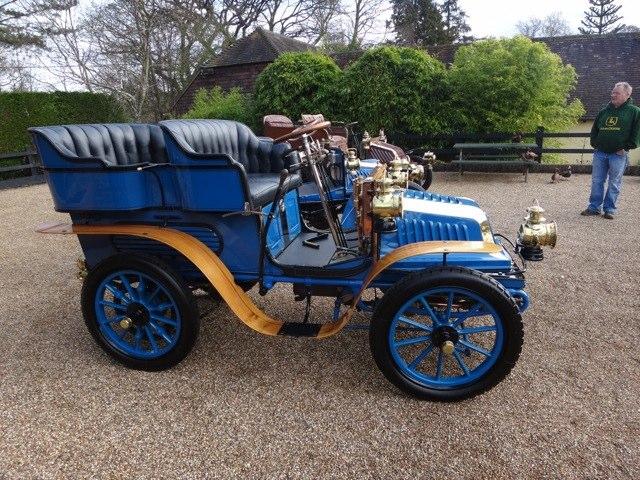
One veteran car and 3D printing enthusiast Danni Suskin found a solution to the problem of the anachronistic headlamps. He designed a new lamp insert that uses an LED headlamp for his 1902 Delahaye. The Delahaye, one of three in the world still known still to exist, was found in a barn in France and was lovingly restored, a process made less extensive since the car was well-stored and 95% of the body was still in great shape.
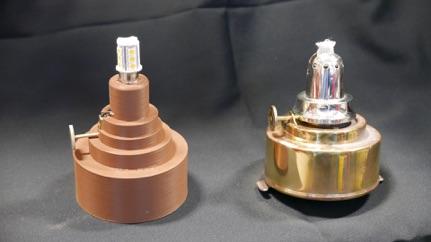
The Delahaye’s orig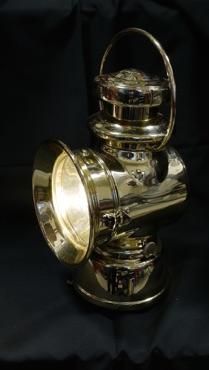 inal lamp inserts are kerosene tanks with wicks and dials to control the flame height. The updated, 3D printed LED inserts install within a minute and can be removed easily to accommodate the original lamps if, say, the car is going to be exhibited.
Suskin began the process by taking careful measurements of the original kerosene headlamp inserts and then designed their replacements using the basic CAD program Cubify Invent, an easy-to-use and affordable 3D design software. When designing the replacement headlamp insert, he added a place for the LED bulb near the top of the piece and then modified the height so that the light would be centered once it was inserted. At the bottom of the insert, he designed a space for the 8 AA batteries (fitted as a pack) as well as channels for the wiring and a recess for the switch. It took Suskin 11 hours to print each insert.
In order to maintain the appearance and integrity of the original design, Suskin designed a switch that looks and function just like the original wick control does. If you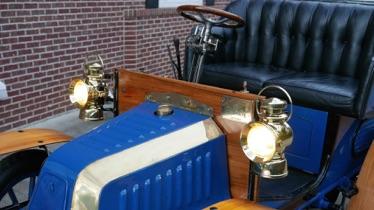 turn the knob, you turn the LED off and on. The handy Suskin made the switch using brass on his own lathe. Once the 3D-printed insert is placed inside of the original brass fixture, there is no distinguishing the difference between the traditional kerosene burner and the updated, 3D printed, LED lamp. The only drawback I can imagine of driving the charming old Delahaye around at night is that onlookers won’t have the benefit of seeing the car clearly in all its vintage glory.
What do you think of Suskin’s update? Let us know your thoughts in the 3D Printed Headlamps forum thread at 3DPB.com.
Subscribe to Our Email Newsletter
Stay up-to-date on all the latest news from the 3D printing industry and receive information and offers from third party vendors.
Print Services
Upload your 3D Models and get them printed quickly and efficiently.













You May Also Like
Printing Money Episode 42: Q2 2026 Public Markets 3D Printing Earnings Analysis with Troy Jensen, Cantor
Welcome to Printing Money Episode 42. Troy Jensen (Managing Director, Cantor) returns, joining Danny Piper (Managing Partner, NewCap) to review Q2 2026 publicly traded 3DP/AM company earnings reports. Troy’s quarterly...
3DPOD 314: Debinding, Sintering, and Metal Binder Jetting with Stefan Joens, Elnik Systems and DSH Technologies
Stefan Joens of Elnik Systems sells ovens. Their debind and sintering equipment powers a lot of high-volume binder jet and MIM production. We learn about Elnik and its origins. But...
The Frankenservice Part 1: Print the Rainbow
So far, most service bureaus and manufacturing companies stick to what they know. Not only for OCD reasons, but gleaming lines of identical LPBF machines are also arrayed on impossibly...
3DPOD 313: Patient-Specific 3D Printing with Ruben Wauthle, Amnovis
Ruben Wauthle studied at Leuven University at a very serendipitous time. Through working with pioneering additive professors and surgeons, he entered into a specialty that was emerging. He joined pioneering...