Microsoft’s HoloLens is Able to Merge Holographic Augmented Reality with 3D Printing

 The future of 3D technology is bright. Whether we are talking about 3D printing and scanning, or virtual reality and holographic displays/goggles, these spaces are sure to spawn multi-billion dollar markets within the coming years ahead. There’s little doubt that large corporations will eventually enter the 3D printing space. In fact, a few already have, and many others show inklings of entering.
Yesterday, Microsoft unveiled its much anticipated Windows 10 operating system. With it, they also unveiled what seems to be the most advanced consumer-level holographic 3D system to ever hit the market, and best of all it may eventually be a valuable tool within the 3D modeling and printing spaces.
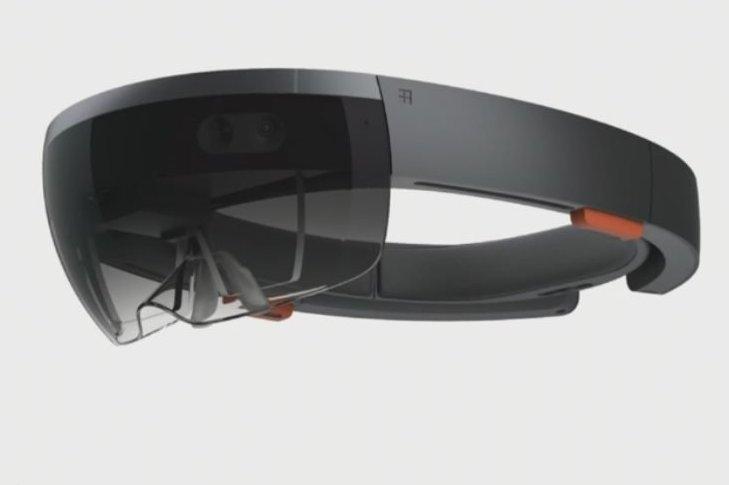
We’ve seen virtual reality headsets like the Oculus Rift, and Magic Leap’s augmented reality goggles, but what Microsoft has revealed — HoloLens — may just be what takes augmented reality to the next level. The Microsoft HoloLens is a wireless 3D holographic display with its own CPU, graphic, and holographic processors built in. Yes, this is a standalone product requiring no secondary control system like a PC or laptop. The user can wear it on his/her face and interact with a computer environment in 3D space anywhere they choose.

While many of you, right now, are envisioning the possibilities when it comes to interactive gaming, people like myself are looking at this as a tremendous tool for the 3D modeling and printing communities.
Alex Kipman, who helped lead the project with the Operating System Group at Microsoft, called it “print preview for 3D printing”. We are all familiar with a 2D printer’s interface, and the ability to review a print layout on a computer screen prior to actually printing it out. Well, what the Microsoft HoloLens does, is provide an intuitive interface for its users so that they are able to envision what a completed 3D print will look like. Size, shape, color and more are all able to be realized in real time, in 3D, right in front of a users face prior to a print being confirmed.
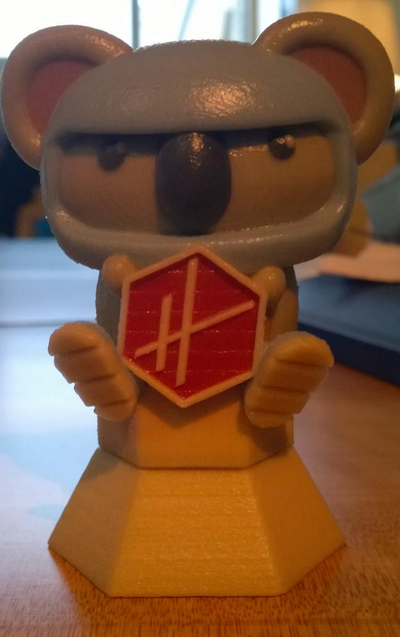
A 3D Printed model created with the HoloLens (Image: Mary Jo Foley)
This isn’t all though. It appears that users will be able to manipulate 3D objects in space right in front of themselves, in essence being able to edit a model prior to printing it out. Mary Jo Foley of ZDNet showed off a souvenir of an actual 3D print which designers at Microsoft created using the HoloLens, and then handed out to the media who were on hand. The object was able to be designed in an augmented space via hand gestures or other methods, sent to a 3D printer and then fabricated in the physical world.
With one of the biggest obstacles to mainstream 3D printing being the lack of intuitive 3D modeling software, such a new type of interface could be a boon for both the 3D modeling and printing communities. With the applications, the HoloLens has the potential to make 3D model manipulation as easy as touching the air.
Microsoft has been working on this project for years, and has worked closely with NASA on the technology behind it all. The company has not provided a specific launch date, however they have stated that it will be available in the Windows 10 time frame (a typical OS’s time frame is 4-5 years), and that developers will be able to get their hands on it within a matter of months.
Let us know your thoughts on the Microsoft HoloLens and what it may mean for the 3D modeling and printing spaces. Discuss in the HoloLens 3D modeling and printing forum thread on 3DPB.com. Check out the video below showing off some potential 3D printing applications for this new technology.
Subscribe to Our Email Newsletter
Stay up-to-date on all the latest news from the 3D printing industry and receive information and offers from third party vendors.
Print Services
Upload your 3D Models and get them printed quickly and efficiently.











You May Also Like
trinckle’s Tool Design Software Lands in Stratasys GrabCAD Print
I’m a fan of trinckle, the German startup that offers super easy-to-use tools for creating customized jigs, fixtures, and other 3D printed products. With trinckle, it’s not just designers who...
Caracol Taps CNC Robotics to Build and Support Its UK Systems
No matter how quickly the economy seems to be changing on the surface, there is no escaping the fact that geography is the foundation of economics, and, in case anyone...
EOS Buys Metalpine, but What’s Behind the Move?
EOS has bought Austrian powder manufacturer Metalpine. EOS doesn’t buy companies often. And with increased competition from China & SLM, profligate spending doesn’t seem like it would be a good...
ExOne Cuts Costs for U.S. Customers as Printhead Production Moves to Detroit
ExOne Global Holdings, created through the 2025 integration of ExOne and voxeljet, is making changes across its U.S. operations. These include starting printhead manufacturing in the Detroit area and lowering...