
The Dental Additive Manufacturing Market Could Nearly Double by 2033, According to AM Research

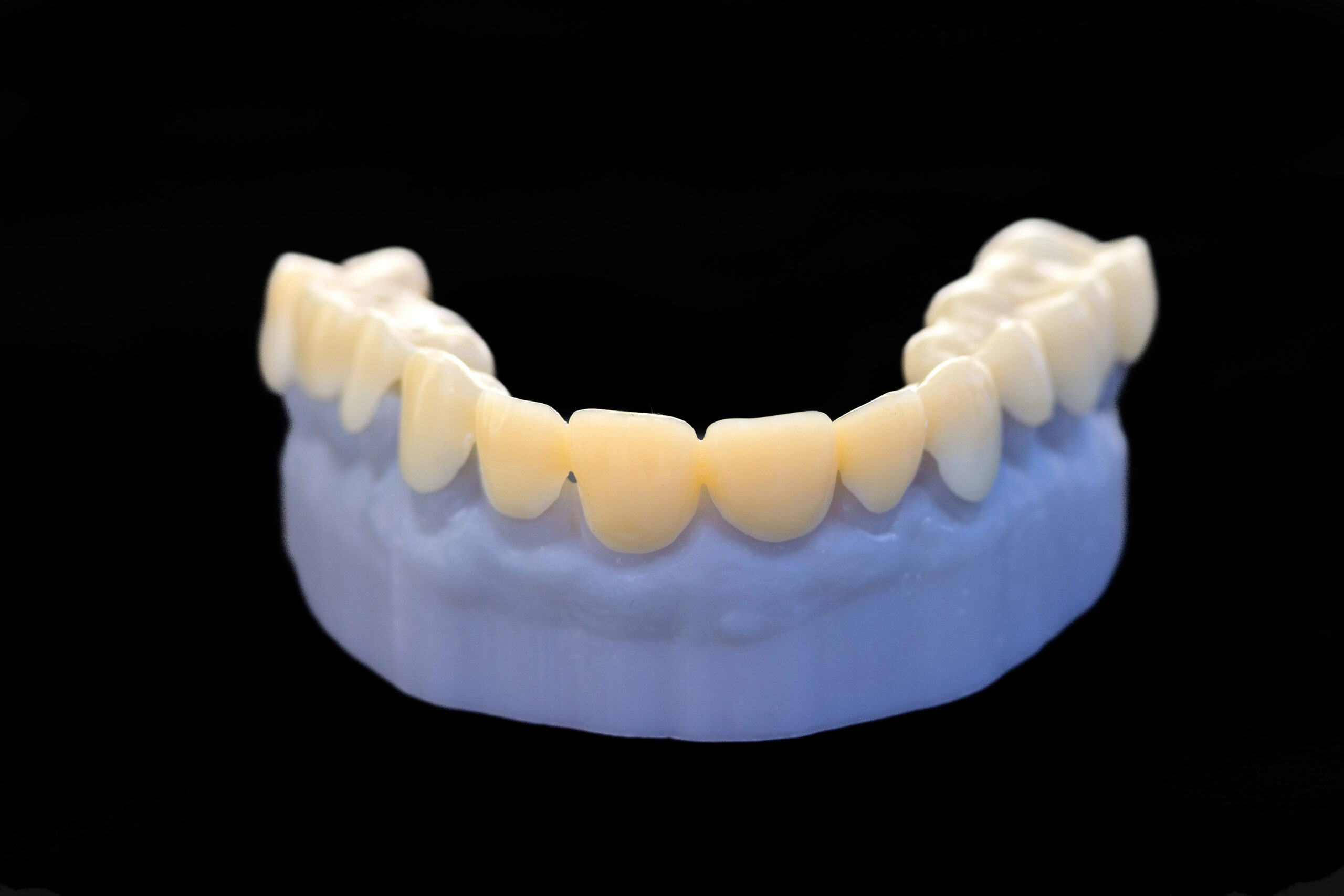
According to an AM Research report from 2024, the medical device industry, specifically in dentistry, prosthetics, and audiology, is expected to see significant growth as these segments continue to benefit from 3D printing. This certainly seems to be true with 3D printing in dentistry, as it’s one of the most mainstream applications of additive manufacturing (AM) technology in the medical sector. AM Research, the leading industry analyst firm providing coverage of the 3D printing/AM sector, recently published the latest iteration of a flagship report, “3D Printing in Dentistry 2025: Market Study & Forecast.”
The authoritative market report for AM in the dental industry, this is the eighth edition of AM Research’s “3D Printing in Dentistry” study. Global dental companies, investors, and entrepreneurs, as well as 3D printing companies in dental industry, use the report, and its accompanying market database, to learn about the latest dental AM hardware innovations, industry segmentation, the competitive landscape and strategies to get ahead, and future scenarios that drive market challenges and growth.
“This report represents the latest findings and trends in the dental printing market outlook from AM Research. The accompanying database of market data and forecasts is updated with the latest impacts from innovations, adoption rates, and challenges in each technology process, dental segment, and region,” AM Research writes.
According to this updated report, at the end of 2024, 15% of dental practices in the U.S. had at least one 3D printer in the office. That equals about 30,000 3D printers in dental practices alone. This figure is consistent with the expectations published in the 2023 iteration of this study, which forecasted around 70,000 vat photopolymerization 3D printers installed in dental clinics and offices around the world by the end of 2025.
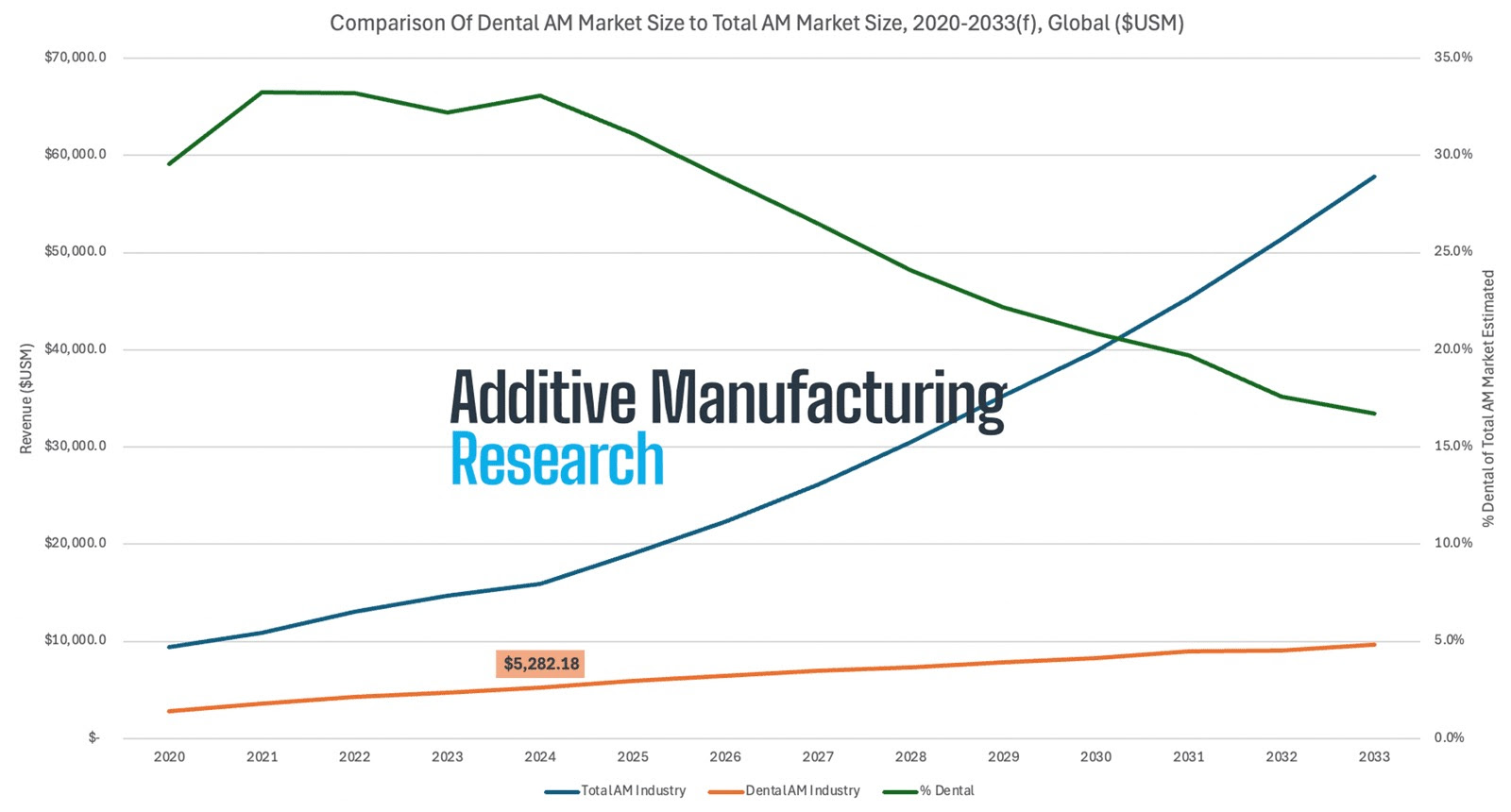
Last year, the dental 3D printing market generated a total of $5.2 billion in revenue, which made up almost one third of the overall AM market. This was broken down into $388 million in software, $965 million in materials, and $3.5 billion in dental AM services. AM Research analysts are now predicting that the dental AM market will almost double by the year 2033 to $9.6 billion in revenue. However, growth from less mature AM industry segments is forecast to reduce the dental industry’s share of the total AM market to an estimated 17%.
This AM Research report mentions several companies that could be considered major users of additive in the dental industry. These include, but are not limited to, 3D Systems, BEGO, Formlabs, Zahn Dental Labs, Carbon, Align Technologies, 3Shape, Henry Schein, Structo, SprintRay, Straumann, Stratasys, RapidShape, Lithoz, Lightforce Orthodontics, Asiga, EOS, and more.
To learn more about our flagship “3D Printing in Dentistry 2025: Market Study & Forecast,” request a free excerpt, or purchase the full report itself, you can visit the website here.
Subscribe to Our Email Newsletter
Stay up-to-date on all the latest news from the 3D printing industry and receive information and offers from third party vendors.
Print Services
Upload your 3D Models and get them printed quickly and efficiently.













You May Also Like
10 Years of Multi Jet Fusion: Onsite at HP’s Vancouver, Washington Facility
At this year’s RAPID event in Boston, HP Additive Manufacturing Solutions celebrated ten years in the additive manufacturing (AM) market. The company ushered in the milestone with several innovations, including...
These 3D Printed Lattices Can Sense Damage Before Failure
A new paper, “Full-Field Damage Monitoring in Architected Lattices Using In situ Electrical Impedance Tomography,” points to lattices being able to detect damage. This could really help composites in critical...
3D Printing News Briefs, October 3, 2026: Hypersonics, Hotends, & More
We’re starting off with defense in this weekend’s 3D Printing News Briefs, as Titomic was awarded a $5 million U.S. defense contract, and VulcanForms announced a partnership with Specter Aerospace...
3D Printing News Briefs, October 1, 2026: Defense, Enclosures, & More
In today’s 3D Printing News Briefs, we’re starting with defense news, first from Massivit and then from AML3D. Then we’ll move on to U.S. manufacturing of a new large-format LPBF...

























































