Callaway Golf to Set Up $15 Million 3D Printing Location in Texas


Callaway Golf is to invest $15 million in a Fort Worth, Texas 3D printing factory, For many years golf companies have flirted with 3D printing. Callaway made a putter with GE in 2023, and just about every major brand has developed a club to some extent. Cobra is in the lead at the moment developing a whole line of clubs with MJF cores and metal 3D printed faces. But Callaway aims to leapfrog everyone by doing its own production in the US.
I think that this is a brilliant move for a premium golf brand. By printing in house, in the US the company will be able to learn faster, iterate quicker, respond to market demand quicker while benefiting from the cachet of making it themselves and doing so in Texas to boot. This is a bit of a body blow to Pflugerville which has attracted Roboze, EOS and Dye Mansion to its 3D printing cluster and now sees Callaway aiming to do production just 200 miles away. But, it’s good for Texas as there is a lot of interest from the oil & gas industry in MRO and 3D printing in general in the state. But, given the huge opportunity and just how much some firms with Texas bases such as SpaceX use Additive, investments have been trailing pent up demand. With Blue Origin also building a site in the state, and other companies such as Firehawk, Raytheon and Lockheed Martin Missiles using Additive intensely in the state, this is a watershed moment for Texas and 3D printing.
The undisputed world headquarters of metal 3D printing is still in Xi’an, China where BLT houses a 1000 LPBF systems. The second biggest cluster is in Long Beach California where space & defense companies have established the largest mixed cluster of LPBF systems and production worldwide. There really isn´t a third cluster at the moment. But, Texas´ size and its defense, energy and space clusters are now investing in Additive making it logical that the third place of LPBF worldwide will probably be Texas. Stratasys Direct & I solids also do polymer in the state. But, with the companies spread out from Pflugerville to Richardson, Dallas, Grand Prairie, McGregor and Starbase this won´t be a chummy cluster that learns together. And some of these firms are some of the most secretive firms in Additive so they’ll share less than others will too. So will this be a true cluster? Maybe not. But, along the I-35 and TX-130 were seeing a 3D printing corridor emerging and this could have significant impacts for the viability of advanced defense and aerospace manufacturing in Texas and beyond. It’s also a good thing for America because one strong earthquake could severely damage the US´ ability to do Advanced manufacturing, and this is a risk.
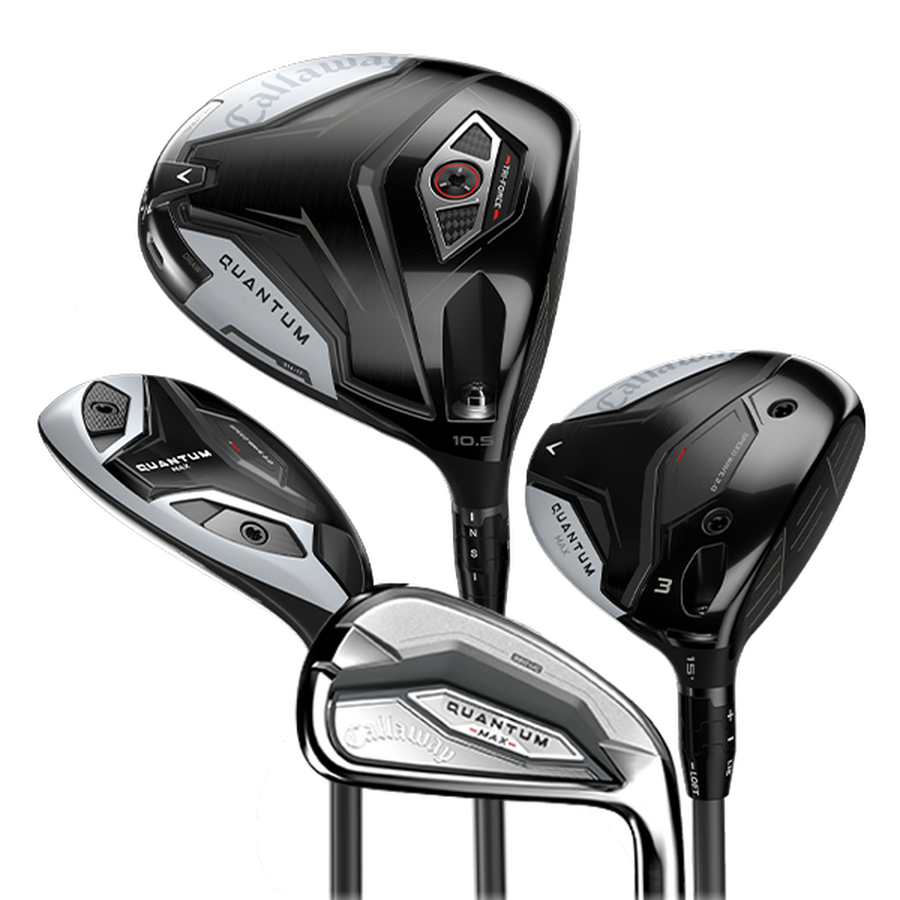
The Golf industry seems to be seriously engaging with Additive now and indeed we can see that for premium clubs, we’re going to be a better way to make better clubs, Callaway believes that, ¨the next great breakthroughs in golf equipment will require more than further optimizing existing manufacturing techniques. They will require entirely new ways of making products.¨
Callaway Golf Company CEO Chip Brewer stated that,
“At Callaway, we believe the greatest performance breakthroughs come from challenging the status quo. We believe 3D printing represents one of the most significant opportunities to advance golf club performance in decades, and we’re investing to lead that future.”
At the new site the company will do both its manufacturing and R&D with the focus being squarely on titanium. The site will be adjacent to the AllianceTexas North America Distribution Center, that the company already has. The firm hopes to set it up by midyear 2027, and this will mean a return to the USA for manufacturing for Callaway that last made clubs there in 1998.
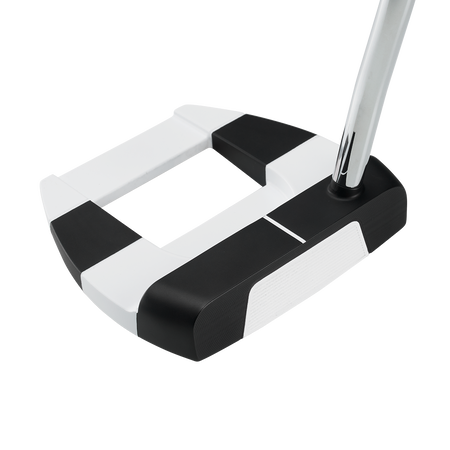
The company thinks that, by
¨giving its engineers greater freedom to develop complex designs and structures that cannot be achieved through conventional manufacturing methods. These new capabilities are expected to unlock opportunities for meaningful improvements in golf club performance while accelerating the development of future innovations.¨
The company says that it has been working on Additive for seven years and has produced clubs internally since 2022 and that the site should be shipping products in 2028. Most of the attention in 3D printed clubs has been on drivers but Callaway has also developed putters using Additive. We can use the technology well to stabilize both clubs so perhaps the firm will make lines of custom putters and drivers? We can´t know this now.
Brewer also believes that,
“Nobody can create the next generation of performance by relying exclusively on yesterday’s methods. We’re building capabilities that give our engineers the freedom to pursue ideas that simply weren’t possible before. This isn’t just an investment in manufacturing. It’s an investment in the breakthroughs that will define the future of our products and our brand.”
Additionally the company has invested a $100m in bringing back golf ball manufacturing to the states. The firm thinks that, through ¨developing proprietary technologies, expanding American manufacturing expertise, and creating golf equipment that delivers meaningful performance advantages for golfers.¨ We’re assuming that the company is looking at LPBF but we can´t be sure of that right now.
This is one of the single best news items of the year. I think that this is absolutely a breakthrough moment. We’ve seen Carbon’s success in bike seats and the LPBF success in acetabular cups, spinal fusion cages and space propulsion. We continue to march onward into manufacturing beyond clear aligners and hearing aids. But, whereas we have focused on making the impossible and very high end goods. of late we can see that we’re spilling over into more quotidian things. We’ve seen a lot of talk about reindustrializing America and scaling up Additive but outside of missile defense very little is actually happening. So this is an incredibly good sign even though the US Navy and Air Force´s multi billion dollar ongoing investments in manufacturing with Additive dwarf this.
We know that in golf clubs Additive can enlarge the sweet spot, reduce vibration, keep club heads straighter the moment they hit the ball, change the ball spin, give users more control over the ball, be less tired, reduce arm tremors, be more comfortable and hit further. These are all very real advantages for players. Cobra & Bryson DeChambeau are moving ahead with production and new inventions using Additive as well. So for a player 3D printing could give them unique clubs with unique advantages while providing them with extra income. Meanwhile Ryan Roach at Cobra has shown how to industrialize additive for golf clubs. But, where he wants to use many processes and materials while making 3D printing more affordable Callaway seems to be focused on custom titanium clubs alone. So we’re seeing different paths to additive success emerge in golf from high end to ultra high end, which is a healthy development to see.
In 2022 I spoke about 3D printing golf clubs at AMS and we identified this application as having real potential for the industry, if used correctly. The point then was that we could print a whole club but we should focus on the tip of the spear where we can add the most value through the most compact part. So in the face and in things like dampening. In 2025 also at AMS, Cobra´s Ryan Roach presented along with nTop´s Bradley Rothenberg on Leveraging Additive Manufacturing + Computational Design to Disrupt Golf. That was a great presentation and showed how, in a useful way you could improve play through Additive. And you can learn about the next at AMS 2027 in February. And now along with this announcement we can see that 3D printing for golf is finally taking off. If you’re at 6K, Praxair or anyone that makes titanium powder in the US, you need to make a beeline for these guys. This is one application that can have real legs. And carts, carts too.
Subscribe to Our Email Newsletter
Stay up-to-date on all the latest news from the 3D printing industry and receive information and offers from third party vendors.
Print Services
Upload your 3D Models and get them printed quickly and efficiently.











You May Also Like
3D Printing News Briefs, November 5, 2026: Tungsten, Color Mixing, Prosthetic Socket, & More
We’re starting with business from Xact Metal, 3D Systems, and Freemelt, and moving on to materials from Snapmaker and hybrid manufacturing with Eplus3D. We’ll end with a custom prosthetic socket,...
3D Printing Financials: Protolabs Hits Record Q3 Revenue, 3D Printing Rebounds
In Q3 2025, Protolabs‘ 3D printing revenue fell by around 6 percent year-over-year (YOY), and in Q2 2026, it declined another 2.6 percent to $20.7 million. In Q3 2026, however,...
Formnext 2026 Preview: Ceramics 3D Printing, Post-Processing, & More
In just a few weeks, it will be time for the biggest trade show extravaganza in the additive manufacturing (AM) industry. Soon, we’ll all be hopping planes bound for Frankfurt...
Additive Manufacturing Strategies Gets Ready for Its 10th Year – and the Industry’s Next Decade
If we’re inclined to organize our thoughts about history into decades for reasons other than the fact that we use a base-10 number system, it’s because in so many contexts,...