3D Printing News Briefs, November 5, 2026: Tungsten, Color Mixing, Prosthetic Socket, & More


We’re starting with business from Xact Metal, 3D Systems, and Freemelt, and moving on to materials from Snapmaker and hybrid manufacturing with Eplus3D. We’ll end with a custom prosthetic socket, a student-led nonprofit, and a color-changing 3D printer that’s supposedly so easy to use that even a first-grader can do it.
Xact Metal Reports Record Q2 & Q3 Orders, XM300G Now Available
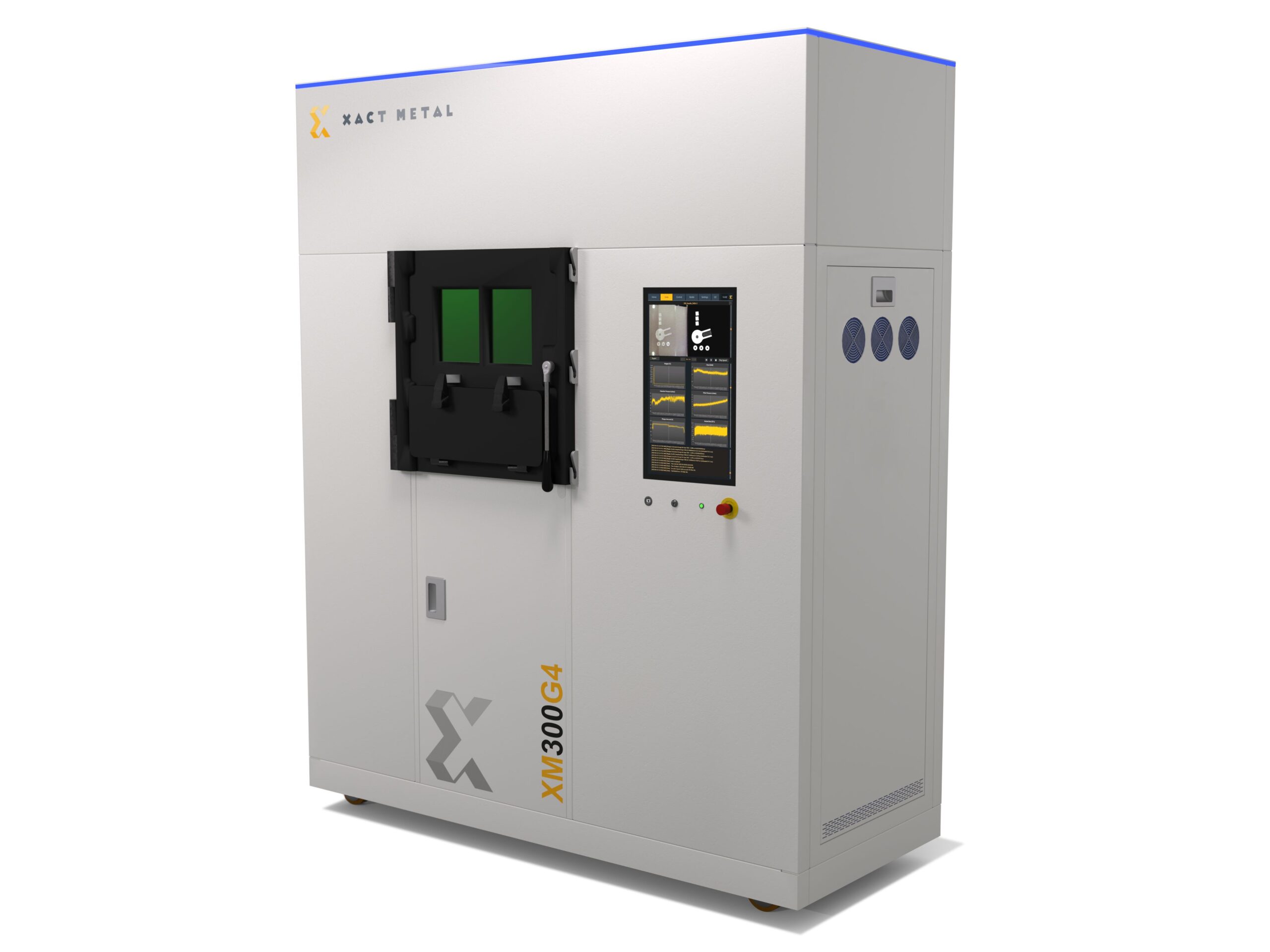
Pennsylvania-based Xact Metal, a privately owned company known for working to expand access for small- to medium-sized companies to affordable metal 3D printing, has had a good year so far. In January of 2026, the company reported that order growth was up 30% year to year. Now, Xact Metal shared that it has achieved a record number of orders in both Q2 and Q3 of this year, which means that demand for its more affordable options continues to be high. Additionally, the company has started taking orders for its new XM300G midsize metal 3D printer. Xact Metal first announced the release of the XM300G series in 2022: a line of mid-sized laser powder bed fusion (LPBF) machines with single-, dual-, or quad-independent lasers. The system features a 300 x 300 x 300 mm build volume that’s upgradable to 300 x 300 x 400 mm and an interchangeable build platform, all of which, as CEO Juan Mario Gomez says, make the XM300G “well-positioned to support a wide variety of production applications.”
“Our products continue to be well received by our customers. Q2 and Q3 were record quarters in terms of orders, increasing by more than 30% through September 2026 versus the prior year,” said Gomez. “Our XM200G single- or double-laser metal printer continues to perform strongly in the marketplace, and our newly launched XM200G μHD metal printer—which allows customers to print very small parts using -22 μm particle size metal powder and a 25 μm laser spot size—started shipping in 3Q 2026,” Gomez said.
“As planned, we are now taking orders for the XM300G midsize printer. We have received very positive feedback on this new printer, and development is on track to begin shipments mid 2027.”
3D Systems Opens New Industrial Technology Center in Colorado
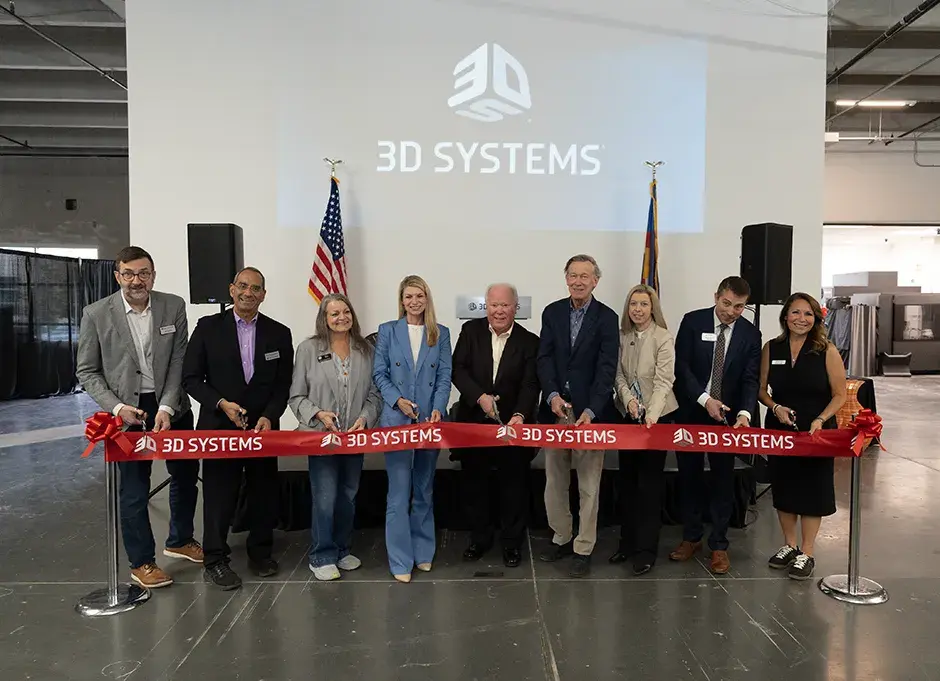
From Left: Joe Zuiker, 3D Systems. Reji Puthenveetil, 3D Systems. Representative Sheila Lieder, Colorado Assembly. U.S. Representative Brittany Pettersen. Jeff Graves, CEO, 3D Systems. US Senator John Hickenlooper. Phyllis Nordstrom, 3D Systems. Merrill Stillwell, Councilmember City of Littleton, CO. Trista Borrego, Littleton CO. Business Chamber.
3D Systems is adding about 50,000 square feet of office and production space with the grand opening of its new Industrial Technology Center in Littleton, Colorado, taking its total manufacturing capacity across the U.S. and Europe to roughly 250,000 square feet. This expansion will not only increase workforce development opportunities in the region, but also strengthen the company’s domestic production capabilities for the aerospace, defense, and semiconductor industries. With seemingly everyone focused on reshoring efforts these days, 3D Systems working to keep the supply chain in the U.S. with this new facility is very positive. The facility maintains the registrations and certifications necessary to support regulated, mission-critical applications, such as ISO9001/AS9100D Certified, ITAR Registered, and more. With this expansion, the Littleton campus will now act as a strategic customer hub, calling on the company’s AM hardware, software, materials, and application engineering expertise to help customers get from development to qualified production.
“With validated facilities, certified quality systems, advanced applications expertise, and scalable production capacity already in place, we are uniquely positioned to help customers move from concept to qualified production faster and with less risk. Our goal is simple: help customers innovate more quickly while strengthening the resilience of critical American manufacturing supply chains,” said Dr. Jeffrey Graves, President and current CEO of 3D Systems.
Freemelt to 3D Print 7,000 Tungsten-Based Components for ESS
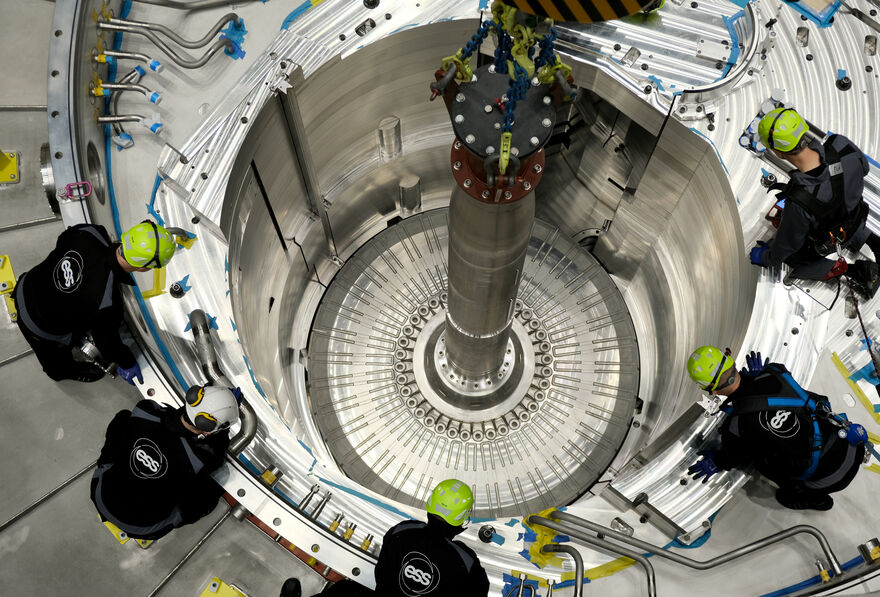
On Friday, 24 November, 2023, the target wheel was lowered into the target monolith. Image: ESS
Swedish electron beam Powder Bed Fusion company Freemelt has received a SEK 28 million order from the European Spallation Source (ESS) to print and deliver 7,000 tungsten-based components. The ESS is one of Europe’s largest research infrastructures, and will use the 3D printed tungsten components in its target wheel system, which was installed three years ago. Inside, neutrons are produced when the accelerator’s proton beam strikes tungsten components, enabling the study of materials at the atomic level. Tungsten is a great choice for this application due to its high melting point, thermal conductivity, and resistance to mechanical, thermal, and radiation-related stresses. But, because the components have a “finite operational life,” they’ll need to be replaced occasionally, which is why the ESS turned to Freemelt’s 3D printing technology. Deliveries of the 3D printed tungsten components are scheduled over a 14-month period, and most are planned for 2027. Freemelt will fulfill the ESS order via its Manufacturing business area, with help from established partners.
“The order from ESS is an important validation of Freemelt’s expanded strategy and demonstrates that our combination of E-PBF technology, tungsten expertise and industrial delivery capabilities meets the demanding requirements of advanced research infrastructure. It confirms the market shift we are seeing, with customers increasingly seeking qualified manufacturing capacity and robust regional supply chains,” said Freemelt CEO Daniel Gidlund. “This strengthens our conviction that Freemelt is well positioned to build Europe’s industrial platform for advanced metal components.”
Snapmaker’s New Filament Bundle for Brighter Multicolor 3D Printing
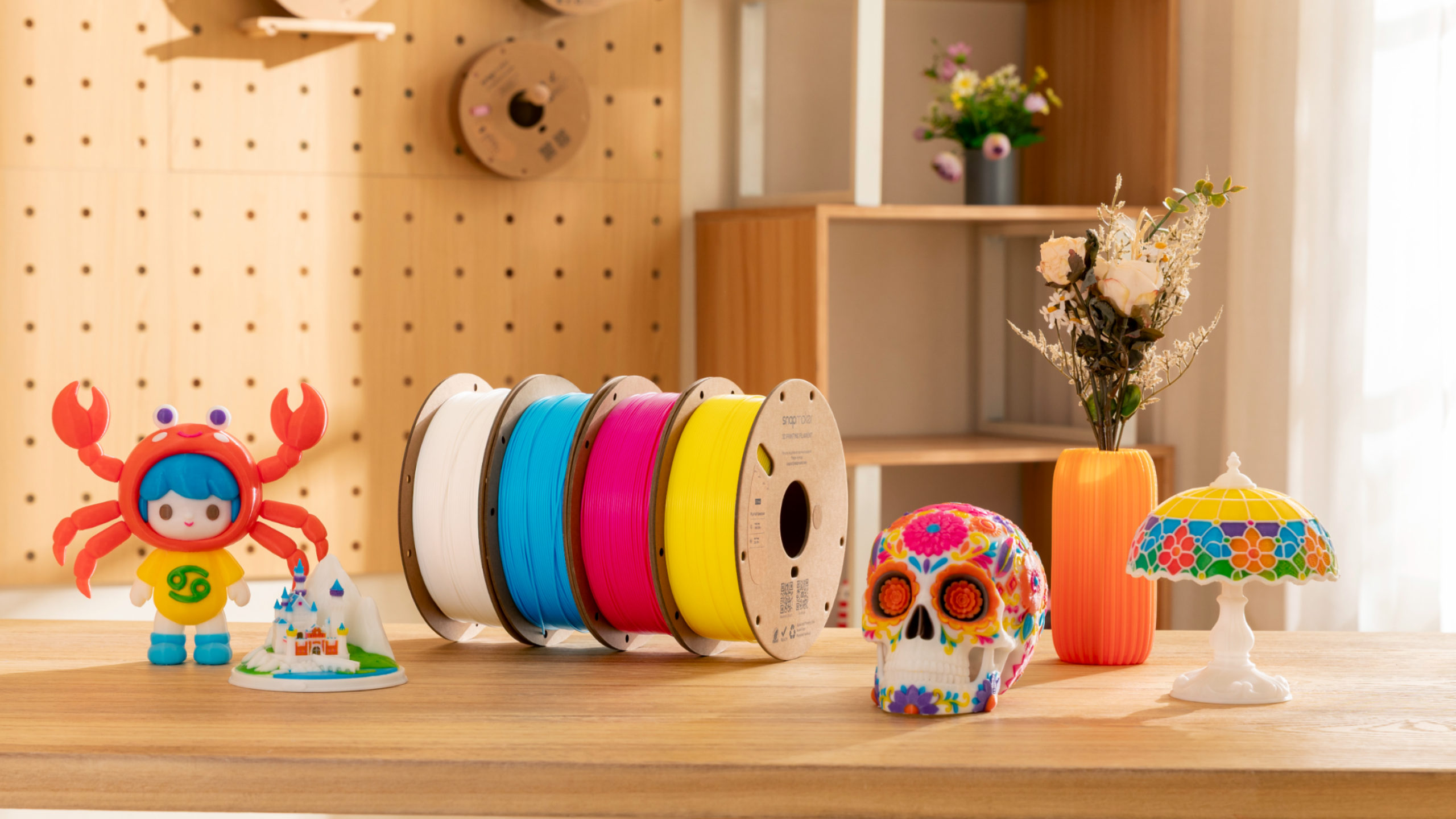
To expand the possibilities for layered color mixing with its U1 3D printer, Snapmaker introduced the PLA Full Spectrum Filament Bundle (White Edition), joining its PLA Full Spectrum Filament Bundle (Gray Edition) and SnapSpeed PLA CMYK Lithophane Filament Bundle. Full Spectrum color mixing alternates thin layers of semi-translucent filaments along the Z-axis to create extra perceived colors. The colors visually blend as light interacts with the layers, which enables a single print to go beyond the four filaments loaded in the U1. Snapmaker Orca slicing software supports this color mixing workflow, and the new PLA Full Spectrum Filament Bundle (White Edition) will create an even broader color palette. The $89 four-spool set includes semi-translucent cyan, yellow, magenta, and white filaments, offering brighter mixed-color tones and pure-white details. Their color and Transmission Distance properties promote natural blending and reduce visible horizontal stripes, and RFID recognition on the U1 printer will automatically load preset filament information.
“Full Spectrum changes the way we think about color in consumer FDM printing. Instead of adding more and more individual filament colors, we can use a small set of calibrated materials together with software and multi-toolhead hardware to generate a much broader spectrum,” said community developer Radu “Ratdoux,” creator of Full Spectrum and now part of the Snapmaker team. “Our goal is to make that process simple enough that users can focus on what they want to create rather than how to engineer the color.”
Eplus3D & Hofmann CNC Combining Metal AM & Precision CNC Machining
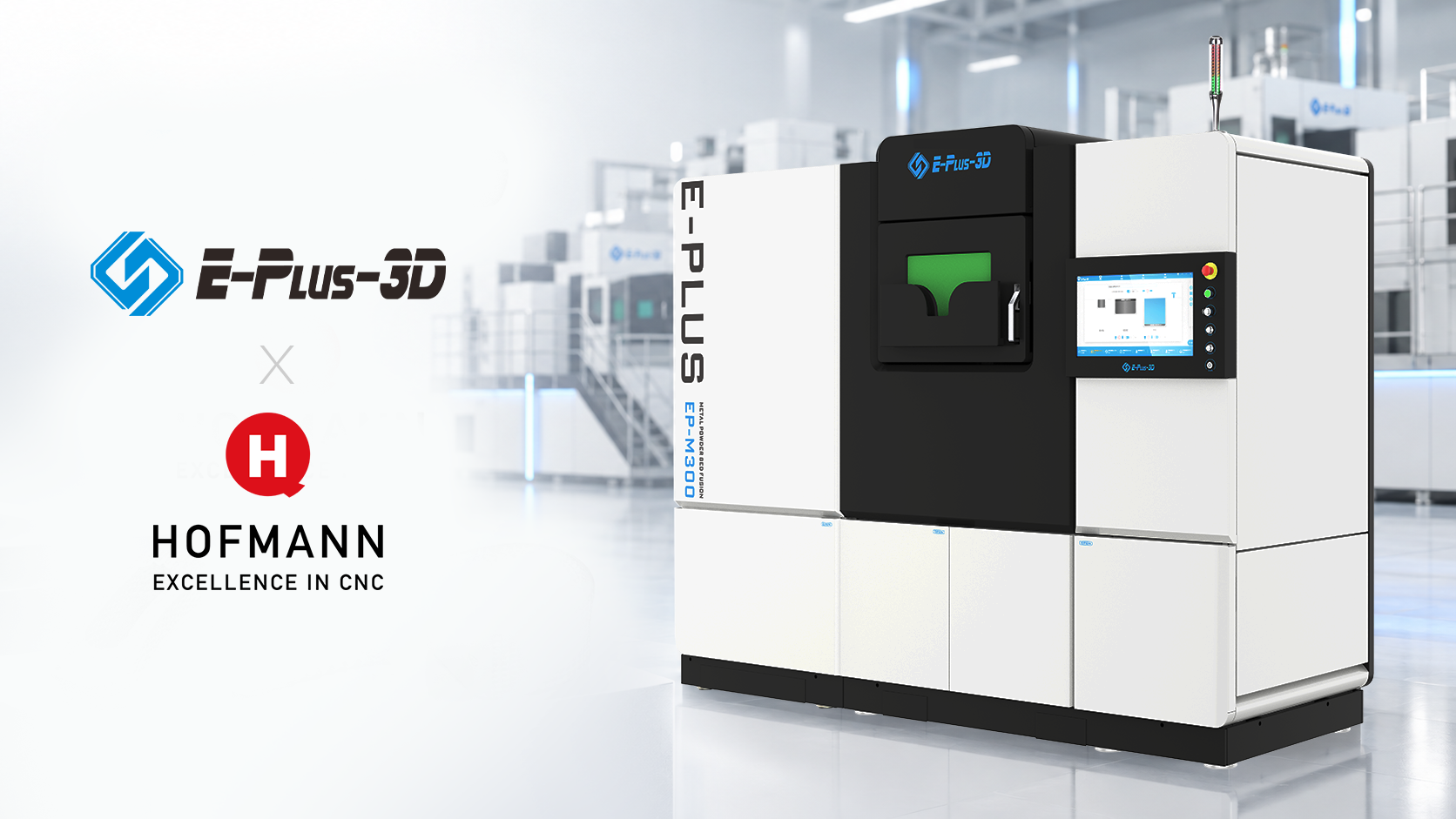
Eplus3D announced that it is partnering with German company Hofmann CNC to pair its industrial metal AM technology with Hofmann CNC’s high-precision machining knowledge. The two technologies each have their strengths: CNC machining supports precision post-processing and finishing, while metal AM offers more flexibility for complex geometries. Introducing AM is “a natural extension” of Hofmann CNC’s current manufacturing capabilities, and the company will be able to pair additive and subtractive manufacturing methods into an integrated production workflow. As part of the partnership between the two, Hofmann CNC invested in an EP-M300 dual-laser metal PBF system. This gives Chinese company Eplus3D a local application and manufacturing capability in Germany, and Hofmann CNC customers will be able to choose between a metal AM or CNC machining approach for their projects.
Hofmann CNC is also building up the local AM capability by developing a dedicated application center in Germany, where both companies can work with customers on technology selection and application evaluation. At the center, existing and prospective customers will be able to see Eplus3D’s metal AM up close and personal, and decide whether it would work for their particular applications, or if they want to use Hofmann CNC’s technology. Speaking of applications, Hofmann CNC has experience in medical manufacturing, and Eplus3D’s solutions have been used to make custom metal components for this industry. So as part of their collaboration, the two will investigate how combining CNC machining and metal AM can support more medical application developments. You can learn more about the partnership between Elus3D and Hofmann CNC at Eplus3D’s Booth E101, Hall 12.0, at Formnext 2026.
Upper Limb Prosthetic Socket System Wins James Dyson Award

Child wearing ENCAJA, showing a lightweight, personalized and playful prosthetic socket
Bioengineer and industrial designer Laura Echeverri-Giraldo, who graduated from Pontificia Universidad Javeriana in Colombia last year, met a young girl born with only one arm who wanted to play piano. She decided to create a tool that could help with this, and the idea spiraled until it became ENCAJA, an affordable prosthetic socket system for people with transradial limb loss. The system, which won a James Dyson Award, combines 3D scanning, generative design, and distributed manufacturing. First, small stickers are placed on sensitive areas and key anatomical landmarks of a person’s residual limb, and a smartphone takes 3D scans, which are uploaded to the ENCAJA platform. Here, a Grasshopper algorithm will automatically generate a personalized socket that protects pressure-sensitive areas and matches the person’s anatomy. The digital files are provided to the person, who can work with partner organizations or other users to manufacture the custom socket with available laser cutting and 3D printing technologies. Now, the goal is to take ENCAJA from a validated prototype to a functional digital platform, and grow the number of interchangeable, attachable tools for daily activities, like a fork.
“ENCAJA is more than a prosthetic socket, it is a complete digital workflow that rethinks how personalized prosthetic interfaces are designed and delivered. Unlike conventional sockets, which require hours of manual work by a skilled prosthetist, ENCAJA automatically generates a custom design from a 3D scan, reducing design time from eight hours to one hour. Instead of manufacturing and shipping physical products, ENCAJA delivers fabrication-ready digital files, enabling local production through available 3D printing and laser-cutting technologies. Its two-part design combines a durable 3D-printed socket with a replaceable laser-cut foam liner that improves comfort while allowing children to personalize colors and patterns. This modular approach also makes repairs and replacements affordable. ENCAJA expands access to personalized prosthetic care for organizations serving underserved communities.”
Bin to Better Nonprofit Receives Awards for Eco-Filament Effort
View this post on Instagram
Based in Fremont, California, Bin to Better is a student-led environmental nonprofit organization. With over 15 chapters around the world, the tagline is “Turning Waste into Opportunity,” and it has repurposed more than 80,000 items through its programs, partnerships, and initiatives. Bounce Back gives new life to used tennis balls, while Tech to Treasure offers e-waste and hands-on electronics. Eco-Filament is the one in which I’m most interested: an effort to convert plastic waste into 3D printing filament and other useful products. Volunteers collect plastic waste from places like parks, and then sort and clean it. Once it’s been turned into filament, the material is tested, and then used to print things like toys and tools for students with sensory needs. Any plastic that’s deemed not safe or suitable to be used as filament is moved through the appropriate recycling channels. This year, the nonprofit won two awards for its inspiring work: the Global Citizen Award, given by the United Nations Association of the USA East Bay Chapter to recognize young people who are supporting climate action and the Sustainable Development Goals, and the Outstanding School Recycling Program Award from the California Resource Recovery Association.
“We’re driven by a simple yet powerful idea: that one person’s excess can be another’s solution. Whether it’s used tennis balls, old electronics, or other overlooked resources, we aim to connect those who have with those who need. By building bridges between individuals, communities, and organizations, we promote a culture of reuse and responsible recycling,” the Bin to Better website states.
Toybox Introduces $349 Four-Color Luna 3D Printer
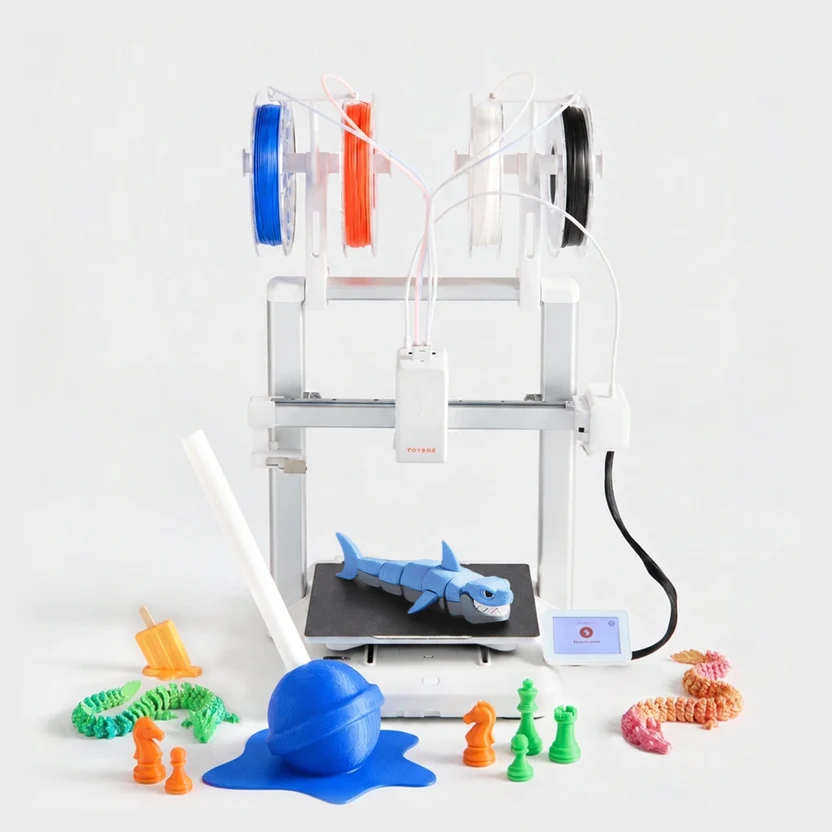
Toybox recently launched Luna, a four-color 3D printer and platform that it claims is so easy, a first-grader can use it. Consumer multicolor 3D printing normally requires users to manually manage color channels, but Luna can feed four filament spools into a print job and switch between them automatically. Users pick the colors in the Toybox platform’s Creator Studio; in Creator Space, you describe an object, upload a photo of it, draw it, or import a 3D file, and the system’s built-in AI returns a color design that’s ready for one-click printing, with no manual slicing required. Toybox is very sure to state that there are no chatbot toys talking to kids or asking them questions, and the company itself says it doesn’t store personally identifiable information on children. The printer also features an onboard camera with encrypted live feed for clog detection and print monitoring, automatic calibration and a heated bed that bends for easy release, and can achieve prints at more than 10″ in every direction. Plus, the Toybox platform has officially licensed designs that no other competing company can print, like Harry Potter, Cartoon Network, Sanrio, DreamWorks, Universal, and Nickelodeon. Finally, multi-part 3D printing isn’t always fast, so it’s a good lesson in waiting for excited kids.
“Designing a toy and printing it is planning, sequencing and problem-solving with a physical object at the end. Four colors give a kid more to decide before they start. Forty years in the kids’ business, and I haven’t found a better way to teach any of it,” said Malcolm Bird, Toybox COO.
Introductory prices for the Toybox Luna 3D printer start at $349, and the Luna Pro Mega bundle includes four filament rolls for an introductory price of $385. So if your kid wants a 3D printer for Christmas, this may be the one!
Subscribe to Our Email Newsletter
Stay up-to-date on all the latest news from the 3D printing industry and receive information and offers from third party vendors.
Print Services
Upload your 3D Models and get them printed quickly and efficiently.











You May Also Like
Bambu Lab Releases $2,499 Full-Color, Multi-Toolhead H3C 3D Printer
Bambu Lab has released its latest 3D printer, the $2,499 H3C, an awaited Bambu answer to Prusa INDX and Snapmaker. The printer comes with a nine toolhead Swaptek exchanger, which...
Formnext 2026 Preview: Ceramics 3D Printing, Post-Processing, & More
In just a few weeks, it will be time for the biggest trade show extravaganza in the additive manufacturing (AM) industry. Soon, we’ll all be hopping planes bound for Frankfurt...
How AM Funding Shifted in China and the US, 2021–2025
Additive manufacturing (AM) funding has shifted in China and the United States over the past five years, but in different ways. In China, metal 3D printing companies accounted for a...
Sakuu to Go the SPAC Route in Anticipation of Its 3D Printed Batteries Hitting the Market
Back in August, Ursa Major, which uses additive manufacturing (AM) for propulsion components, announced that it plans to go public early in 2027 via the Special Purpose Acquisition Corporation (SPAC)...