3D Printing News Briefs: October 17, 2026: Affordable Housing, Bone Implants, Rubber Gloves, & More

In this weekend’s 3D Printing News Briefs, we’re starting off with quality assurance in metal additive manufacturing (AM), a new 3D printer, and 3D printed housing. We’ll finish up with 3D printed stents, 3D printed bone implants, and 3D printed rubber gloves. Read on for all the details!
CCAM Highlights Additive Assurance’s AMiRIS as Easy Solution
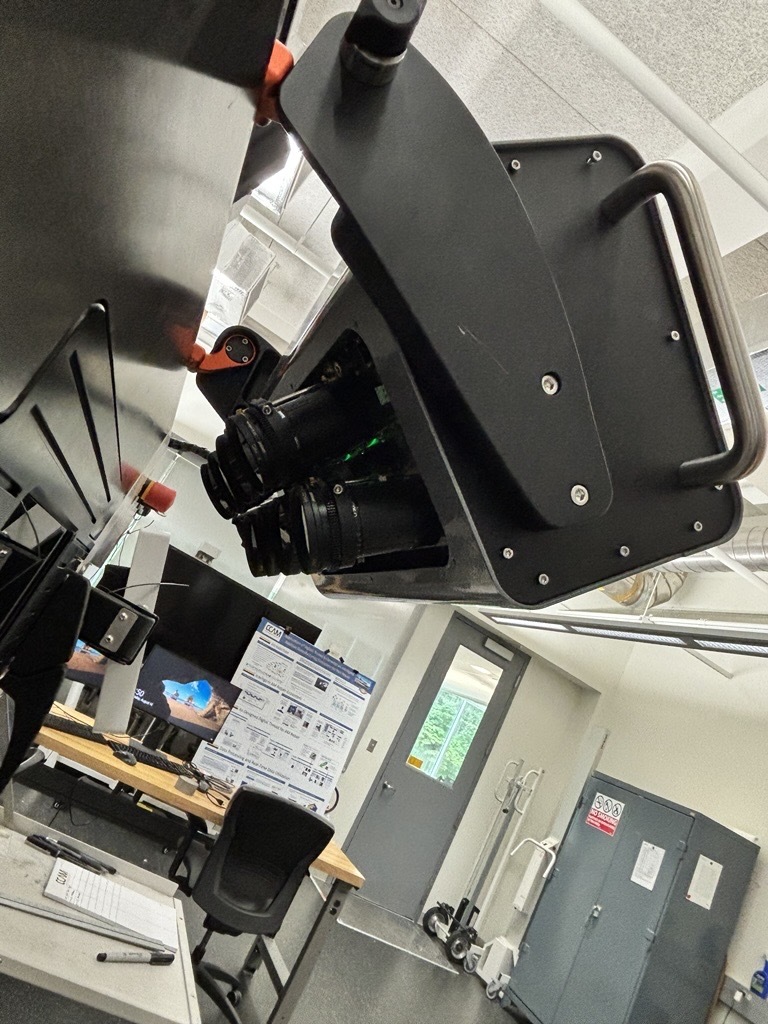
At the Commonwealth Center for Advanced Manufacturing (CCAM) in Virginia, researchers work with industrial members to evaluate advanced manufacturing technologies, and find out how to support production needs. One thing they’ve learned is that manufacturers don’t just need in-situ monitoring to capture process data, but for that data to speed up qualification and lower the burden of inspection. That’s why Kamden Shephard, Research Engineer for Additive Manufacturing at CCAM, relies on Additive Assurance’s AMiRIS in-situ monitoring system, which focuses on making large volumes of in-situ process data easily accessible to users. Shephard says its spatial resolution is great, with a multi-camera near-infrared approach offering excellent high-resolution process insight. He also appreciates that AMiRIS is designed to convert sizable volumes of build data into easy-to-interpret processed information. The feedback Additive Assurance has received from CCAM reinforces its central mission and plan that in-situ QA has to be about more than simply sensing during a build.
“Over the past year, we’ve seen a real shift in urgency. Users understand that traditional qualification standards are not always a direct fit for AM, and there is now a much stronger push to understand which sensors and process intelligence tools can support qualification in a more practical way,” Shephard said.
“Software and usability are critical. A lot of monitoring tools have good hardware, but the interface feels like something written for the engineer who built it. AMiRIS is different. It is one of the easiest systems I’ve used, and that matters enormously if you want a tool to move from a research environment into production.”
Phrozen Launches Sonic Might Revo 16K MAX Resin 3D Printer
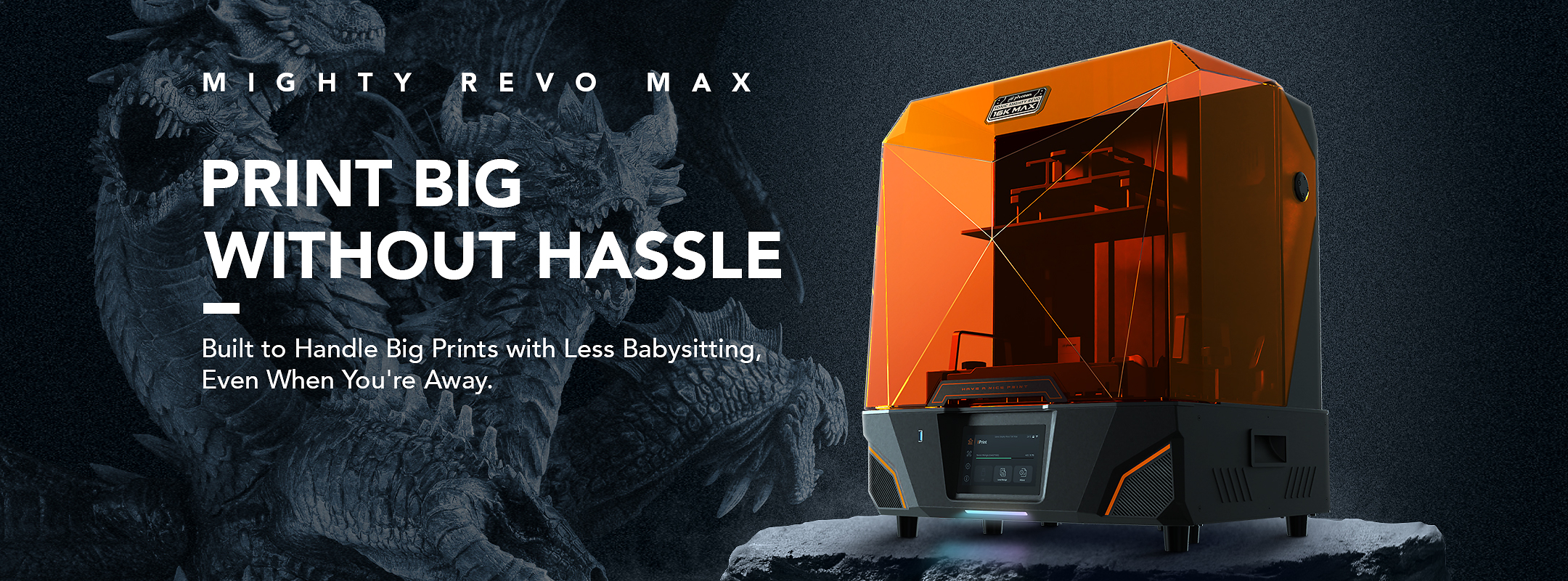
Taiwan-based 3D printing brand Phrozen recently launched a new large-format MSLA resin 3D printer, the Sonic Mighty Revo 16K MAX. The 14-inch system is meant to make large, high-detail 3D printing more manageable, stable, and production-ready for studios, creators, and service providers. It features several upgrades for batch production, long prints, and daily maintenance that enable users to complete longer jobs with steadier conditions, deal with less mid-print interruptions, achieve faster turnaround between print jobs, and enjoy clearer remote visibility. These upgrades include a dual-fan chamber heating system, a 2L resin vat that can hold up to 2.5 standard 1kg bottles, an all-metal angled build plate for resin draining, quick-release maintenance to decrease downtime, and a vertically mounted 1080p camera for AI-enhanced monitoring. Additionally, users can control and monitor the Revo MAX through the Phrozen GO app, which supports live camera viewing, multi-printer management, and time-lapse review alerts. Finally, the printer is designed to fit right into a full workflow for large-format resin printing, including the Wash Mega S for model cleaning, the Cure Mega S for consistent curing, and more.
“For many users, moving into larger resin prints is exciting, but it also raises the stakes with longer print times, more resin, and more chances for interruption. With the Revo MAX, our goal is to reduce those points of uncertainty, from heating and resin capacity to monitoring and maintenance, so users can build a large-format printing workflow they can trust,” explained Ray Wu, CEO of Phrozen.
The new Sonic Mighty Revo 16K MAX from Phrozen is now available in the U.S. for $1,600, but if you act fast, you can get the Early Bird rate of $1,350.
Five 3D Printed Habitat for Humanity Houses Underway in Virginia
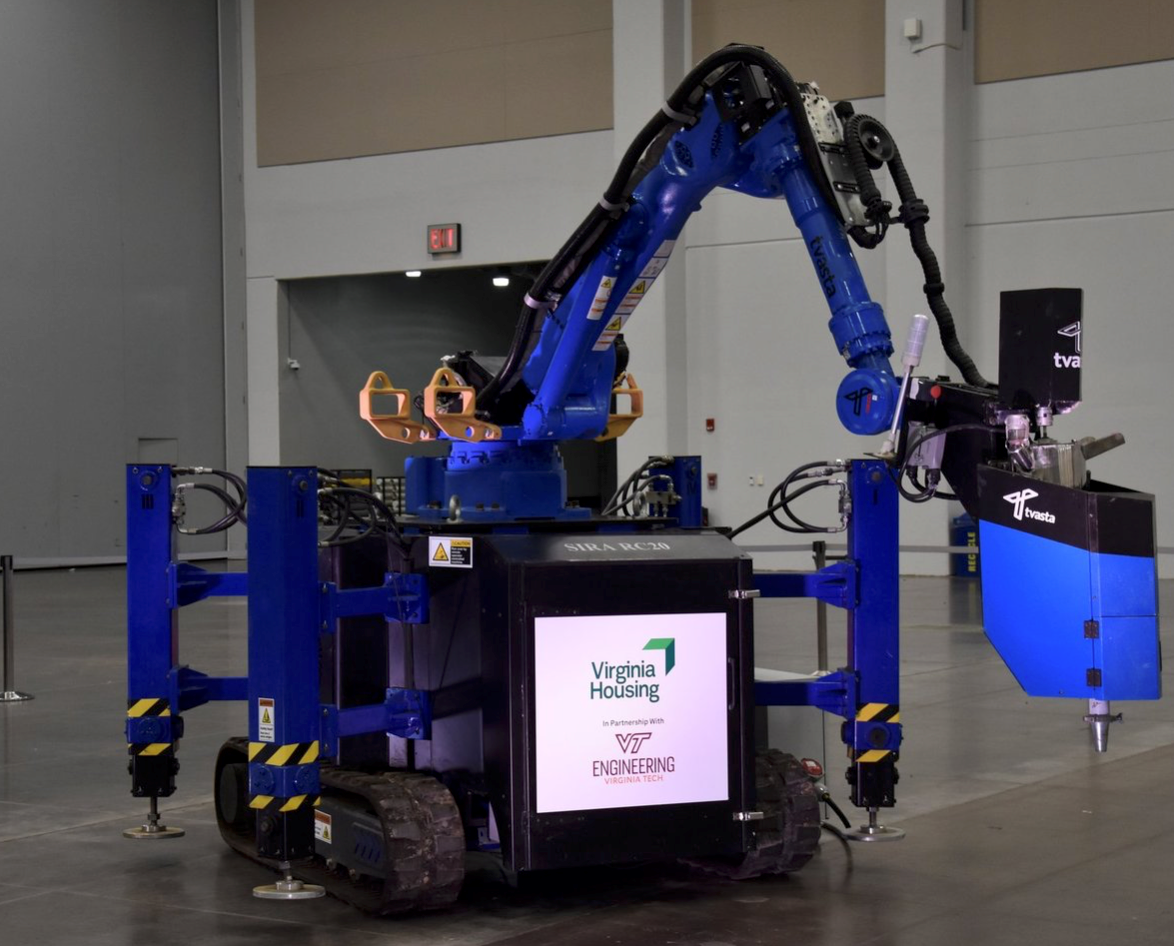
Tvasta 3D printer
Thanks to the efforts of a group of affordable housing partners, Richmond Metropolitan Habitat for Humanity broke ground on five 3D printed, affordable, single-family homes at the new Carter Place I community in Virginia. The Virginia Center for Housing Research at Virginia Tech used a $1.1 million Innovation Demonstration grant from Virginia Housing to buy a mobile Tvasta SIRA RC robotic arm 3D concrete printer to explore more affordable construction techniques. The project builds on a previous grant in support of 3D printed home construction from 2021, and now Richmond Habitat is building the homes with several partners, including the Henrico County Affordable Housing Trust Fund; Williamsburg Builder Consultants LLC; automated additive construction company HiveASMBLD; and several Virginia professors and graduate students from the Department of Civil and Environmental Engineering and Myers-Lawson School of Construction. Wall components are currently being printed in an offsite warehouse, before everything moves onto the actual home construction phase. The project will allow partners to document what works with additive construction, its costs and limitations, and find other opportunities for the technology.
“We are excited about Carter Place I and the role 3D-printed construction can play in the future of affordable housing,” said Matt Waring, Chief Operating Officer, Richmond Metropolitan Habitat for Humanity. “Richmond Habitat has always looked for innovative ways to build safe, durable and affordable homes, and this project is a natural extension of that commitment. Through our partnership with Virginia Housing and Virginia Tech, we have an incredible opportunity to test new technologies while remaining focused on what matters most: creating opportunities for families to achieve the stability and hope that come with homeownership. We are honored to be part of this pioneering effort and eager to see its impact on our communities.”
Vital3D Technologies & Cleveland Clinic Developing 3D Printed Stents
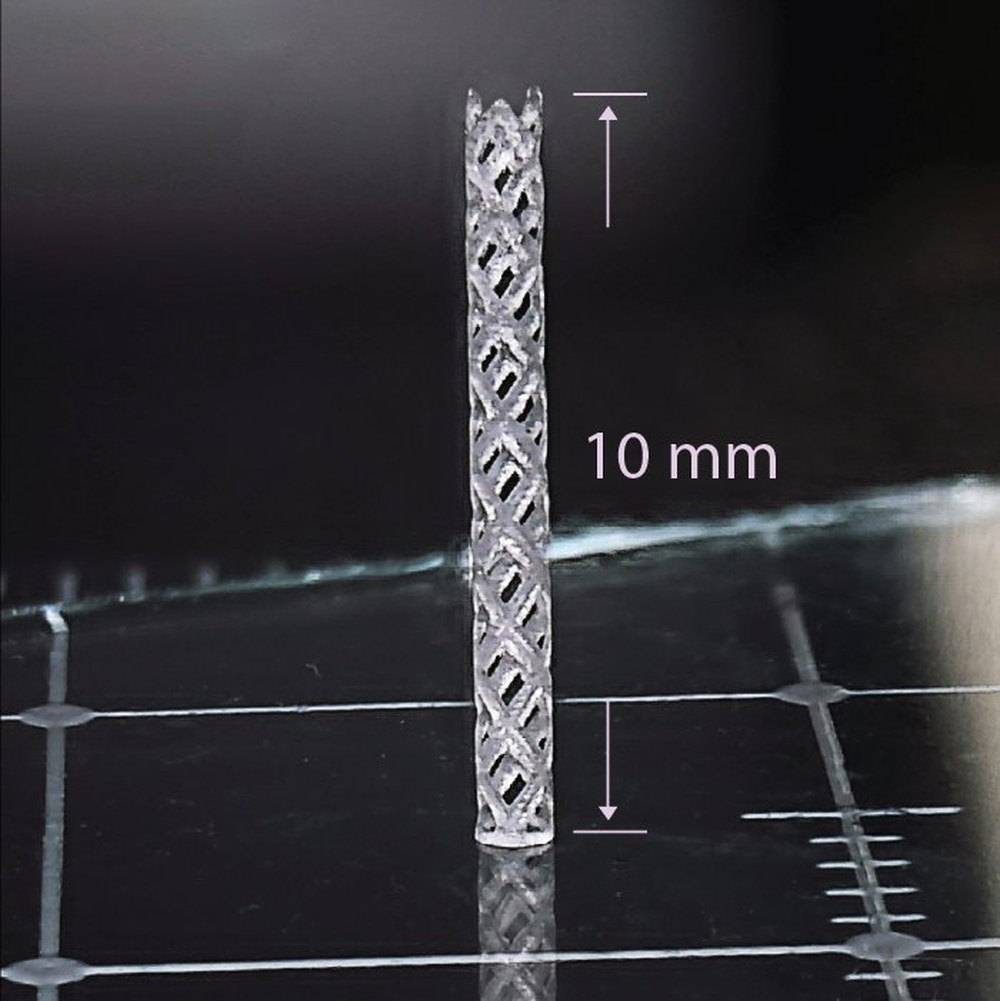
Image courtesy of Vital3D Technologies
Lithuanian deep-tech company Vital3D Technologies, which is developing precision 3D microfabrication for medical devices, has announced a “know-how” license agreement with the Cleveland Clinic to develop patient-specific 3D printed stents. They will be used in the treatment of bifurcation aneurysms in the brain (forms where a brain artery wall vessel splits into two branches). The licensed know-how, including device design and both clinical and procedural planning, was developed by Cleveland Clinic neurosurgeons Mark Bain and Sean Nagel. They have a financial interest in the technology through their rights to get royalties if any products created under the license are commercialized. Per the agreement, Vital3D will apply its proprietary laser-based FemtoBrush platform to see if it’s possible to reproducibly print a single, patient-specific, Y-shaped stent, and successfully deliver it through a neurovascular catheter. The platform pairs single-feature precision of roughly one micron with build dimensions up to 50 mm in the same manufacturing process, which is something vascular devices require. Initial work will focus on finding suitable materials, translating patient-specific anatomy into device geometry, and determining if catheter-based neurovascular delivery is feasible.
“This is exactly the type of problem our technology was built to address: a complete medical-device geometry that still demands micron-scale structural control. Our earlier vascular-stent work gives us a scientific foundation in developing, manufacturing and evaluating very small vascular structures,” said Vital3D’s Co-Founder and CEO Vidmantas Šakalys. “The next milestone is to determine whether those elements can be translated into a reproducible bifurcation device and a feasible neurovascular delivery.”
Researchers 3D Print Bone Scaffold Designed Around How Bone Breaks Heal
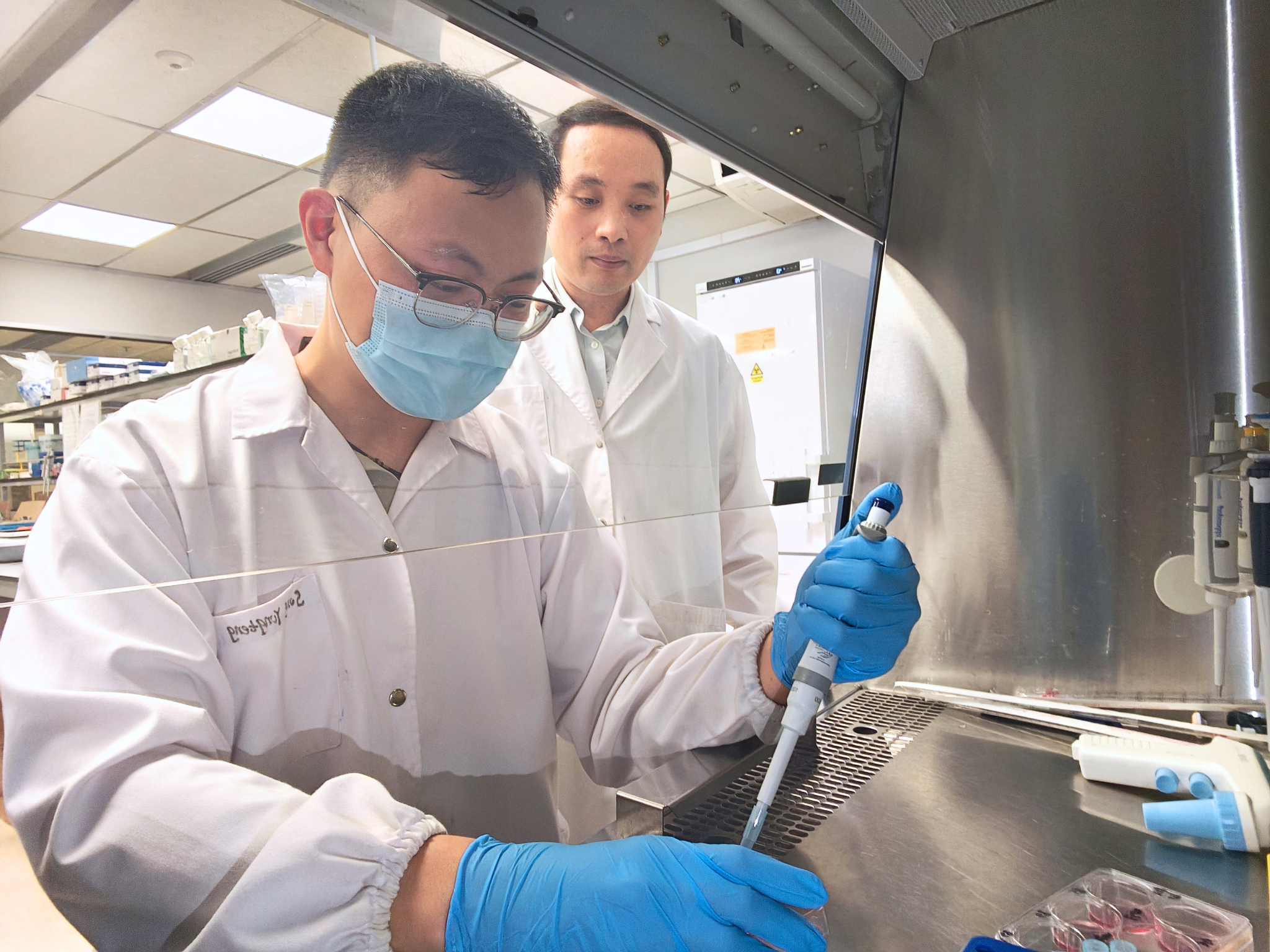
First author Yongteng Song (front) and Associate Professor Changjin Huang (behind) at work in the lab at NTU MAE.
While small bone breaks often heal on their own, large ones don’t. Doctors typically fill the gap with bone taken from somewhere else in the patient’s body, which means another surgery, a limited material supply, and possible harvest site problems. But worse still, filling the break doesn’t necessarily guarantee new bone regeneration: a large defect must have early protection from bacteria, be reachable by new blood vessels, and encouraged to grow new bone. All three of these things happen at different points in the healing process, so loading an implant with all its antibiotics to be released at once isn’t necessarily the best solution. A team of researchers at NTU Singapore, led by Associate Professor Changjin Huang, are working to create a bone implant around the way injuries actually heal, with each of these three functions taking the lead only when needed, and then stepping back. They 3D printed a bone scaffold from a water-rich gel of sodium alginate and gelatin; active copper ions and amoxicillin are placed inside tiny porous hydroxyapatite ceramic beads, which go into the gel. These active ingredients are released quickly, and then more slowly over a few weeks, offering strong protection when the risk of infection is high, and then continuing a steady supply while blood vessels and new bone are forming. This supports proper healing over time.
Much of the design rests on the copper ion, which fights bacteria, encourages the formation of blood vessels, and supports bone marrow stem cells building new bone; the material is also more stable and affordable than typical protein growth factors. They say timing is everything, and in this case, the timing of the release is built into how each of the scaffold ingredients are held. Within the gel network, the copper ions bind to the sodium alginate, and when the implant swells with fluid, the ions at the surface are released quickly at first, while the rest come more slowly. The antibiotic is stored on, and within, the porous ceramic beads, and just like with the copper ions, what’s near the surface comes out first, with the rest of drug releasing more slowly through the beads’ tiny channels. It took some time to figure out how to get the gel to print, because it had to be thin and runny enough to flow through the nozzle, but also able to hold its shape once extruded. By adding the copper ions and the hydroxyapatite ceramic beads, the ink’s behavior changed, so the team experimented with formulation, extrusion pressure, print speed, and temperature until they found the best solution. Yongteng Song, first author of the team’s paper, says that while they’ve had some success with animal tests, the work is still an early proof of concept. But he hopes that one day, it might be possible to print scaffolds to match a patient’s exact bone defect.
Cranfield University Reshaping Rubber Glove Industry with 3D Printing
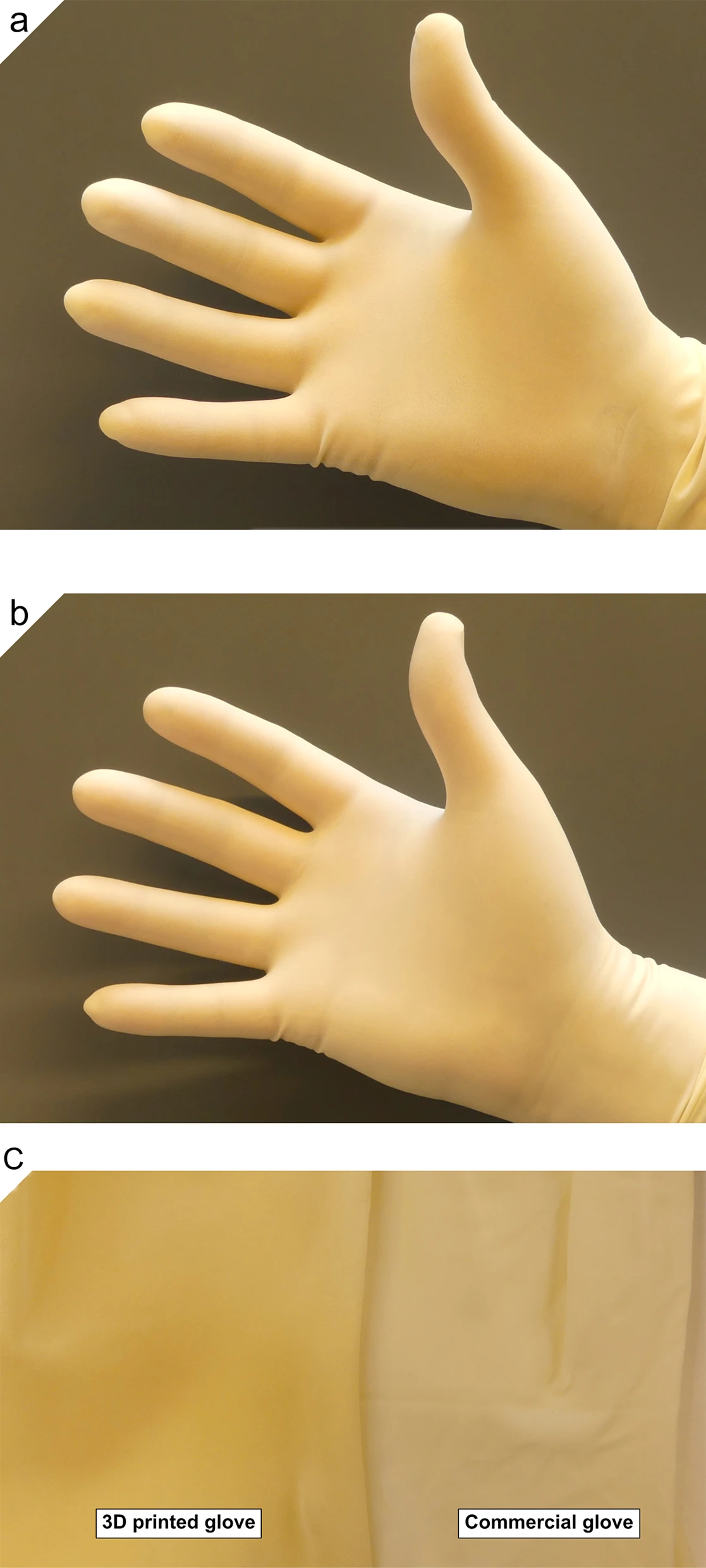
Comparison of 3D printed and commercial gloves. (a) 3D printed glove. (b) Commercial surgical glove. (c) Comparison of film surface finish of 3D printed glove (left) and commercial surgical glove (right).
Right now, large production lines are needed to manufacture rubber gloves, which makes for a long, energy-intensive, and wasteful process. A team of researchers at Cranfield University and Meditech could reshape the industry by 3D printing the gloves in a new method that’s more scalable and uses natural rubber, which could potentially offset carbon emissions. Traditionally, gloves are made by dipping molds, or formers, into multiple baths during the process, and they need to dry in between each step. The team developed the 3D-PEP, or 3D Printer for Elastomeric Products, which sprays the rubber onto the mold, while at the same time heating the glove from inside and outside to vulcanize it into its final form. This allows you to tailor its properties, and offers more control over batch size, both of which could enable custom-made gloves. Additionally, the team chose to use natural rubber latex, as it’s more sustainable than synthetics, and can supposedly degrade in just one year. Finally, as most of the current glove manufacturing industry is in Southeast Asia, using 3D printing to make rubber gloves brings about greater supply chain resilience by enabling manufacturing at print farms in other parts of the world.
“There are so many benefits to migrating from traditional production line manufacturing to this type of 3D printing. Production is much more focused and customisable, and you can even scan people’s hands to make personalised gloves just for them. On top of all that you can do it more sustainably with less material wastage,” said Dr Eva Peláez-Álvarez, Research Fellow in Advanced Materials at Cranfield University.
“Now that we have proved this method in glove manufacturing, we’ll be looking into how it can be adapted for other industries as well. There are plenty of other areas in which this method could be of benefit.”
Subscribe to Our Email Newsletter
Stay up-to-date on all the latest news from the 3D printing industry and receive information and offers from third party vendors.
Print Services
Upload your 3D Models and get them printed quickly and efficiently.













You May Also Like
UniFormation S10 Heads to Kickstarter with an Integrated Resin Printing and Post-Processing System
UniFormation will launch its S10 desktop resin 3D printer on Kickstarter on October 22, 2026, with pledges starting at $999. The S10 integrates printing, washing, and drying, allowing a print...
Creality Goes Pro with Sermoon P1S 3D Scanner
From making millions of value-engineered Prusa clones, Creality really has aggressively pivoted to more complex machines. The company has made strides forward in software, and the Ender’s of yore is...
Stratasys Showcases 3D Printed Automotive Applications & New Printer at IMTS 2026
Just ahead of last week’s International Manufacturing Technology Show (IMTS) in Chicago, Stratasys launched the F870, a new large-format, production-grade FDM 3D printing platform designed to drive industrial manufacturing at...
Creality Launches SPARKX i8 on Indiegogo, Bringing Fastest, No-Purge-Waste Printing
Creality announces the launch of the multi-color 3D printer SPARKX i8 on Indiegogo, at an early-bird price of $309 (MSRP $399) starting from Sept. 21. Designed for ultimate user experience,...