
Foundation Alloy Raises $22M in Series A for Solid State Molybdenum


Foundation Alloy has just raised $22 million in Series A financing. The alloy company is trying to create a platform that will enable the solid state manufacturing of alloys. In the UK, the Fray-Farthing-Chen (FFC) Cambridge process has led to a revolutionary new approach to alloy manufacturing. That process is used by Metalysis to make alloys. Now, Foundation wants to do a similar process in the US, but for molybdenum, which I hope never becomes popular since I still can’t pronounce it properly (the secret is to say it like a bored teenager, “moh-lib-den-um,” but steer away from emphasizing the “lib-den” part for fear of confusing the British). Molybdenum may seem very niche but…and this is going to shock you…the high-temperature refractory has potential for defense applications. Molybdenum is an alloying agent, and can be used in missiles, space, armor, hypersonics, and nuclear engineering. In Refractory Complex Concentrated Alloys (RCCAs), molybdenum is a key material. RCCAs are key to the rapid development of specific high alloy families, and you can read more about this here in our Goldilocks Flywheel article. The material is potentially scarce, but it is mined in the US, though the country will have to export it from places like Mexico, Peru, and Chile if it wants a lot of it.
So Foundation’s fundraising and its focus on this material is very well timed indeed. At the same time, Foundation can have high performance in powder and quick iteration into new materials if it masters its variant of the FFC process. Foundation calls its process MetalsFIRST. The company says that it is a “solid-state platform encompassing composition design, mechanical alloying, shape forming, and sintering, that produces engineered alloys without ever entering the molten state.”
So far, investors are interested with the $22 million in Series A being raised through Trust Ventures, Yamaha Motor Ventures, America’s Frontier Fund, Overlap Holdings, Material Impact, Engine Ventures, and El Cap. The company has also gotten Kanematsu Corporation to distribute its materials in Asia. Foundation is manufacturing in the US, and hopes to use its platform to sell material worldwide. For now, it has a 36,000 sq ft plant in Massachusetts, and an additional location in New Hampshire at Re:Build Manufacturing.
Foundation CEO Jake Guglin said,
“Metals made through our platform are being used by customers today in commercial pilots with Japanese industrials, in production trials across North America and Europe, and in forging demonstrations with LIFT in Detroit.This Series A funds the factory, not the lab. Our new Massachusetts facility and modular production cell are set to grow capacity from pilot-scale today to tons per week by 2027—a 100x increase, built on a modular equipment platform that deploys and scales 10x faster than traditional metals manufacturing. We’re hiring across production, engineering, and commercial teams to help meet surging demand in defense, advanced manufacturing, and energy where legacy materials and supply chains are failing. Our team is uniquely positioned to solve these challenges right now.”
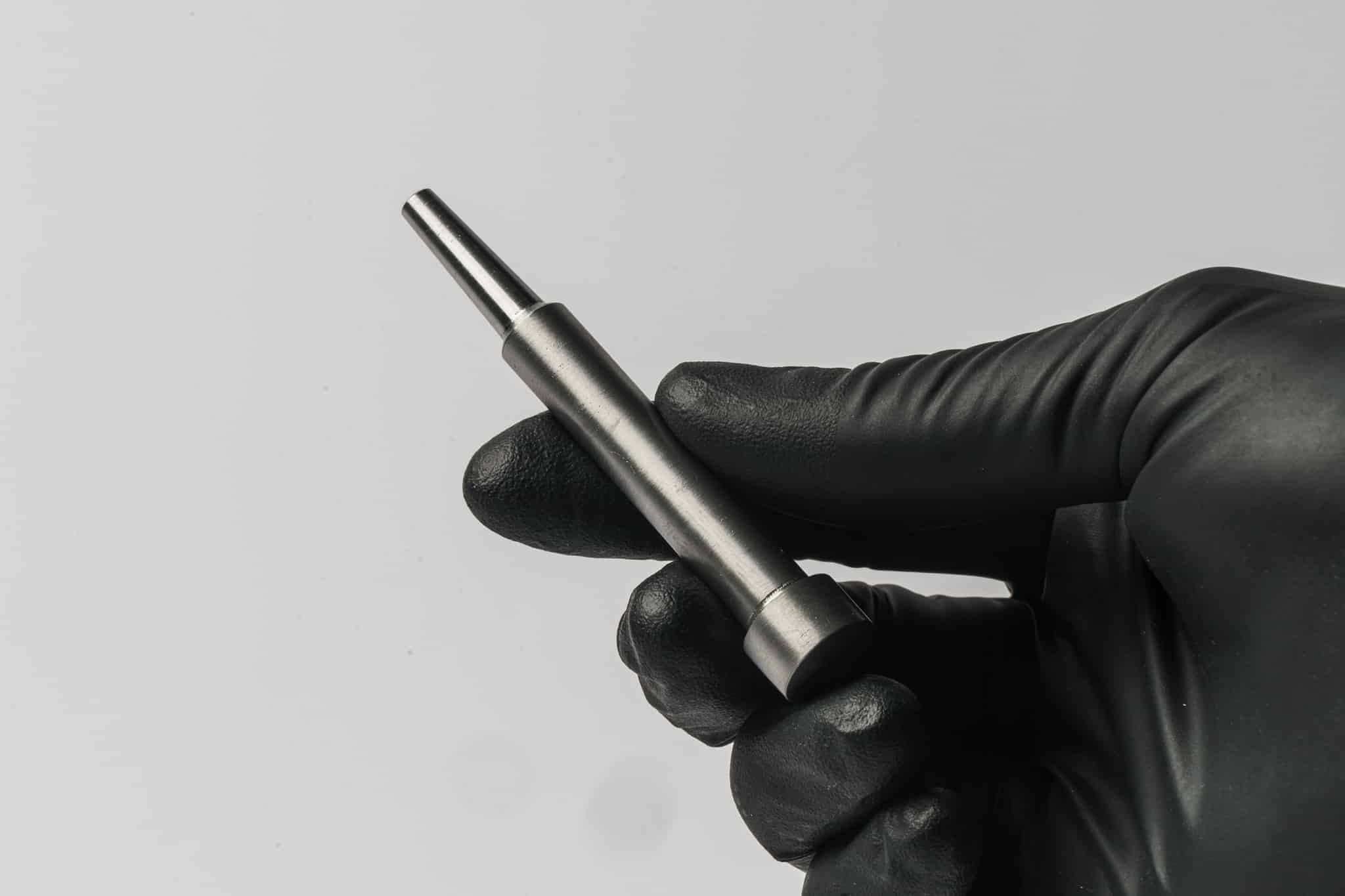
The firm thinks that it can offer a cheaper way to make alloys and powders at scale through more efficient energy use and less investment. One of their first materials is called Molyclast MC1200, which the firm says is three times stronger than other molybdenum alloys. It’s unclear in which way; it may just be more emotionally resilient or mature? The alloy is kind of insane, and is said to be “ductile at room temperature, stable at heat, as-sintered.” With a yield strength of between 950–1,250 MPa, it can be 98% dense, with a Young’ s Modulus of 300 GPa, and retains nearly 97% of strength at 1000°C. It is isotropic, has a fully recrystallized microstructure, and should be 3D printable.
Kenyu Okawara, General Manager, Kanematsu Corporation said,
“Foundation Alloy’s platform addresses the most persistent challenges our customers face—productivity, equipment utilization, and supply-chain reliability—through a fundamentally different production approach. Client companies across our network are already evaluating Foundation Alloy’s materials for high-demand applications, and we look forward to delivering these next-generation alloys to manufacturers across Japan and Asia as part of our solution-oriented approach to the metals business. We see the potential for hundreds of millions of dollars of demand for these materials across Japan and Southeast Asia in the coming years.”
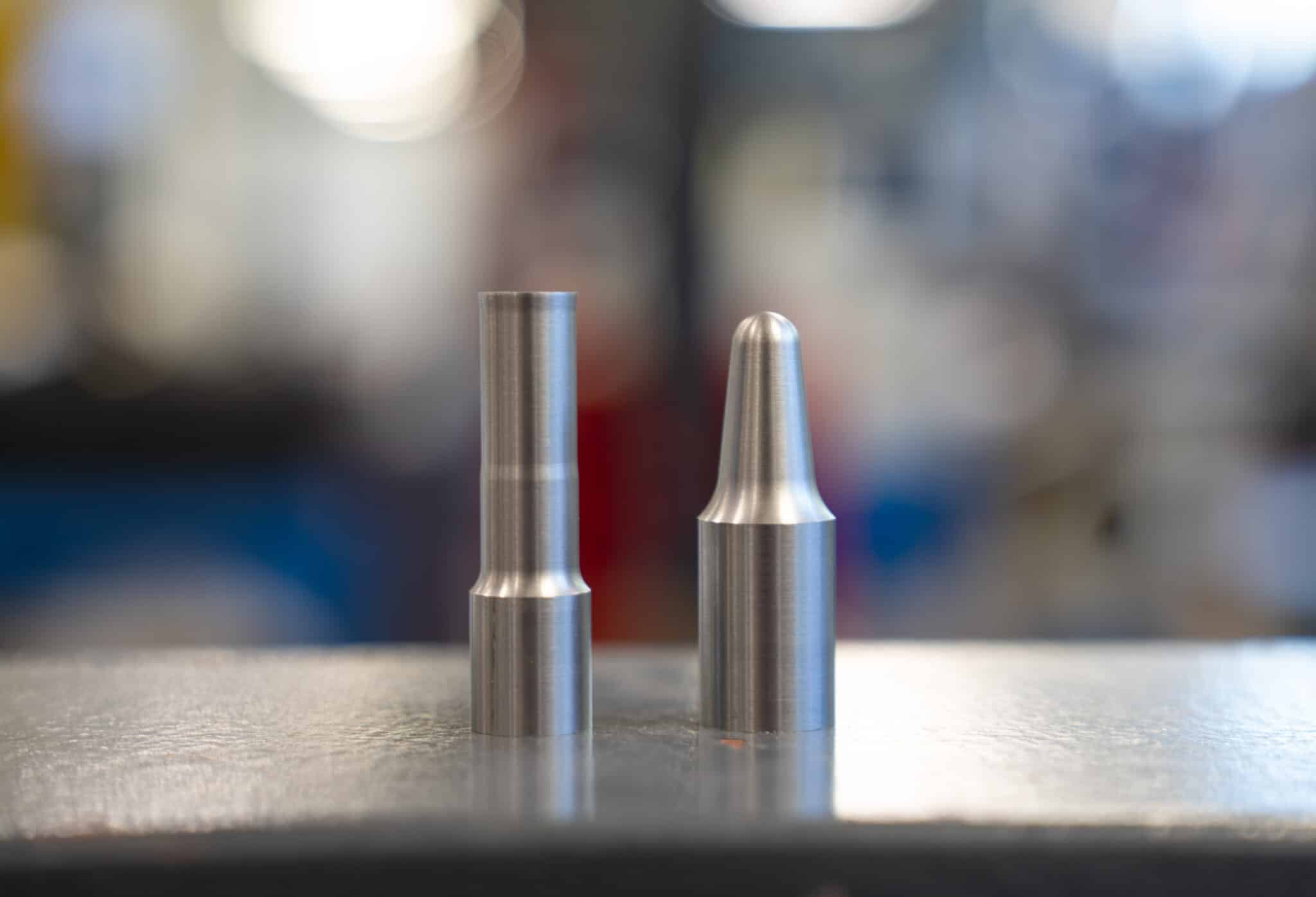
The company is also working on iron-based alloys, tool steels, and other products, including cutting tools, blades, and perhaps high pressure die casting. Foundation doesn’t specifically mention the latter, but they do compare it with TZM a lot, so I’m guessing that is what has gotten the Japanese all excited. TZM is used widely in high pressure die casting, and Ryobi stuck to that business when it sold its tool division. High pressure die casting was an important technology for Japan in its rebirth. Since then, the country has built industries on top of this technology, which, in some sectors, firms like Uber, Toyo, and Shibaura still lead. So that could explain this interest.
Foundation also has another material, MC700, which is a finer grain structure ductile material. Anyone want to make like a NiobiumFactory or something before it’s too late? Investments in defense-oriented spending are increasing in the US. Not only is additive pivoting increasingly towards defense, but the entire supply chain of “idea to part” is also being funded by tech startups that want to localize production of the highest performance materials and parts in the US. With Japanese industry also waking up to this opportunity, Foundation could really shake things up in the refractories market.
Subscribe to Our Email Newsletter
Stay up-to-date on all the latest news from the 3D printing industry and receive information and offers from third party vendors.
Print Services
Upload your 3D Models and get them printed quickly and efficiently.












You May Also Like
AM Investment Strategies 2026 Sets the Stage for AMS 2027
AM Investment Strategies 2026 Nov. 5 · 12 p.m. ET · Free online event RESERVE YOUR SPOT ↗ A one-hour online discussion featuring some of the biggest names in 3D...
With Its Latest $200M Round, ICON May Be Running Away With the 3D Printed Construction Market
I used to view ICON, the Austin-based additive construction (AC) firm, as one of a handful of companies that could realistically consider itself the leader of the 3D printed construction...
How Should Businesses Build New Business? Dirk Simon Weighs In — Part 1
Dirk Simon had deep experience in materials and chemistry before joining the 3D printing industry. Instrumental in BASF and Farsoon’s market introduction, Dirk has spent a lot of time thinking...
3D Printing Services Near $2.5B as AM Market Shifts Beyond Hardware
The additive manufacturing market may be growing again, but one of the more interesting numbers behind that recovery has little to do with selling 3D printers. AM services generated nearly...


























































