Continuum Powders Launches On-Demand Alloy Service for Small-Batch Production


The need to meet demand for high-mix, low-volume (HMLV) production is one of the dominant catalysts driving new manufacturing investment. One explanation for this lies in a rare dual transformation taking hold in global supply chains: typically, the manufacturing sector alternates between cycles in which it’s mostly focused on adapting to changes in product technology and cycles in which it’s mostly focused on adapting to changes in process technology.
The relatively infrequent phases commonly referred to as ‘Industrial Revolutions’, however, are defined by cycles where both product and process technologies shift, in more or less equal measure, simultaneously. In the context of this historical trend’s current manifestation, the growing demand for HMLV capabilities is a primary reason for increasing additive manufacturing (AM) adoption. A good example of that is the latest announcement from Continuum Powders: the launch of a service called Custom Foundry Runtime (CFR).
The Houston-based materials supplier is now offering customers the opportunity to order custom alloys in small batches, produced using Continuum’s Greyhound platform, which leverages the company’s proprietary Melt-to-Powder (M2P) technology. The M2P process enables scrap to be converted into new metal powder without the need to convert the old metal into ingots first.
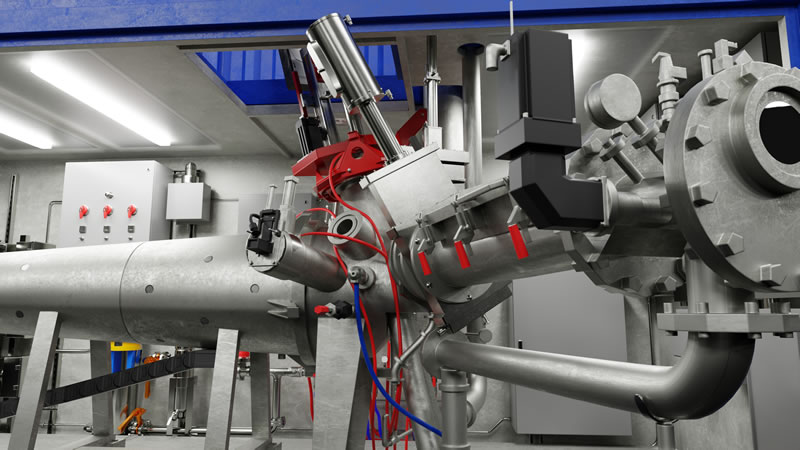
The Greyhound Melt to Powder (M2P) Platform.
Now, with CFR, customers can gain the same advantage with alloys tailored to their specifications. In addition to directly serving demand for HMLV output, this should appeal to enterprises and organizations involved in R&D work, as well as those working with particularly high-value materials like gold and platinum. Continuum notes that it anticipates typical batch sizes will range from 100 kg/day (“For complex, multi-variant, or constrained trials”) to 500 kg/day (“For favorable alloys and stable production setups”).
In a press release about Continuum Powders’ launch of its Custom Foundry Runtime service, the company’s CEO, Jon Cozens, said, “Custom Foundry Runtime represents an important evolution for Continuum Powders. We’re seeing growing demand for flexible alloy development and secure processing capabilities, particularly for customers working with highly specialized or precious materials. CFR gives companies access to advanced atomization infrastructure without forcing them into traditional large-scale production models that don’t fit their needs.”
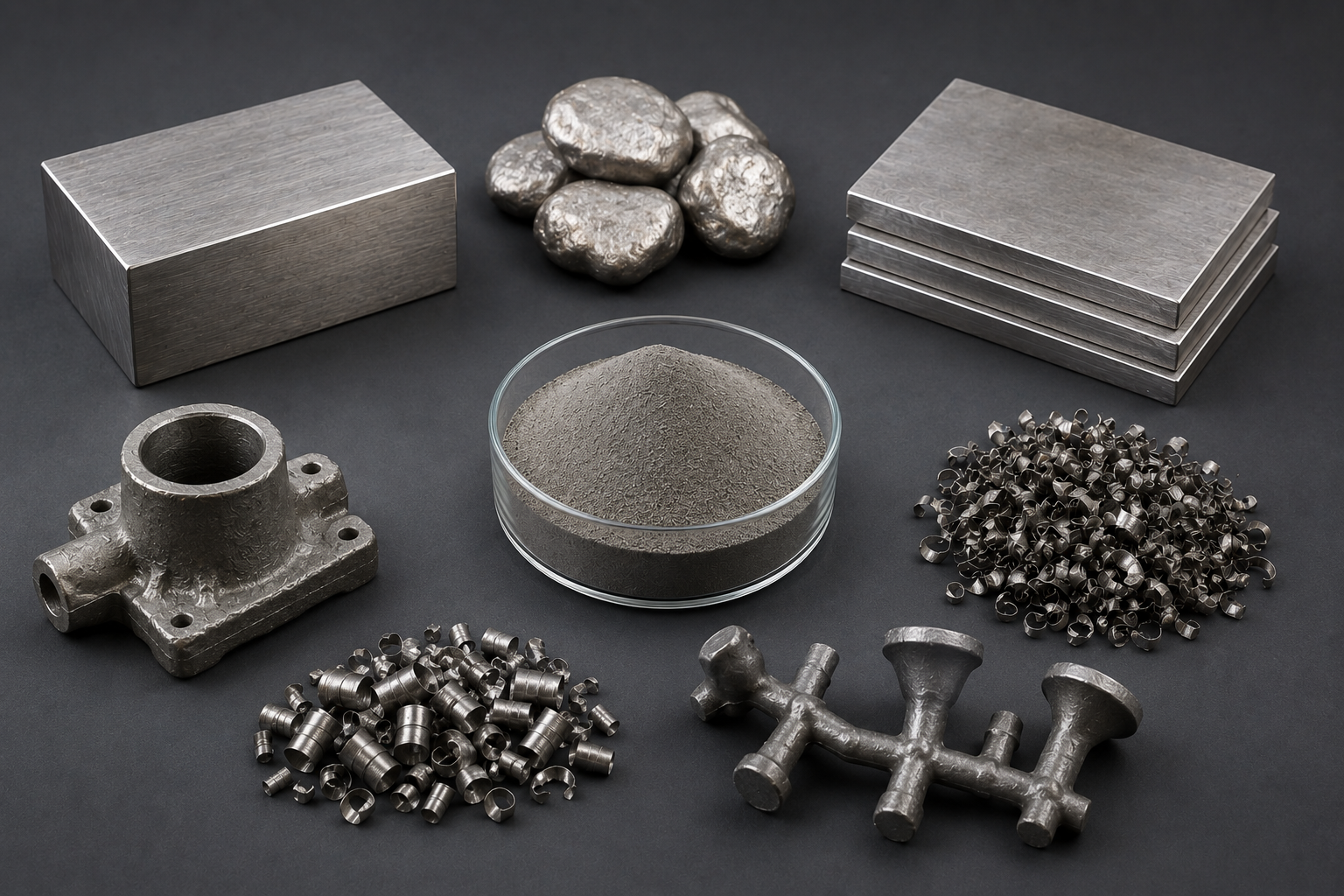
Continuum Powders’ Melt-to-Powder (M2P) process converts diverse metal feedstocks into high-performance powders for additive manufacturing applications.
Recycling seems like it could be a growth industry from now until the end of time, give or take. This isn’t because people have finally started to care about environmental destruction: rather, it has everything to do with the pragmatism inspired by this new era of geopolitical ruthlessness.
Oil prices should be far higher than they are right now, and the fact that they have been suppressed back under 100 dollars a barrel is actually a much more terrifying reality than the alternative. That is because it has taken unprecedented efforts of globally coordinated strategic reserve releases just to keep prices in the high 90s, and the “cushion” of oil reserves is being rapidly depleted, with levels in the US Strategic Petroleum Reserve (SPR), for instance, now near all-time lows. No one can predict how high prices could spike once that cushion runs out, if that indeed takes place without normal Middle Eastern flows returning to the market — a scenario that experts say could happen as soon as next month.
Moreover, oil is far from the only resource affected, with aluminum prices, for instance, recently hitting four-year highs because of lost capacity resulting from the Strait of Hormuz closure. This is why, barely three weeks into the war, I urged readers to please localize their supply chains. Transportation of goods will only get more expensive because of oil, materials will only get more expensive because of energy prices and direct lost capacity, and let’s not even get into the frightening prospect that Iran’s success at leveraging its control over Hormuz may inspire other nations proximate to worldwide shipping chokepoints to establish their own makeshift tollbooth mechanisms.
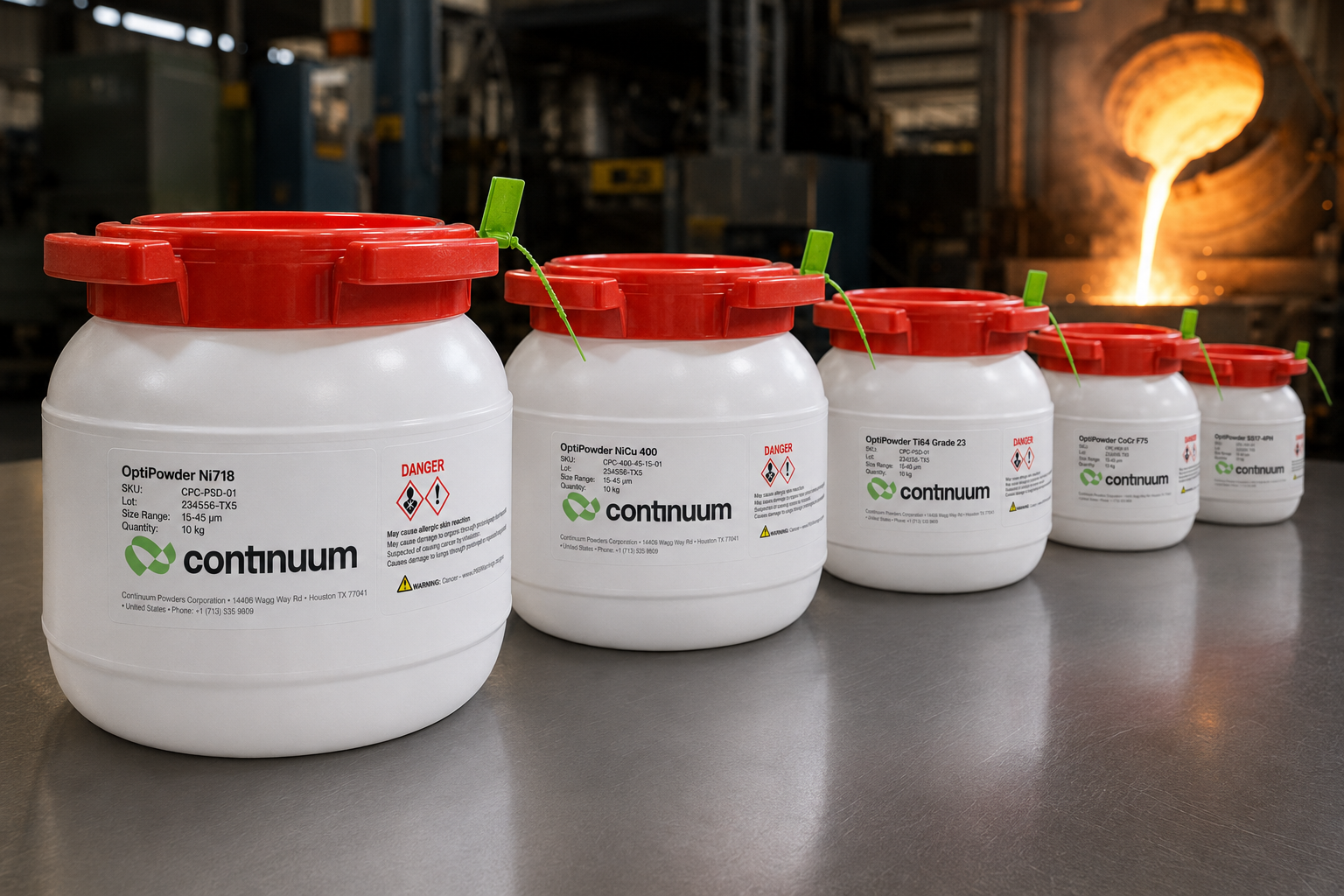
Metal powders manufactured by Continuum Powders using its proprietary Greyhound Melt-to-Powder platform.
There are no easy solutions to any of that, but recycling is a difficult — but also real — solution that I think the most proactive enterprises will start to take more seriously, very quickly. And while it’s no easy task to change how you source material inputs, a solution like the one Continuum is offering should make it much more feasible in many cases.
Images courtesy of Continuum Powders
Subscribe to Our Email Newsletter
Stay up-to-date on all the latest news from the 3D printing industry and receive information and offers from third party vendors.
Print Services
Upload your 3D Models and get them printed quickly and efficiently.












You May Also Like
3D Printing News Briefs, June 18, 2026: Reseller, Relocation, Metal Space Powder, & More
We’ll start with business news in today’s 3D Printing News Briefs, as XJet appointed a value-added reseller in Germany, BIO INX is expanding its presence in the Italian market, and...
Scientists Use BMF to 3D Print Seal Whiskers That Track Prey Long After It’s Gone
Seals use their whiskers to hunt. Not Navy Seals, although they may in some way also, but this article is about lowercase seals. Not Seal the musician either; as far...
Researchers Combine AI and Bioprinting to Create Tiny Blood Vessel Networks
If 2026 has a theme in bioprinting, it may be blood vessels. Researchers can already print incredibly sophisticated tissues. The harder part is keeping those tissues alive. Without a network...
University of Arkansas Researchers Test Metal 3D Printing in a Mars-Like Atmosphere
If humans eventually establish a long-term presence on Mars, they will face a major manufacturing challenge almost immediately. Tools will break. Parts will wear out. Equipment will need repairs. But...