Please Localize Your Supply Chains


Resilience is starting to feel like the only economic metric that matters, which is noteworthy, for one, because there is no defined metric that I know of that actually measures resilience. But there are plenty of measurements that can serve as indicators of a lack of/threat to resilience.
Energy prices that seem to spike out of nowhere are an excellent example of that, though not the only example. Water scarcity is another example: again, though, not the only other example. While there are countless such examples that the world is currently facing simultaneously, they all essentially revolve around the fact that demand is in one area of the world, and supply is somewhere else, often very far away.
The US Energy Secretary, Chris Wright, formerly a CEO of a fracking company, recently told CBS News that there isn’t a problem with oil supply, just a problem with logistics, which is the same thing as saying there is a problem with oil supply. I acknowledge the distinction between a shortage of viable extraction and a shortage of ways to get adequate supply to sites that need it, but as I understand it, being able to get that supply to where demand is happens to be a very important part of the process.
As I noted in a recent post about a potential Taiwan crisis that’s lurking not too far behind the Hormuz crisis, looking at war as a business opportunity, no matter how popular it is these days, is monstrous. Thus, despite the fact that all of the preceding has been a lead-up to what I’ll point out now — that supply chain localization has become an absolute imperative, indeed an emergency — that’s not meant as an observation of an opportunity; it’s a warning about the requirements for economic survival.
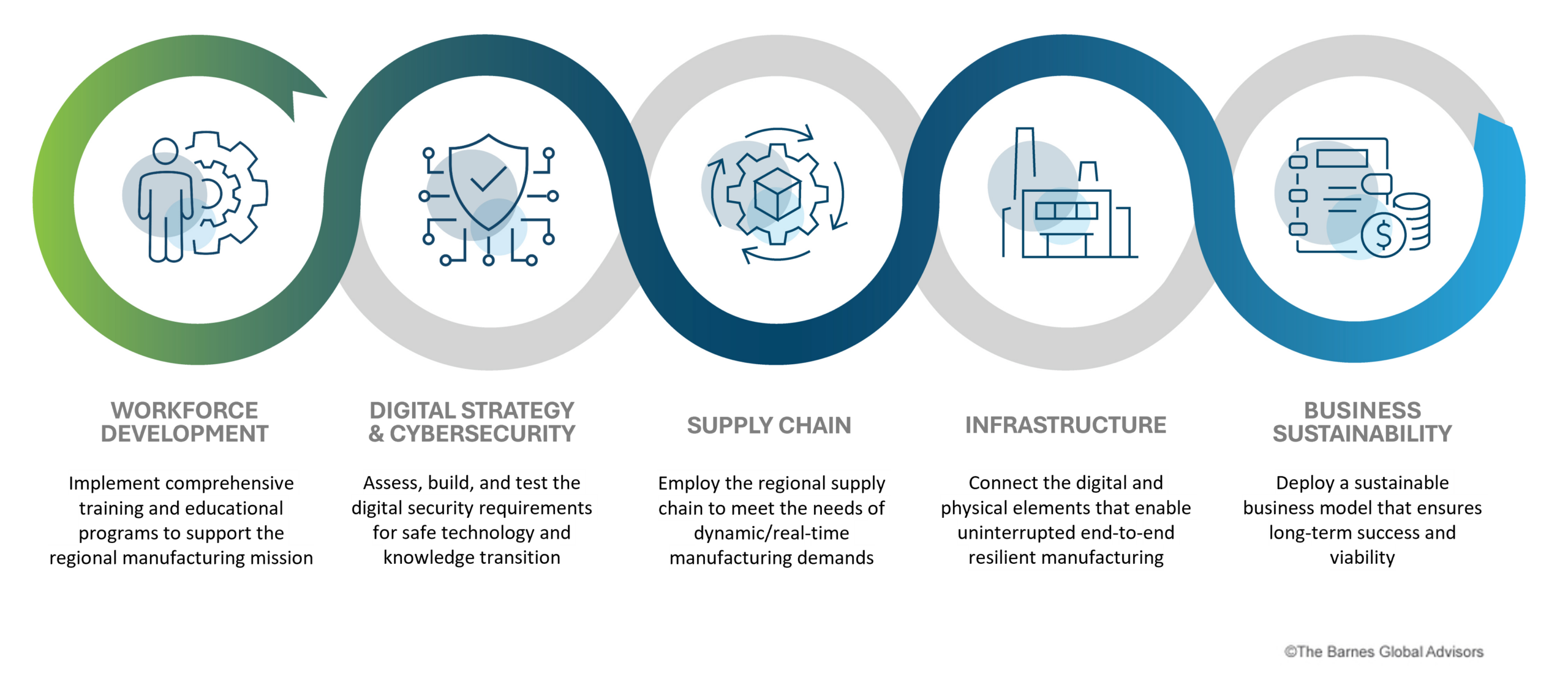
The tariffs that were imposed almost exactly a year ago, which the entire world effectively wasted the better part of that year deliberating over, were, of course, struck down about a month ago, suggesting that the whole international order spent nearly a year’s worth of effort on busywork. As it turns out, however, whether this was accidental or part of the design (the line between geopolitical analysis and conspiracy theory is very blurry), the chaos sparked by the tariffs did at least stimulate many industries to start rethinking their supply chains, even if reshoring to the US hasn’t been a major beneficiary of that process.
The Trump administration has erred in its approach to industrial policy (or bungled it intentionally for some reason, whatever the case may be), so much so that permanent damage may have been done to the very idea that localizing manufacturing supply chains would be a good thing. On the other hand, a recent survey by accounting and consulting giant KPMG of 300 US-based C-suite professionals found that 14 percent of organizations are planning to invest in supply chain resilience/diversification with any potential tariff refunds, the highest percentage for any answer. Moreover, another 24 percent combined said they plan to reinvest refunds in R&D/product innovation and capital expenditures, both of which could align with supply chain resilience objectives.
Now, those sorts of investments were likely to start increasing anyway, given that the One Big Beautiful Bill reinstated the first-year 100% tax deduction for R&D-related capital equipment, a rule that had been defunct between 2022 and 2024 owing to the original Trump tax cuts. The key angles to the KPMG survey’s findings are 1) the signaling of a double down on investing in new manufacturing hardware that can enable supply chain localization with the “found money” of tariff refunds; and 2) they reinforce that decision makers have internalized supply chain resilience as a long-term objective of future capital investment.
That focus matters because businesses are now being thrown into a situation where their primary concerns will no longer be protecting margins but ensuring that they’re able to remain operational at all. Energy products are the most immediate challenge to address, a challenge that hits every business at once. In that context, the production-on-demand model enabled by 3D printing can potentially help alleviate the costs associated with the energy costs of storing inventory associated with the status quo. There is also the possibility of offsetting higher shipping costs by moving production nearer to the point-of-need.
It’s not going to be limited to energy, though. Critical metals, batteries, pharmaceuticals, food, electronics, etc., are all shipped through the Strait of Hormuz. And one certainly shouldn’t assume there will be no ripple effect in other areas of global trade. I would, in fact, very much expect that to be the case, and President Trump has already pushed back his meeting with Xi on trade matters by a month, originally scheduled for the end of March.
All of this is leading up to a November deadline for a pause on rare-earth export disputes. If trade dynamics continue to be subject to geopolitical chaos until then, everyone can expect an entirely new international order to emerge in the aftermath. Nations need to be preparing for self-sufficiency. 3D printing can help to some extent, but only if it’s incorporated into a broader resilience strategy. Get to strategizing.
Images courtesy of KPMG
Subscribe to Our Email Newsletter
Stay up-to-date on all the latest news from the 3D printing industry and receive information and offers from third party vendors.
Print Services
Upload your 3D Models and get them printed quickly and efficiently.













You May Also Like
Beyond Generative Design: Can AI-Driven 3D Printing Truly Deliver on Precision?
Artificial Intelligence (AI) has brought a new look to the hardware engineering domain. Using generative design algorithms, engineers put performance parameters and weight constraints together and the program generates complex,...
The Next Phase of EB-PBF Will Be Defined by Beam Control
The bar for metal additive manufacturing has moved. Early on, the question was often simple: Can the machine print the material and produce a dense part? That still matters, but...
The SLS Market, Game of Trucks: Part 2
With the release of the new HP 1200 and the Formlabs X1, we can see real competition from very different segments. From several million dollars to just $20,000, the laser...
Australia’s AMCRC Funds Titanium 3D Printing R&D
In terms of the global economy’s presently existing state, there is no realistic path to economic resilience that doesn’t start with critical minerals security. This is a problem for pretty...