Scaling 3D Printing Takes More Than You Think; HP’s Webinar Looks at Making It Work Long Term

3D printing is no longer new. In fact, most manufacturers already know what it is, where it fits, and what it can do. But knowing the technology and actually scaling it are two very different things. That gap, between experimentation and real production, is where many companies get stuck. But it’s also where things start to get interesting.
Because while additive manufacturing has proven its ability to create complex, high-performance parts with less material and more design freedom, turning that into a repeatable, cost-effective production process is still a challenge for many organizations.
And yet, that’s exactly where the industry is moving today.
Onward
Across sectors, from healthcare to industrial manufacturing, 3D printing is moving beyond prototyping and into real production environments. The question is no longer if companies should adopt additive manufacturing, or even how to scale it, but how to make it consistent and repeatable over time.
That’s the focus of an upcoming webinar hosted by HP, titled “Systematizing Your Production: The Final Step in AM Maturity,” taking place on May 5, 2026, which aims to break down what it actually takes to move from early adoption to full production.
This session is also the final part of a four-part series. Earlier webinars looked at how companies adopt 3D printing, expand into new applications, and scale it across their operations. This last installment shifts the focus to what comes next: how to make those efforts consistent, repeatable, and sustainable over time.
Led by Dustin Kloempken, HP 3D Printing Application Engineer, and Josh Almeter, who manages 3D printing operations at HP’s Americas Product Completion Center (APCC), the session focuses on the practical side of scaling: choosing the right applications, selecting materials that perform in real-world conditions, and building a roadmap that aligns with business goals. These decisions help turn 3D printing into part of production.
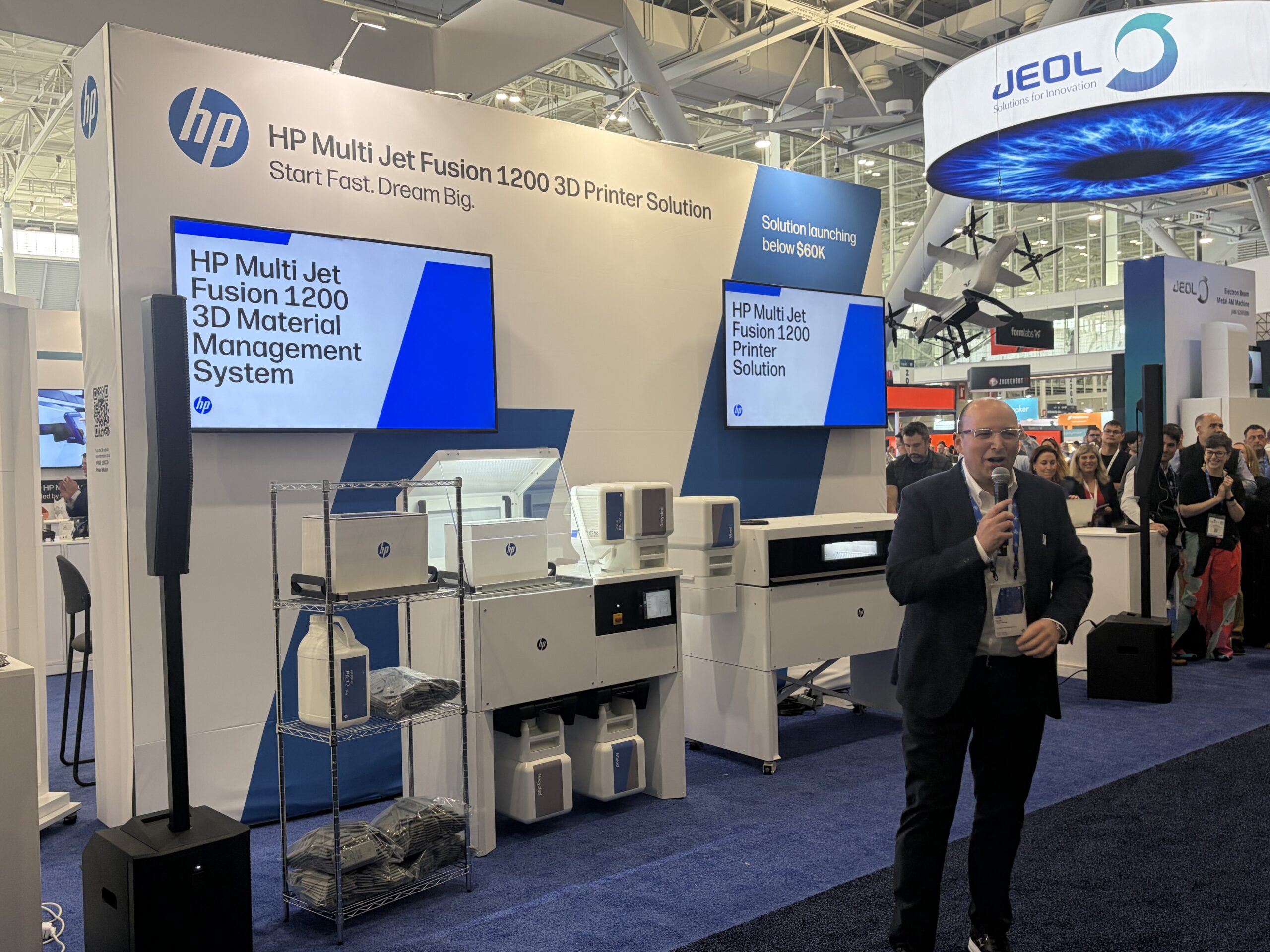
Alex Moñino, Senior VP and General Manager, HP Additive Manufacturing Solutions as HP debuts new 3D printing products at RAPID + TCT 2026. Image courtesy of Sarah Saunders/3DPrint.com.
Momentum
In the last few years, 3D printing has gotten a lot more reliable. Materials are better, systems are more consistent, and it’s now possible to produce real, functional end parts. But that doesn’t mean running it consistently at scale is easy.
The challenge isn’t just the technology. It’s knowing where 3D printing actually makes sense, how to make it work in existing workflows, and how to manage things like cost, quality, and speed. It also means thinking about 3D printing differently, not as a tool, but as part of production. That’s where sessions like this come in.
This webinar tackles those questions directly. It looks at where 3D printing already works, how to choose the right materials, and what it takes to move into production. It also includes real examples, including how HP’s own teams scaled from a single printer in 2017 to a full production environment today, and what changed along the way.
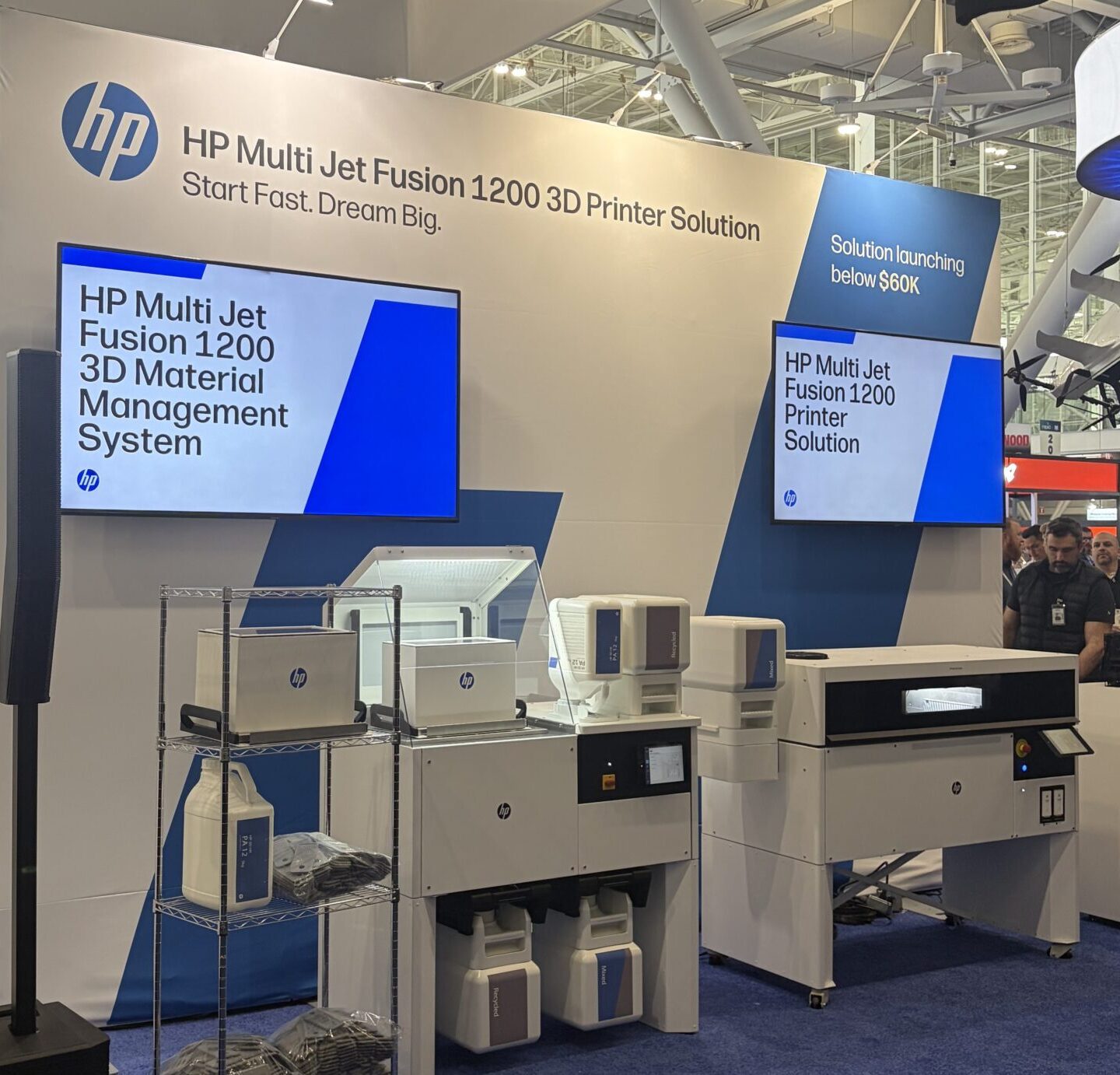
HP unveils Fusion 1200 printer at RAPID + TCT 2026 show floor. Image courtesy of Sarah Saunders/3DPrint.com.
It also looks at what happens once everything is in place. Companies are already seeing real savings from running production in-house, explains HP. In some cases cutting out the need for outside suppliers. The session also touches on what’s next, like automation and more connected systems, as 3D printing becomes part of everyday operations.
For companies already using 3D printing, this webinar is the next step. For those still figuring it out, it’s a much easier way to understand what adoption actually involves.
More importantly, the session looks at what happens after scaling, how to build systems around additive manufacturing so it can run consistently, deliver measurable results, and support long-term growth. As more companies move in this direction, that move from using 3D printing to fully integrating it into operations is becoming a key part of how the technology delivers real value.
You can register for the webinar here and learn more about how companies are putting this into practice.
Subscribe to Our Email Newsletter
Stay up-to-date on all the latest news from the 3D printing industry and receive information and offers from third party vendors.
Print Services
Upload your 3D Models and get them printed quickly and efficiently.













You May Also Like
The Money Behind AM: What to Watch at AM Investment Strategies 2026
For years, simply being a 3D printing company could attract attention from investors. New machines, new materials, faster speeds, and the promise of mass production were often enough to get...
Metal AM in a Multipolar World: Resilience, Regional Production and a Changing Market
Technology develops in response to forces driving change. That was the starting point for a keynote I presented with Mikael Schuisky at AM Meetup 2026, held in Karlstad, Sweden, on...
EOS Bets on Mexico’s AM Market with Axiomatek Sales Channel Deal
Mexico is one of the biggest beneficiaries of the push to diversify manufacturing out of China. This development is perhaps inevitable given the current global trade environment, but even with...
3D Printing Market Hits $4.48B After Six Straight Quarters of Growth
The additive manufacturing market continued to grow in the second quarter of 2026, adding another quarter to what is becoming a much more consistent expansion for the industry. Worldwide revenue...