Leading Chemical Manufacturer Kureha Makes Strategic Investment in Z-Polymers’ Advanced 3D Printing Materials

Aside from rising gasoline prices, the US still hasn’t seen much direct economic impact from disruption to Strait of Hormuz maritime traffic. However, it’s only a matter of time before that situation changes, and other countries—especially in Asia—have already begun enacting emergency measures to help alleviate the pain of price shocks for businesses and consumers.
This isn’t a vague, hard-to-pin-down prospect. There’s one material that’s in virtually everything, for instance, which should be expected to lead to sustained inflation for some time, as the effects of the conflict in Iran filter into the broader economy: plastics. About 15 percent of the planet’s polyethylene (PE), for instance, which is the most common plastic on the market, comes from the Middle East.
From one perspective, this is just as negative for the additive manufacturing (AM) industry as it is for all other businesses, but there’s also reason to believe that it will catalyze greater interest in AM, if only as a way to reduce material waste. With that in mind, we should expect to see more deals like the one just announced by leading global chemical supplier Kureha Corporation, based in Japan, and Massachusetts-based manufacturer of advanced 3D printing materials, Z-Polymers.
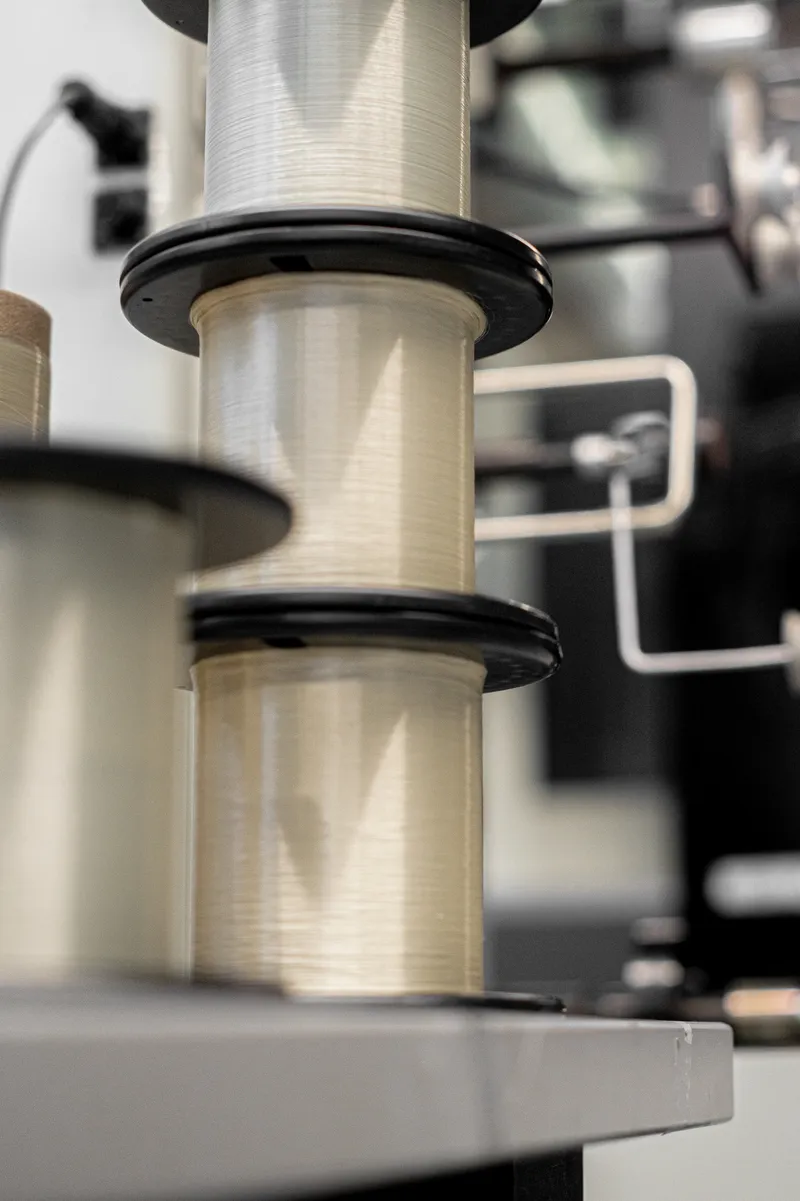
The deal is twofold: in addition to Kureha making a seed investment in Z-Polymers for an undisclosed amount, the two companies have also formed a joint development agreement (JDA) that aims to accelerate the commercialization of Z-Polymers’ proprietary Tullomer material. Tullomer is a liquid crystal polymer (LCP), optimal for applications that require high strength, corrosion-resistance, and low dielectric loss.
Founded in 2021, Z-Polymers’ origins as a spin-out from the University of Massachusetts Lowell Innovation Hub make the company a good fit for working with Kureha, which excels at specialty materials and prioritizes staying ahead of the curve with a robust R&D program. The compatibility of Tullomer with low-cost FDM printers gives the company an inherent edge in an R&D setting.
In a press release about Kureha’s investment in and partnership with Z-Polymers, Naomitsu Nishihata, SVP of Kureha Corporation, said, “We believe Z-Polymers’ technology platform represents an exciting advancement in high-performance polymer materials. Through collaboration with innovative companies like Z-Polymers, we aim to expand advanced materials solutions for global markets.”
Dr. Michael Zimmerman, founder and CEO of Z-Polymers, said, “Kureha’s investment represents strong validation of the technical foundation and commercial potential of the Tullomer platform. By combining a new class of liquid crystal polymer materials with scalable manufacturing methods, we believe this platform can enable high-performance polymer fibers with capabilities beyond many existing melt-processable materials.”
Z-Polymers’ trajectory from a university spin-out to a partner of a leading chemicals supplier reminds me of a topic I wrote about multiple times last year, and which I think will only continue to gain in relevance: the importance of ensuring that manufacturing innovation has the opportunity to thrive at research universities. Any nation that wants to help itself revitalize its manufacturing landscape needs to include secondary education as a key component in the overall industrial strategy.
With that in mind, the relationship between Kureha and Z-Polymers suggests the opportunity to accelerate efforts to do the same on an international level. Japan and South Korea are among the countries that have already cut polymer production output in response to Hormuz-related supply chain disruptions.
At the same time, nations like Japan and South Korea possess national innovation ecosystems that the US and other Western nations could greatly benefit from emulating. Trading US fossil fuel feedstock for emerging technology collaboration would seem to be an ideal solution.
That may run contrary to the US’s current stance of alienating all its traditional allies, but such an approach is proving to be unsustainable from just about every angle. The US may have succeeded at taking hostage of the world’s energy supplies in the near term, but eventually, America’s partners will want something in return, or they’ll find their own way. Combining forces in order to give the next generation options to be hopeful about would be a step back in the right direction.
Images courtesy of Z-Polymers
Subscribe to Our Email Newsletter
Stay up-to-date on all the latest news from the 3D printing industry and receive information and offers from third party vendors.
Print Services
Upload your 3D Models and get them printed quickly and efficiently.













You May Also Like
UniFormation S10 Heads to Kickstarter with an Integrated Resin Printing and Post-Processing System
UniFormation will launch its S10 desktop resin 3D printer on Kickstarter on October 22, 2026, with pledges starting at $999. The S10 integrates printing, washing, and drying, allowing a print...
Creality Goes Pro with Sermoon P1S 3D Scanner
From making millions of value-engineered Prusa clones, Creality really has aggressively pivoted to more complex machines. The company has made strides forward in software, and the Ender’s of yore is...
Stratasys Showcases 3D Printed Automotive Applications & New Printer at IMTS 2026
Just ahead of last week’s International Manufacturing Technology Show (IMTS) in Chicago, Stratasys launched the F870, a new large-format, production-grade FDM 3D printing platform designed to drive industrial manufacturing at...
Creality Launches SPARKX i8 on Indiegogo, Bringing Fastest, No-Purge-Waste Printing
Creality announces the launch of the multi-color 3D printer SPARKX i8 on Indiegogo, at an early-bird price of $309 (MSRP $399) starting from Sept. 21. Designed for ultimate user experience,...