BigRep Expands into the Auto Aftermarket Through SEMA’s 6,000-Member Network


Several months ago, 3DPrint.com Executive Editor Joris Peels made a good case for aftermarket car parts as a potential high-growth opportunity for additive manufacturing (AM), specifically in the context of automotive seating. 3D printing for aftermarket car parts isn’t a new idea, but Joris’s spin on the concept emphasized how aesthetic and comfort, rather than repairs, look poised to add a whole new dimension to aftermarket demand that would benefit both the AM industry and automakers.
BigRep America, the original equipment manufacturer (OEM) of large-format, polymer extrusion 3D printers, just secured a deal that validates Joris’s theory: BigRep is partnering with SEMA Garage, the product development and technology center for the Specialty Equipment Market Association (SEMA), to give SEMA members access to BigRep’s production hardware. SEMA Garage will house a BigRep STUDIO industrial-grade machine at its facility in Diamond Bar, CA, located in the Los Angeles area, providing an entry for BigRep into SEMA’s network, comprised of thousands of member companies.
While SEMA is involved in all aspects of the auto aftermarket landscape, restyling has historically been one of the organization’s main focus areas, and the passion for individualized car aesthetics was a main catalyst behind SEMA’s founding over 50 years ago.
BigRep, for its part, has extensive experience in the auto sector, including relationships with major OEMs like Ford, as well as with NASCAR teams like Legacy Motor Club. The German company has continued to push into the North American market since going public on the Frankfurt Stock Exchange in 2024.
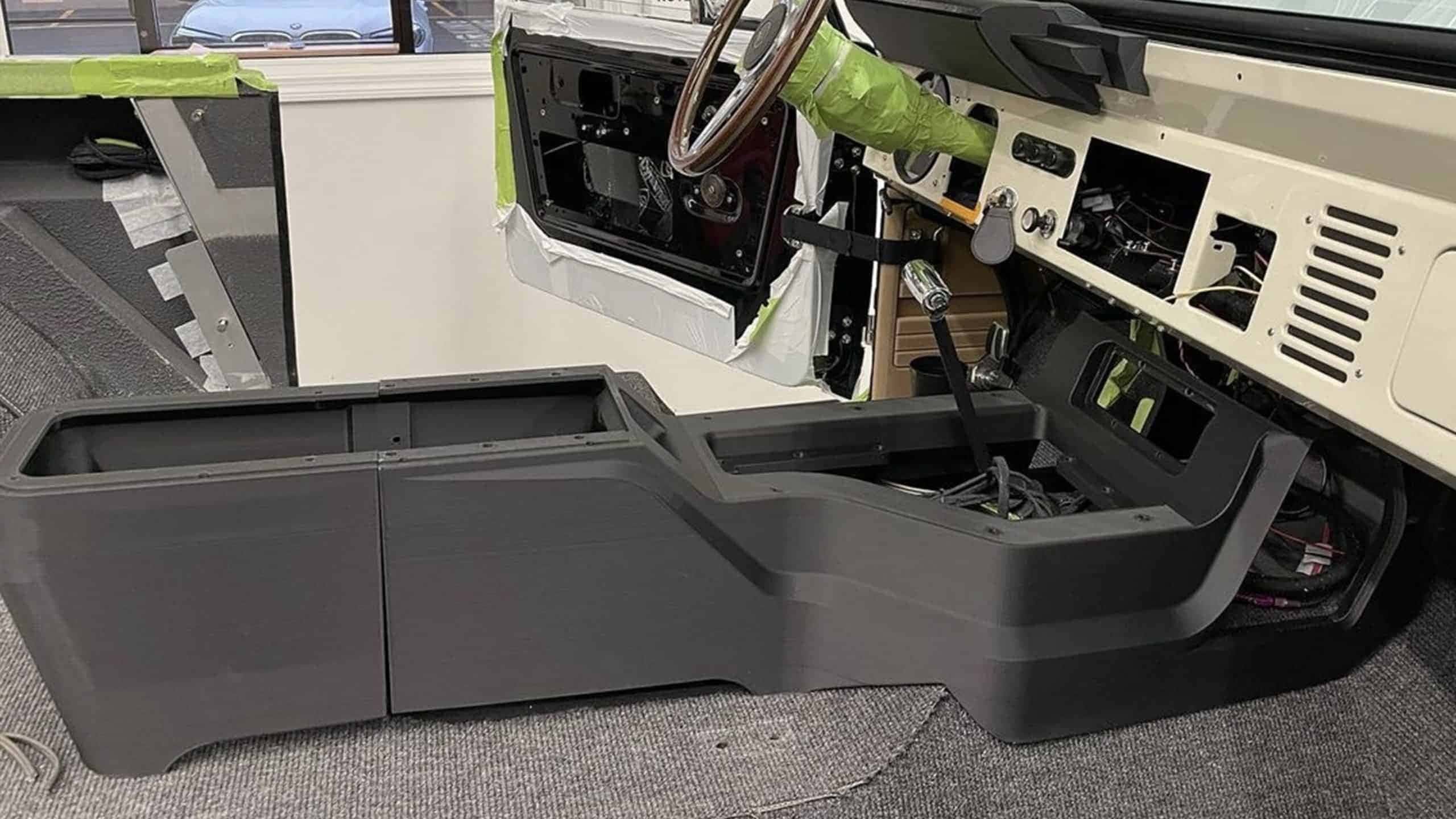
In a press release about BigRep’s partnership with SEMA Garage, the president of BigRep America, Jeff Olson, said, “We couldn’t be more excited about this partnership with SEMA Garage. It’s a meaningful step forward in how we bring large-format [AM] to the automotive industry in North America. The automotive sector has always been at the heart of what we do, and by working directly with SEMA Garage, we’re making it easier than ever for their members to tap into that technology for real large-scale applications.”
Jim Moore, the VP of OEM and Product Development at SEMA, said, “SEMA Garage is thrilled to partner with BigRep to bring large-format rapid prototyping into our Product Development service lineup. This cutting-edge capability gives our members the tools to stretch the limits of innovation and improve the speed and efficiency of their development process.”
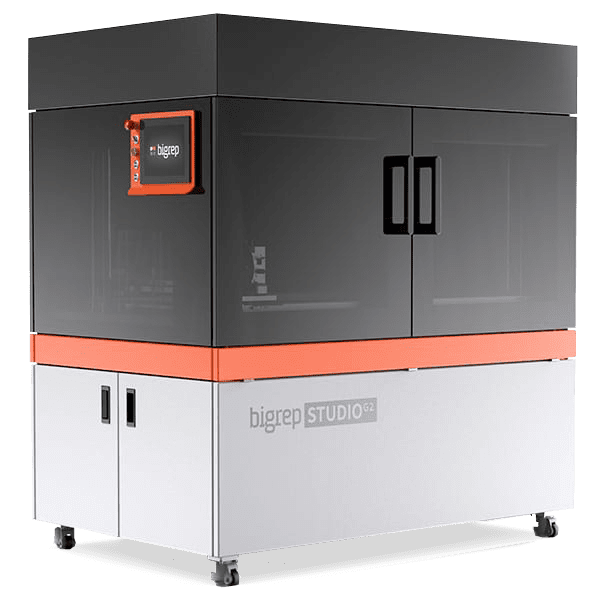
The BigRep STUDIO
BigRep’s partnership with Legacy Motor Club was one of the most interesting use cases I wrote about last year, because it shed light on the fact that NASCAR teams are already using distributed AM to respond more quickly to constantly changing design requirements imposed by the stock car racing league. The partnership with SEMA Garage has the potential to do something similar for the entire automotive market, as BigRep now has a foot in the door of an enterprise with a reach of over 6,000 companies.
Aftermarket parts that aren’t safety critical would seem to be a perfect middle-ground for scaling AM’s adoption in the auto sector. It addresses demand in a way that remains removed from any life-or-death hazards, targeting a demographic that by definition is willing to spend disposable income on pure enjoyment.
That leaves 3D printing OEMs like BigRep relatively insulated from the cost and scrutiny of safety regulations, while still familiarizing auto part manufacturers with the underlying technology, letting both customers and enterprises experience the benefits of large-format AM firsthand. Simultaneously, BigRep is still making strides on the safety-critical side of the auto market at the pace required in order to meet regulatory requirements.
It’s a winning strategy, and it’s one that other OEMs should flesh out further in other verticals where it already has a foundation. While there are plenty of examples, the first one that jumps to mind right now is the complementarity between targeting both the hobbyist and industrial drone markets at the same time.
Images courtesy of BigRep
Subscribe to Our Email Newsletter
Stay up-to-date on all the latest news from the 3D printing industry and receive information and offers from third party vendors.
Print Services
Upload your 3D Models and get them printed quickly and efficiently.












You May Also Like
Product Market Fit: Nikon Advanced Manufacturing CEO Hamid Zarringhalam on How Defense Demand is Pushing Metal AM to Scale
After years in which the additive manufacturing (AM) industry gained a reputation for its hype outpacing its performance, an interesting development has emerged recently. In certain market segments, at least,...
Beyond Thermoplastics: Why JuggerBot Is Betting on Hybrid AM
For years, thermoplastics have been the workhorse of additive manufacturing (AM). They are pretty easy to process, available, and compatible with many of today’s industrial 3D printers. From prototypes to...
Beehive Industries Invests $70M in Ohio to Support Its Advanced Manufacturing Buildup for Propulsion
Beehive Industries and the state of Ohio have each been killing it in the metal 3D printing game. Naturally then, it was only logical for Beehive and Ohio to combine...
IperionX Raises $50 Million to Expand U.S. Titanium Production
IperionX has raised about $50 million through a public offering to speed up the commercial rollout of its U.S. titanium manufacturing business. The company sold 2.275 million shares at $21.98...