IperionX Receives Another $25M in U.S. Government Funding to Scale Domestic Titanium Powder Production

Earlier this year, IperionX, the U.S. critical minerals supplier specializing in building a domestic titanium supply chain, announced that it had been awarded a Department of Defense (DoD) Industrial Base Analysis and Sustainment (IBAS) program contract worth up to $47.1 million. Now, the North Carolina-based company is announcing that the DoD has awarded it an additional $25 million from that contract, following two earlier tranches worth a total of $17.5 million.
According to IperionX, the previous funding phases went towards “advanc[ing] the Titan Critical Minerals Project in Tennessee to shovel-ready status”, and helped the company manage the long lead times involved in procuring the equipment used for manufacturing titanium. The ‘shovel-ready status’ phase of the work involves a Definitive Feasibility Study (DFS) for the Titan project, which the company initiated in April and expects to complete by Q2 2026.
IperionX says that the latest, $25 million tranche will go towards the ongoing scale-up of titanium manufacturing and advanced manufacturing capacity at the company’s Titanium Manufacturing Campus in Virginia. Ultimately, the company is aiming to produce over 1,400 metric tons of titanium per year at the Virginia facility.
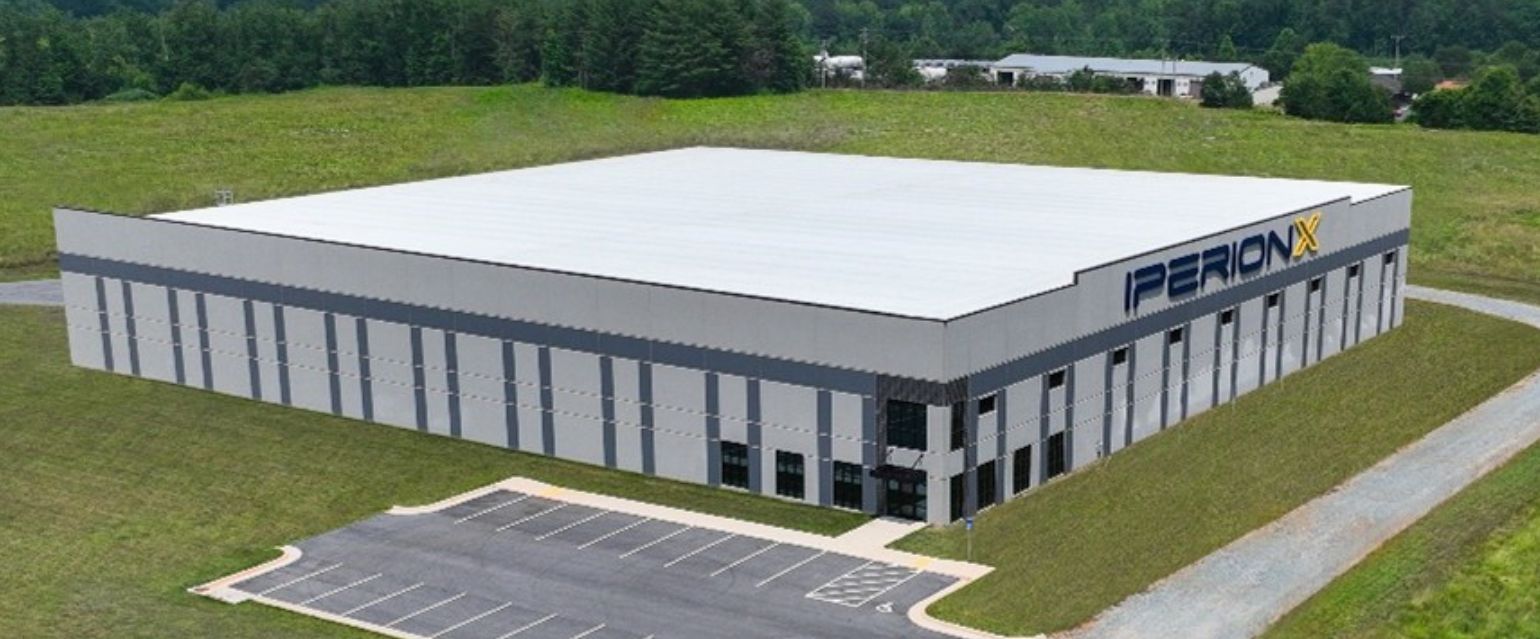
IperionX’s Virginia facility
As the company noted in a previous announcement about the DFS for the Titan project, in addition to titanium, the Tennessee site also includes “significant quantities of light and heavy rare earth elements — including dysprosium and terbium.” Those are two of the seven rare earth elements that China imposed export control restrictions on in April, in response to the Trump administration’s tariff-centered trade war.
As 3DPrint.com Executive Editor Joris Peels explained in an article last June, there could be a big opportunity for the additive manufacturing (AM) industry in applications requiring rare earths. One of those opportunities involves substituting different materials for rare earths altogether, but there is also the potential to simply produce similarly performing products while using less of these increasingly difficult to source materials.
That would, of course, present another AM opportunity for IperionX, should the company eventually decide to develop its rare earth assets. That would be a logical fit for the overall business case the company is cultivating, given the many parallels between the titanium and rare earth markets, especially in the current geopolitical context. The U.S. imports about 90 percent of the titanium it uses, including 100 percent of its titanium sponge, the main raw material used in titanium products:
As a recent article from critical mineral and energy researchers The Oregon Group notes, “The core problem for the West is not resource availability, but processing capacity. The real chokepoint is metal-grade production, especially aerospace-certified sponge and titanium alloys. These require highly controlled refining and long-term qualification processes, which only a handful of facilities outside China and Russia currently meet.”
That’s precisely why IperionX is focused on building an end-to-end domestic titanium supply source, as opposed to focusing solely on one link in the chain. Development across the entire value chain is the only approach that will ensure that the U.S. has genuinely secure access to titanium in the long run.
In that same vein, what IperionX is doing with titanium, and what the company may do with rare earths down the road, serves as a useful model for how AM material suppliers might form strategic partnerships with original equipment manufacturers (OEMs), end-users, and public agencies going forward. While DoD and the defense sector may be the key examples presently, the idea has applicability in virtually any area of AM adoption. Still staying in the world of titanium, for instance, Apple’s 3D printing of the material for the latest iPhone suggests how the advantages of building out end-to-end, localized supply chains could attract end-users far beyond the defense sector.
Images courtesy of IperionX
Subscribe to Our Email Newsletter
Stay up-to-date on all the latest news from the 3D printing industry and receive information and offers from third party vendors.
Print Services
Upload your 3D Models and get them printed quickly and efficiently.













You May Also Like
3D Printing News Briefs, October 10, 2026: Drones, WAAM, Ceramics, & More
We have a packed 3D Printing News Briefs for you this weekend! First, America Makes celebrated the recent National Manufacturing Day with 3D printed drones, and then it’s on to...
10 Years of Multi Jet Fusion: Onsite at HP’s Vancouver, Washington Facility
At this year’s RAPID event in Boston, HP Additive Manufacturing Solutions celebrated ten years in the additive manufacturing (AM) market. The company ushered in the milestone with several innovations, including...
PharmaTher Plans U.S. Network to 3D Print Medicines on Demand
3D printing medicines has often been tied to the idea of personalization, basically making a pill in the right dose, shape, or drug combination for a patient. PharmaTher is now...
3D Printing News Briefs, September 17, 2026: 3D Printed Boat, UAS Development, & More
We’ll start with maritime manufacturing in this week’s 3D Printing News Briefs, and continue on to defense 3D printing. We’ll end with funding for Tripo AI. Read on for all...