Anker Discontinues FDM 3D Printers, Focuses on UV Model After Record Kickstarter


Anker, the popular electronics company behind brands like AnkerMake and EufyMake, has stopped selling its traditional 3D printers. The company confirmed to The Verge that it is no longer offering its AnkerMake M5 and M5C models, nor many of the replacement parts for those devices.
This marks a major shift for Anker’s 3D printing business, which first entered the space with high-profile crowdfunding campaigns and sleek, user-friendly fused deposition modeling (FDM) machines. Now, the company appears to be stepping back from filament-based 3D printing altogether.
FDM Printers Discontinued Due to Component Shortages
According to a statement from Anker spokesperson Brett White, the decision is tied to supply chain problems. The company has been unable to source critical components needed for its M5 and M5C models, so Anker took them off the EufyMake website.
Some M5 and M5C replacement parts, including extruders and hotends as well as 3D printing filament, are still listed on the EufyMake website. While Anker hasn’t confirmed whether these parts will be restocked, their current availability may indicate that the company is selling off its remaining inventory. In fact, White suggested that customers needing specific components should contact EufyMake support directly.
White also indicated that there is currently no timeline for when (or if) the M5 and M5C printers will return to the market. For now, sales of both models, along with many of their accessories, remain on hold.
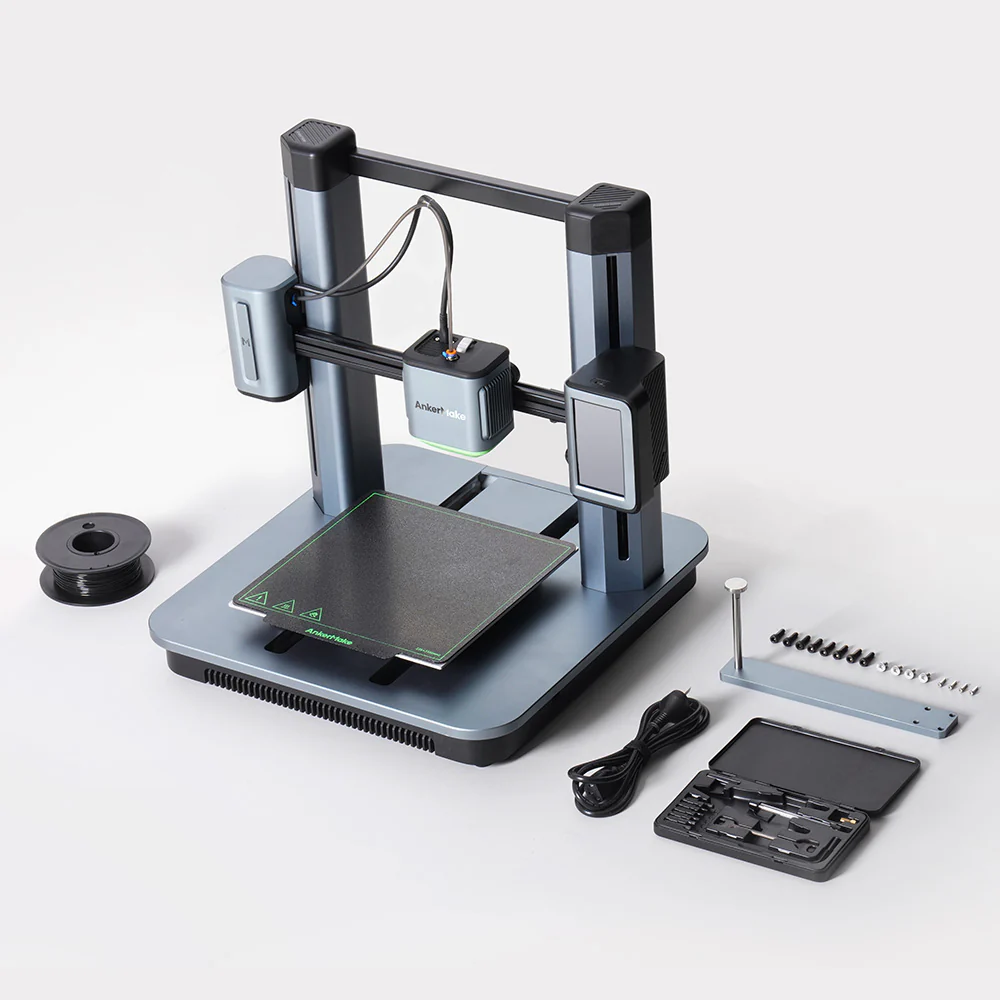
EufyMake M5 3D printer.
New Focus: UV Printer Smashes Kickstarter Record
While Anker exits the FDM printer market, it has shifted its focus to a new kind of machine: the EufyMake E1, a UV printer that uses ultraviolet light (UV) to instantly cure inks printed on various surfaces like metal, wood, ceramic, or fabric.
The E1 doesn’t work like a traditional 3D printer. Instead of building objects layer by layer with melted plastic, it prints full-color, textured designs directly onto objects like phone cases, tote bags, or mugs. Beyond flat images, it can build up textured layers of ink to create a slight “3D feel effect,” up to 5mm thick.

EufyMake E1. Image courtesy of Anker.
This shift appears to be working. The EufyMake E1 recently became the most funded project in Kickstarter history, raising over $46 million from more than 17,800 backers. Anker initially aimed to raise $500,000 in two months, and hit $10 million within the first 14 hours; that’s an astonishing 9,352% of its original funding goal. Kickstarter announced this news on their site, stating, “EufyMake’s latest campaign has officially become the most funded crowdfunding campaign ever.”
“Kickstarter record? Broken. Crowdfunding record? Broken. Guinness World Record? Yeah, that too. EufyMake just made history,” noted the site. “This record-breaking moment doesn’t just top Kickstarter; it also surpasses the previous record. It surpasses every crowdfunding campaign ever. Period. The previous record was held by the Brandon Sanderson — Four Secret Novels campaign.”
3DPrint.com reviewed the E1 earlier this year. In May, contributor Orville Wright published an in-depth review of the EufyMake E1, highlighting its ease of use, print quality, and unique textured output. The review was based on a test unit provided by AnkerMake. While it highlighted the printer’s capabilities and packaging, it also noted challenges such as ink costs, limited alignment precision for batch production, and early issues with the companion app’s security warnings.
-
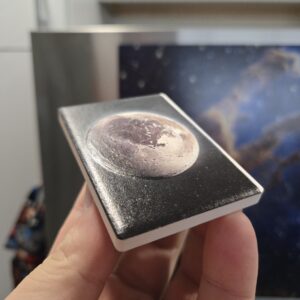
- E1 First Print Texture. Image courtesy of Orville Wright.

-
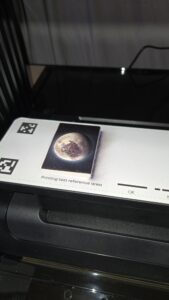
- E1 First Print. Image courtesy of Orville Wright.

Described as the world’s first personal 3D texture UV printer, the E1 is expected to start shipping in July and August, depending on the bundle. Prices ranged from around $1,900 to $2,700 during the campaign.
The company launched the AnkerMake M5 in 2022 and followed it with the more affordable M5C in 2023. Both were well-received for their design and speed. But like many in the market, Anker is now dealing with supply chain problems and trouble accessing key components. For now, the business seems to be shifting its focus to UV-based printing as the next phase of its 3D-related business.
Images courtesy of Anker
Subscribe to Our Email Newsletter
Stay up-to-date on all the latest news from the 3D printing industry and receive information and offers from third party vendors.
Print Services
Upload your 3D Models and get them printed quickly and efficiently.













You May Also Like
AM Investment Strategies 2026 Sets the Stage for AMS 2027
AM Investment Strategies 2026 Nov. 5 · 12 p.m. ET · Free online event RESERVE YOUR SPOT ↗ A one-hour online discussion featuring some of the biggest names in 3D...
With Its Latest $200M Round, ICON May Be Running Away With the 3D Printed Construction Market
I used to view ICON, the Austin-based additive construction (AC) firm, as one of a handful of companies that could realistically consider itself the leader of the 3D printed construction...
How Should Businesses Build New Business? Dirk Simon Weighs In — Part 1
Dirk Simon had deep experience in materials and chemistry before joining the 3D printing industry. Instrumental in BASF and Farsoon’s market introduction, Dirk has spent a lot of time thinking...
3D Printing Services Near $2.5B as AM Market Shifts Beyond Hardware
The additive manufacturing market may be growing again, but one of the more interesting numbers behind that recovery has little to do with selling 3D printers. AM services generated nearly...