ORNL Improves Error Mitigation in Large Polymer Parts

Oak Ridge National Laboratory (ORNL) has commercialized a number of large-format 3D printing technologies. Now, scientists are working on error mitigation in large parts. ORNL is using six thermal cameras to analyze the deposition, hardening, and cooling behavior of the beads as they are deposited. Computer vision is then used to adjust the temperature and extrusion parameters in response to defects. The parameters can also be optimized to increase intra-layer bonding. I first saw this approach at Aibuild many years ago. The team there, at the time, just two people strong, pioneered adjusting parameters in real time to reduce and even correct errors.
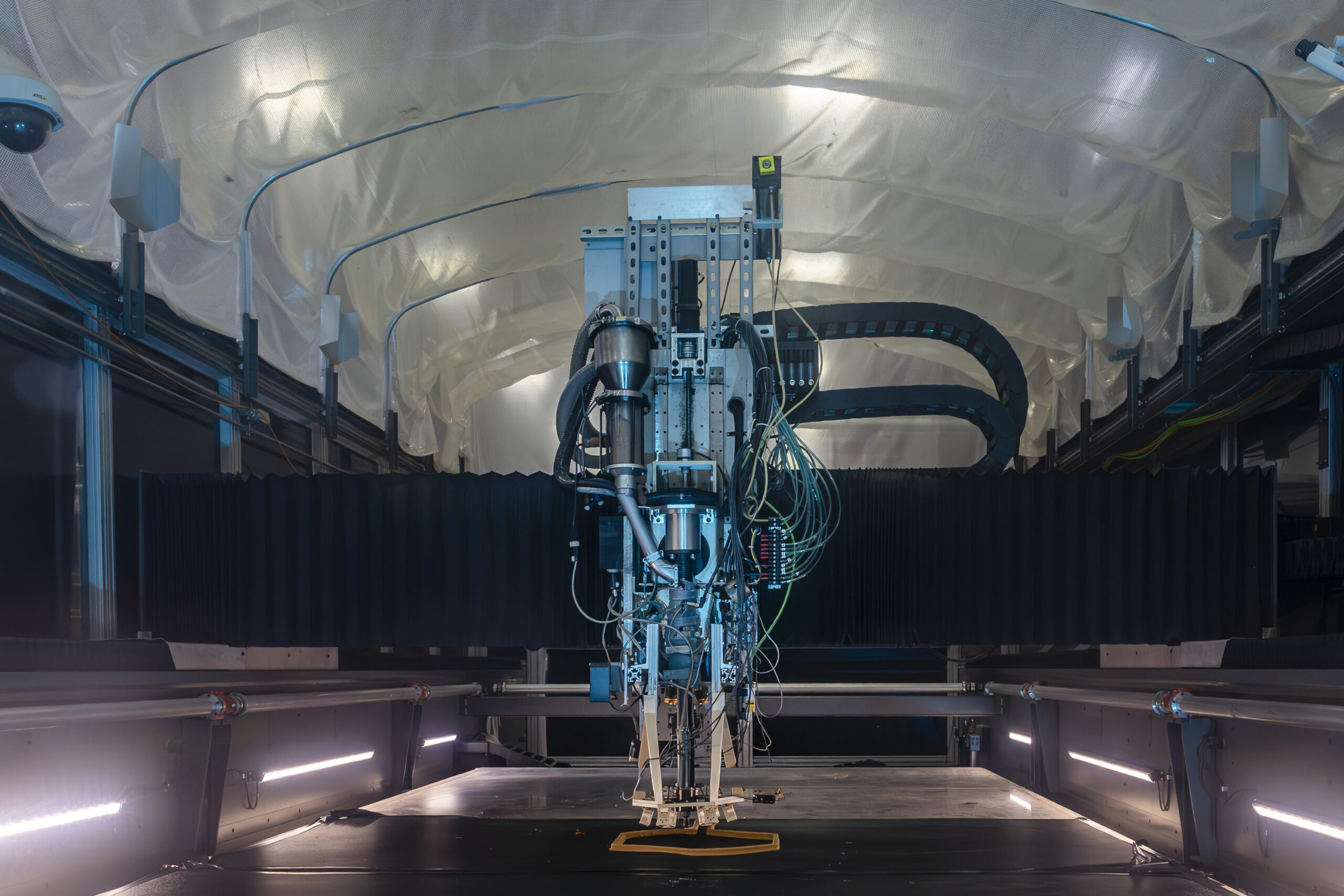
A test object is 3D printed using a new system that monitors for errors and corrects them automatically during the manufacturing of large plastic composite items. Image courtesy of Carlos Jones/ORNL, US Dept. of Energy.
The ORNL team says that they can do things like adjust when, “material that was about 30% too cool when the next layer was applied. Upon detecting this, the controller automatically increased the print speed to maintain the optimal temperature for layers to fuse correctly, demonstrating real-time correction in action.” The control unit can adjust temperature variants to a few degrees. The AI model does not have to be trained on new parts per se, but it should work for any printable part. In 2024, ORNL published a paper looking at this approach and later made it so that the system could adjust within seconds. Now the correction happens in real time.
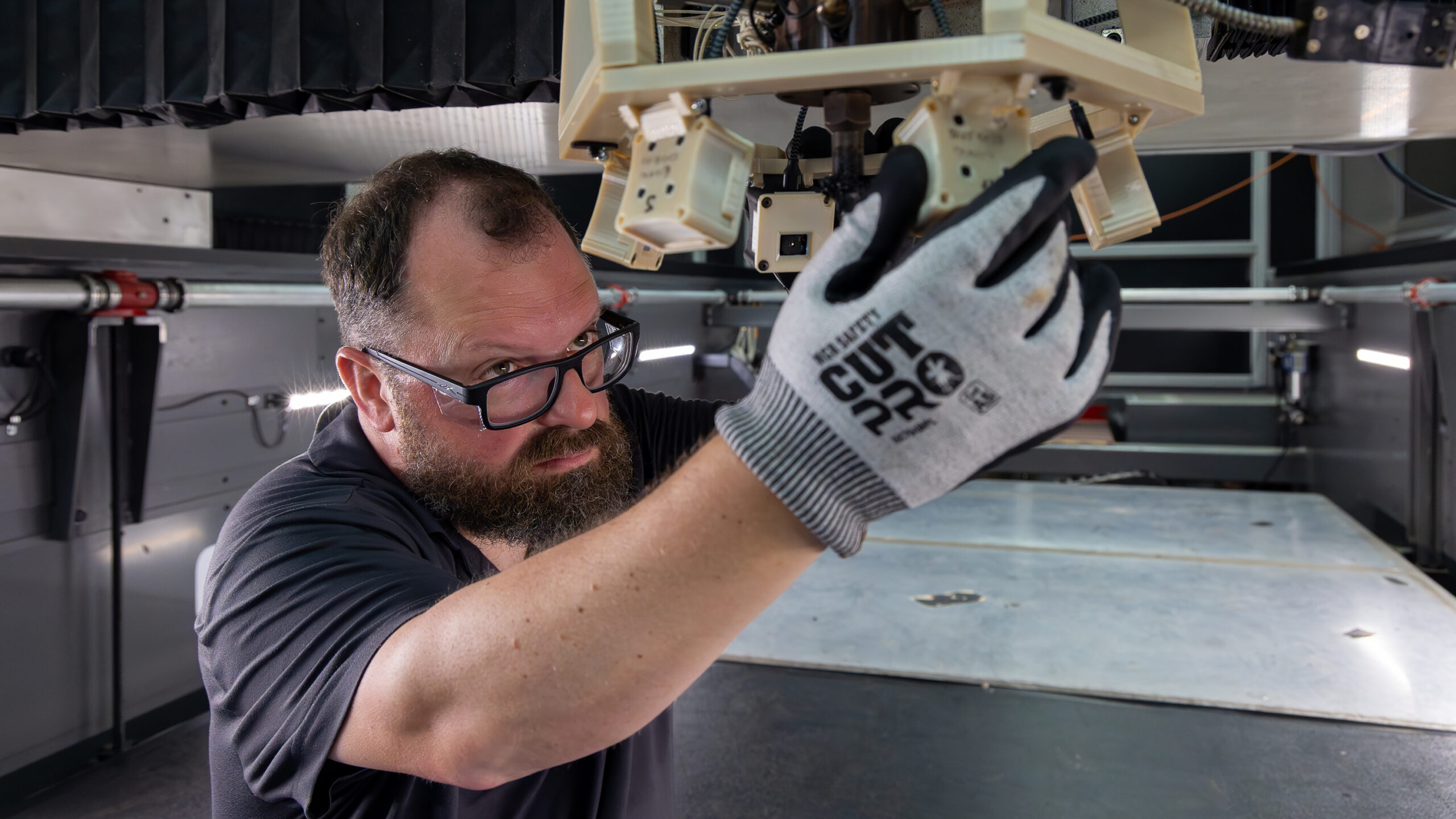
ORNL’s Kris Villez adjusts thermal cameras incorporated into a big-area 3D printer before testing a new technology for error recognition and correction. Image courtesy of Alonda Hines/ORNL, US Dept. of Energy.
Lead Researcher Kris Villez explained,
“There is a vast opportunity space to make these machines more intelligent and more responsive. In the end, we’d love this to work like baking bread: You set the oven temperature, put in your dough, and return when the timer goes off to see if it’s done. You don’t have to monitor the oven temperature in real time throughout the baking.”
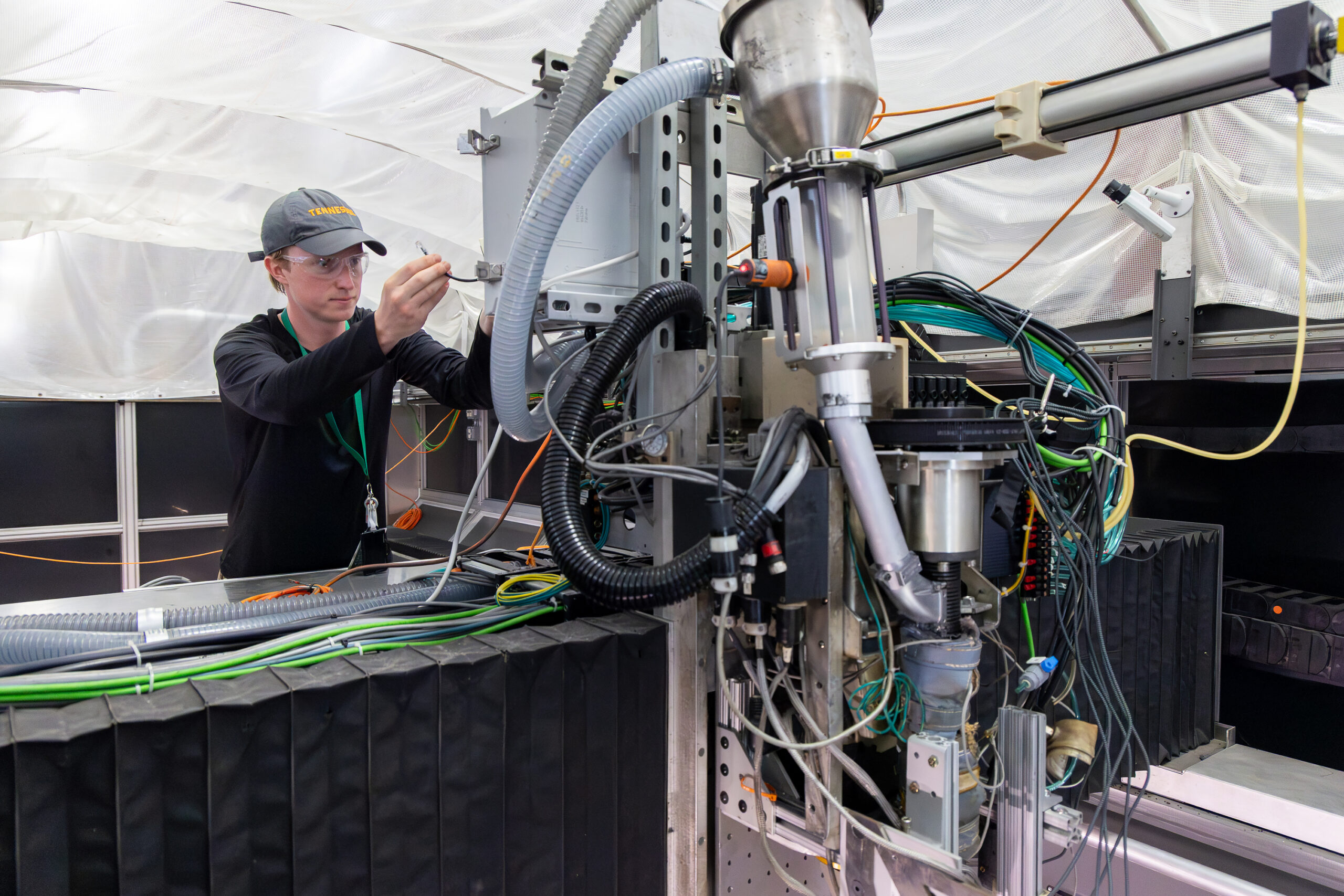
University of Tennessee graduate student Chris O’Brien sets up the 3D-printing apparatus at ORNL to test a new sensing and control technology for creating large objects with plastic composite. Image courtesy of Alonda Hines/ORNL, US Dept. of Energy.
Large-format polymer 3D printing has been important to the US for decades now. On the one hand, it can be used for formwork for construction. But it can also be used to make many boats very quickly and at much lower cost than is done now. In 2021, we said that,
“The U.S. is almighty on the sea, but automated construction of autonomous sea vehicles can negate American marine power. The U.S. has hundreds of billions tied up in its carriers, and a fleet of polymer UUVs or surface vehicles could negate this force. In the Persian Gulf, Iran already routinely menaces much more sophisticated U.S. ships with its polymer gunboats.”
We looked in May of 2022 at the potential and importance of 3D printed drone boats, and we said then that this capability being offered to Ukraine,
“A curiosity in a laundry list of weapons given to Ukraine, this may seem like small beans compared to Howitzers and other weapons. However, this is an incredibly significant move. Russia should have near-unrestricted access and dominion over the Black Sea. However, due to the specter of these drones, it does not. It would take many millions of dollars in funds and thousands of individuals on conventional ships to make Russia worry about its position in the Black Sea. It would also take many months of training for Ukrainian sailors to learn to operate the high-tech Christmas trees that are contemporary frigates and other warships. It would take many years to build new surface ships as well. With conventional weapons, there is no solution or path to a solution whereby Ukraine would be a credible threat to the Russian Navy. But, with these new expendable drones, it is.”
The first Russian ship was sunk in October of that year, and now Ukraine has disabled around a third of the Russian Black Sea fleet with these drones. Ukraine, a country without a meaningful Navy, has come close to neutralizing the once mighty Russian fleet in the Black Sea with these drones. So 3D printed drone boats are not a luxury or a cool science project, but a war-winning weapon. And as we argued in the Hilux for the Seas post recently, the US could and indeed must turn to 3D printing to develop these drone boats at scale.
At the same time, 3D printing of formwork for energy installations, as well as for missiles and hypersonics, is very important. A lot of the roads towards a functioning US military go through 3D printing, and getting large-format polymer right seems more important every day.
The growing connection between drones, defense, and additive manufacturing will be a major focus of the Additive Manufacturing Strategies UAS: The Present and Future of Drone Manufacturing event on June 30, 2026, where industry leaders will discuss how 3D printing is reshaping drone production and deployment.
Subscribe to Our Email Newsletter
Stay up-to-date on all the latest news from the 3D printing industry and receive information and offers from third party vendors.
Print Services
Upload your 3D Models and get them printed quickly and efficiently.













You May Also Like
HG Laser & The Overlooked Sources of China’s Advanced Manufacturing Strength
Chinese state-owned enterprise (SOE) HGTech (Huagong Tech) just reported that it achieved record revenue in H1 2026, amounting to just over $1 billion. The company credited the results to success...
3D Printing Financials: $28M in China, U.S. Deals and a Metal AM Comeback
Money continues to go into additive manufacturing (AM). From a $30 million raise for a Chinese metal 3D printing company to new funding for naval AM and a European company...
AMAsia Pulse: AM Investment Picks Up Across Asia-Pacific
The first half of September brought fresh investment and expansion activity across Asia-Pacific’s additive manufacturing sector. China’s Xinjinghe secured funding for an aerospace AM hub, South Korea’s Lincsolution outlined plans...
3D Printing Market Hits $4.48B After Six Straight Quarters of Growth
The additive manufacturing market continued to grow in the second quarter of 2026, adding another quarter to what is becoming a much more consistent expansion for the industry. Worldwide revenue...