Himed and Adva Cera to Work on Bioceramic Medical Devices


Himed, a provider of calcium phosphate and hydroxyapatite, has partnered with Adva Cera. Adva Cera is not a spell to make you stop moving in the Harry Potter universe, but rather a 3D service that uses equipment from Lithoz and Prodways Ceram to produce ceramic parts. The two firms will work on calcium phosphate spine, orthopedic, and dental implants.
Himed and Adva Cera, from idea to implant, are using Himed’s Bioceramics Center of Excellence and Adva’s 3D printing capabilities. This kind of setup could be very beneficial since it lets people quickly lean on existing expertise in medical device manufacturing using additive. Amnovis does a similar thing for metal additive, and this can mean that a lone inventor could get her device made by one partner.
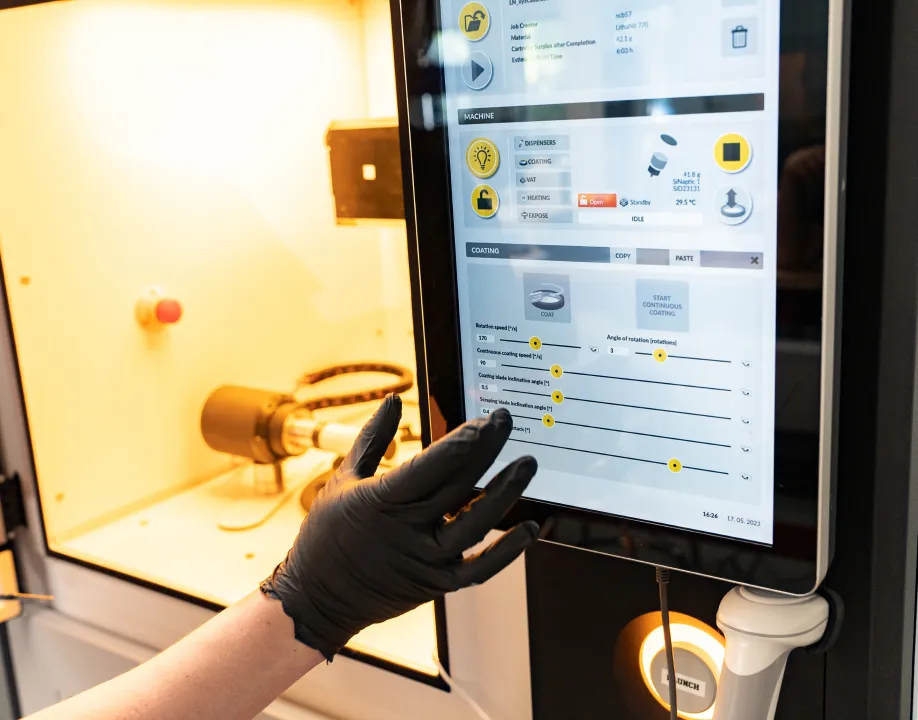
The companies think that this approach will be faster and make going from initial articles to production implant easier. This kind of approach also fits into an asset-light model whereby, instead of building up a lot of 3D printing expertise and investing in machines, small and lean firms instead focus on inventing, funding, and marketing a device. This concentrates the needs of an implant firm and allows them to excel where they need to be rather than trying to be a mini DeDuy.
The duo hopes that they can make calcium phosphate implants that bond to bone. The company believes that “ceramic additive manufacturing has now matured to the point where complex internal geometries with controlled porosity and intricate lattice structures can be printed reliably, and the market is responding.”
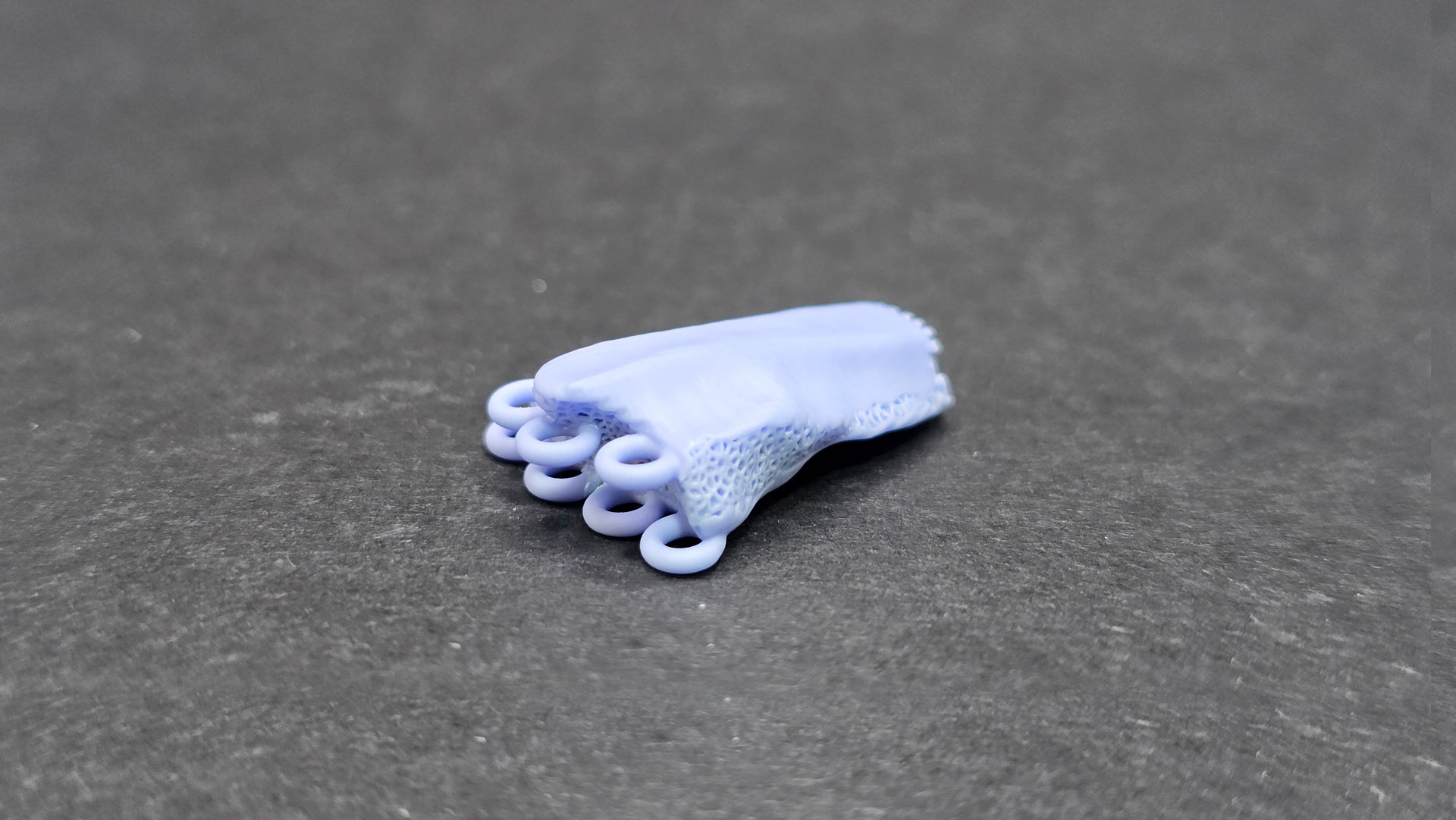
A 3D printed bioceramic implant manufactured using calcium phosphate materials. Image courtesy of Himed and Adva Cera.
Himed President Craig Rosenblum stated,
“Customers who come to the Bioceramics Center of Excellence now have a clear production pathway. Partnering with Adva Cera means two leading companies can move customers from a fully optimized 3D-printed implant design into qualified, production-scale ceramic additive manufacturing with the regulatory rigor that goes with it. Their serial production capabilities will allow our customers to bring an exciting new generation of implants to patients.”
In addition, Adva Cera President Hugh Roberts explained that,
“Himed has built something immensely valuable for the medtech industry: a center where customers can develop bioceramic technologies with the help of a highly specialized team of material scientists. We’re excited to be the scale partner for that work. Our team is set up for serial production of advanced ceramic components, and our near-net-shape capabilities mean parts go quickly from the build plate to finished components. Partnering with Himed is a natural fit.”
This is a good development for the industry. More systems integrators, facilitators, and platforms for scaling will all be force multipliers for our industry. Only a very few companies can afford to adopt additive entirely on their own. For some firms, going solo is worth the effort, as it would let them stay ahead of the competition in rocket engines or speed up time to market in the long run. But for other firms, the money and time spent learning additive would be better spent elsewhere. For these firms, good partners that can help them qualify, industrialize, and scale are a godsend. And for the rest of the industry, these firms can bring in more money, approvals, and parts than many people working on their own. It would be smart for firms to explore being a similar partner for defense, marine, energy, and medical firms.
Ceramics is a growing area. There are many possibilities enabled by hard, light-resistant ceramic materials. And calcium phosphate and hydroxyapatite are materials that are familiar to the body. Bone or near-bone implants, or some kind of regenerative, cell seeding, or permanent implant, could very well work better in these materials. Matching the strength and elasticity of bone, in all its different forms, is difficult, of course. But Cerhums’ 3D printed grafts show that an awful lot is possible. As we saw at the Ceramitec show, recent progress by Sinto Ceram, Lithoz, and others is pointing to an expanding and growing number of applications in medical implants. Himed and Adva Cera could be well placed to capitalize on these in the years to come.
Subscribe to Our Email Newsletter
Stay up-to-date on all the latest news from the 3D printing industry and receive information and offers from third party vendors.
Print Services
Upload your 3D Models and get them printed quickly and efficiently.













You May Also Like
3D Systems Gets Further $9 Million For US Air Force Metal 3D Printing Project
3D Systems has received an extra $9 million under the Air Force’s Large-Format Metal 3D Printer Advanced Technology Demonstrator program. In 2023, the firm already got $10.8 million from the...
Lyten’s Graphene Filaments Power Modovolo’s US-Made 3D Printing Platform
Drone manufacturer Modovolo has selected Lyten as the primary filament supplier for its industrial 3D printing platform, a move the companies say will strengthen U.S.-based manufacturing for aerospace, defense, and...
Inside Decibel’s Collaboration with SKYLRK at Coachella 2026
There’s a version of Coachella most people never see. Not the stage. Not the crowd. Not even the music. It’s everything built around it: the spaces where artists host, brands...
3D Printing News Briefs, July 25, 2026: Distribution, Board Game, & More
We’re starting with material distribution news in this weekend’s 3D Printing News Briefs, and then on to outer space. We’ll end with a story about an ancient board game. Read...