Croom Medical Signals Potential for 3D Print Diversification in Nuclear Fusion

As international interest in reshoring continues to mount, the additive manufacturing (AM) industry clearly has key advantages to offer suppliers scrambling to develop alternatives to traditional supply chains. One of those advantages is the ability of AM services providers to move more easily into new areas of production than is typically the case for legacy contractors.
An intriguing example of this was just announced by First Light Fusion, a UK-based, University of Oxford spin-out working to commercialize nuclear fusion energy. First Light Fusion collaborated with Croom Medical, an Irish medical device manufacturer specializing in leveraging AM to produce components from tantalum, to scale up the output of its flagship pressure amplifier.
According to First Light Fusion, the results of the project — which were published in The Journal of Applied Physics — demonstrate that the 3D printed amplifier matches the performance of conventionally manufactured counterparts when undergoing mechanical shock testing. Furthermore, the 3D printed parts were also cheaper and faster to produce than machined amplifiers.
Meanwhile, First Light Fusion conducted the first two-stage light gas gun tests on the 3D printed amplifiers, which the company expects to publish later this year. In addition to fusion energy, First Light Fusion’s research has implications for other strategic sectors, including space and defense.
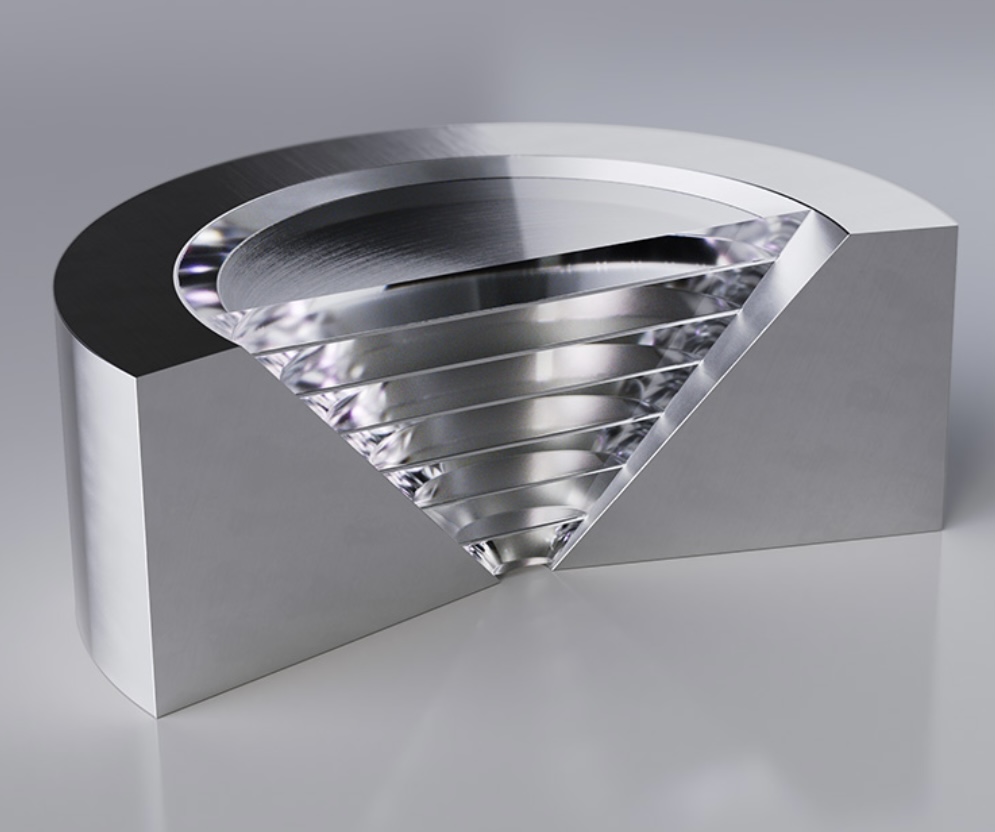
A cross-sectional view of the company’s Pressure Amplifier. Image courtesy of First Light Fusion.
In a press release about First Light Fusion’s deal with Croom Medical to 3D print tantalum pressure amplifiers for nuclear fusion energy, Martin Gorman, the Lead Shock Scientist at First Light Fusion, said, “3D printing tantalum gives us a reliable, cost-effective path to mass-produce our amplifiers — unlocking wide-ranging applications outside of inertial fusion, from materials research to defense.”
Shane Keaveney, Croom Medical’s R&D Manager, said, “We’re proud and excited to support First Light Fusion by applying our recently launched TALOS [AM] platform to such a groundbreaking application. Tantalum is an exceptionally challenging material to process, and this project demonstrates how our technology can unlock its full potential in cutting edge applications where high-performance in extremely high-pressure environments is required.”
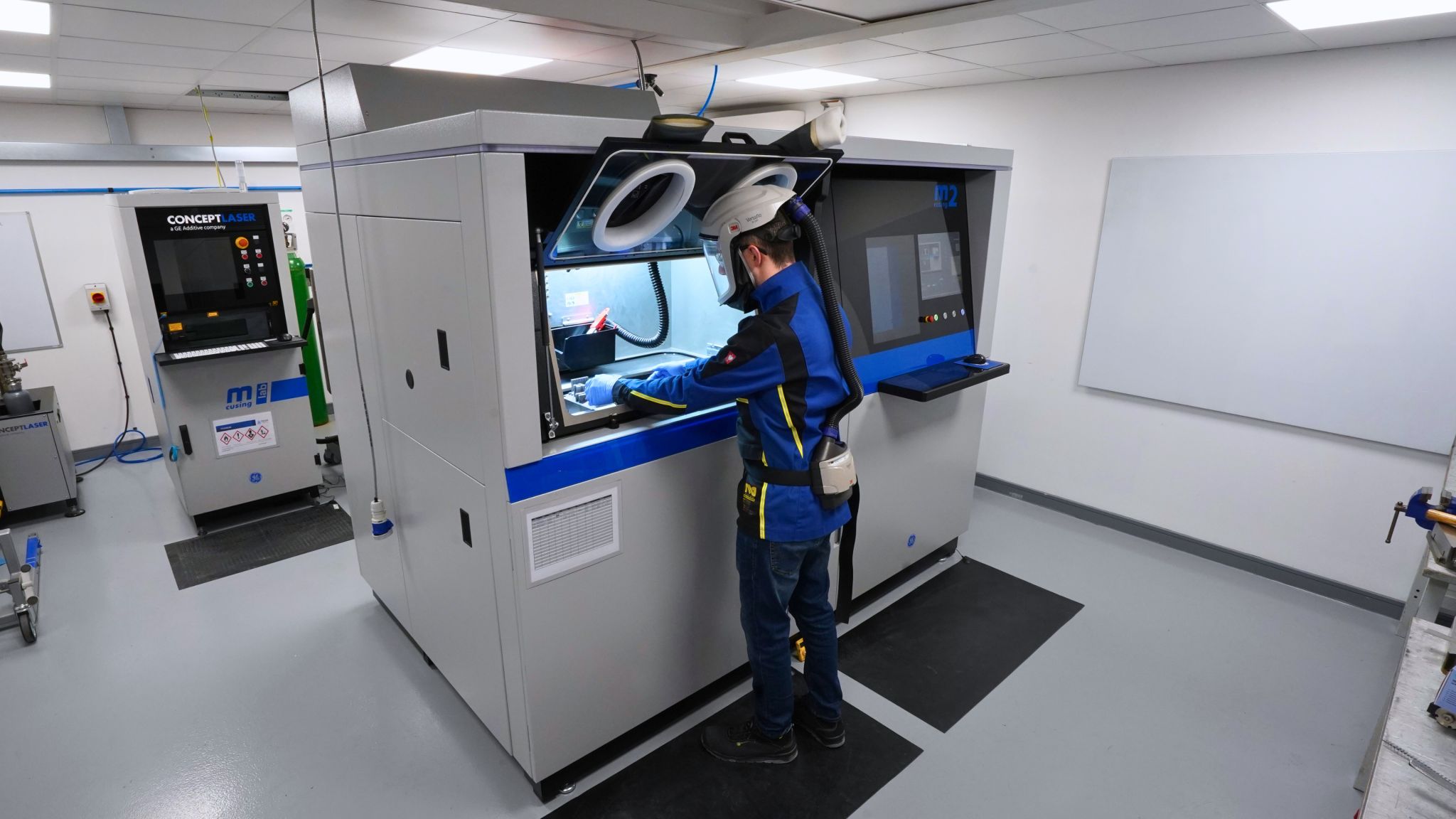
3D printing tantalum. Image courtesy of First Light Fusion.
One significant angle to the deal between First Light Fusion and Croom Medical is that Croom’s proprietary TALOS process incorporates the M2 from Colibirium Additive, which has been in use for years around the world, giving TALOS-optimized parts a clear advantage when it comes to attempts to scale in a distributed manufacturing context. Along those lines, Croom Medical could license part files to any operator of an M2 machine, enabling aerospace and medical manufacturers to become manufacturers for energy supply chains, the automotive sector, and other industries.
In fact, it’s hard to imagine a reshoring strategy that hinges on metal 3D printing succeeding without some such scenario playing out over and over again, use-case by use-case. As Nikon Advanced Manufacturing CEO Hamid Zarringhalam shared with me in a recent interview, metal 3D printing is now in a position to enable fabless manufacturing — currently a technique that’s more or less solely associated with the semiconductor industry — to spread to general industry.
From a long-term perspective, perhaps even more so than the defense sector, the energy sector needs that capability to become commonplace, making the use case developed by First Light Fusion and Croom Medical all the more relevant. That is especially the case given all the new energy applications that are in the works all over the planet. If Croom Medical can do this for nuclear fusion, there’s no reason why the same can’t be done for solar, wind, geothermal, and all the other non-fossil sources that the global economy will increasingly rely on in the decades ahead.
Subscribe to Our Email Newsletter
Stay up-to-date on all the latest news from the 3D printing industry and receive information and offers from third party vendors.
Print Services
Upload your 3D Models and get them printed quickly and efficiently.













You May Also Like
Kickstarter is Testing the Next Wave of Desktop 3D Printing
3D printers are raising serious money again…on Kickstarter, that is. Over the last few months, a new group of 3D printer campaigns has attracted millions of dollars and thousands of...
Stratasys vs. Bambu Lab: What’s Really Behind the $27.6M Patent Verdict?
Editor’s note: This is Part 1 of a two-part series by Xu Fanglei examining the technology and patent issues behind the Stratasys-Bambu Lab dispute. Part 1 looks at the U.S....
Bambu Lab and SUSAN FANG 3D Print for London Fashion Week
At London Fashion Week, some of the more unusual pieces on the runway came from 3D printers. Chinese fashion designer SUSAN FANG presented her Spring/Summer 2027 Air-Illusion collection at the...
Stratasys Wins $27.6M in Patent Case Against Bambu Lab; Bambu Challenges Verdict
Update, September 21, 2026: This article has been updated with a statement from Bambu Lab responding to the verdict, along with additional information about the company’s ongoing patent challenges against...