Stratasys and Shin-Etsu to Offer Silicone for Origin DLP 3D Printers


Stratasys announced that P3 Silicone 25A, developed and produced in collaboration with Japanese firm Shin-Etsu, has been commercially launched and is now available for the company’s Origin DLP systems. Shin-Etsu, a $21 billion revenue chemicals giant, has made the high-performance material available only for the Origin. The material comes with a flame retardancy and biocompatibility rating, and is available to order in EMEA and APAC; it will come to the Americas later in 2025.
Stratasys Chief Business Unit Officer, Rich Garrity, said,
“The proliferation of additive manufacturing in production environments depends on specialty materials that perform to the standards of traditional methods. Our collaboration with Shin-Etsu delivers precisely that. P3 Silicone 25A gives manufacturers the flexibility of additive with the trusted performance of true silicone—backed by repeatable results and real-world data.”
Shin-Etsu’s Makoto Ohara, the Head of Sales and Marketing Department S4 for Shin-Etsu Silicones Europe B.V., stated,
¨We are excited and proud to be working with Stratasys, the global leader in additive manufacturing, to bring 3D printable true silicone to market and grow together. P3 Silicone 25A combines excellent physical properties and long-term reliability with detailed and precise printability. It can rightly be considered ‘true silicone’ in both composition and performance.”
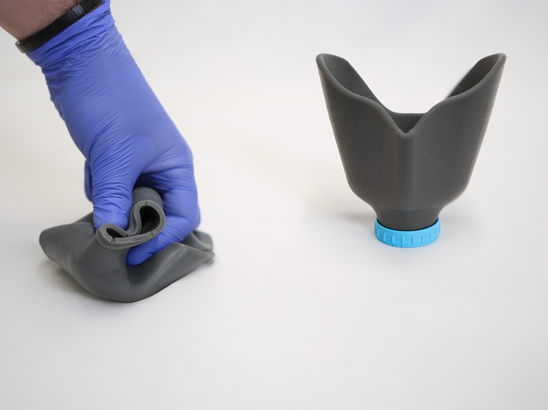
The companies believe that “seals, gaskets, vibration dampers, wearables, and soft-touch components” will be the in-demand parts made with this material. Spectroplast, RLP, Chromatic, Carbon, Henkel, and others have been working on new 3D printing processes and materials for more durable elastomeric parts over the past years. The lack of good elastomeric parts has really held our industry back, and these developments are very positive ones for us.
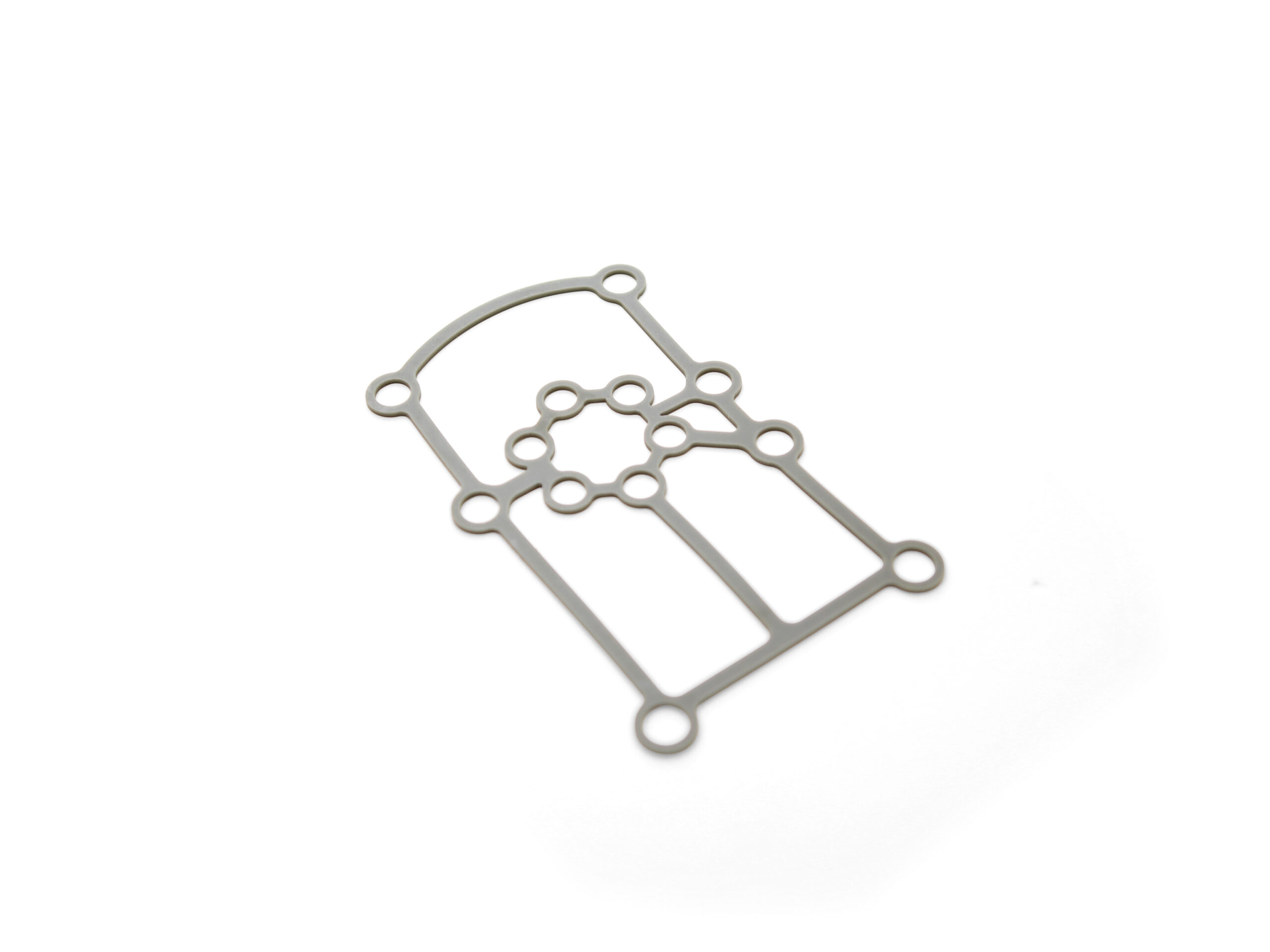
Industrially, things like grommets and vibration dampening have a huge potential for 3D printing. There are a lot of aging, difficult to make, low-volume parts like that. These parts, on tanks, planes, boats, trains, and cars, age and need to be replaced continually. Beyond this, there are a lot of uses for these types of parts in industrial machinery, machine tools, and production lines. Wearables would seem like a great application as well. We’ve been waiting for custom wearables for a while now, but prototyping alone could sustain some business. I for one think that vibration dampening itself could be a potentially significant market for us. Custom vibration-damping components could really outperform those made for many other different uses. You could also retrofit customized devices to many machines as well. Gaskets and seals are almost omnipresent industrially, and replacing them is often a question of not having the right part at the right place. There are tens of thousands of different shapes and sizes of these things. Wait times for these parts are long, while storing them will incur costs. Someone really should make an on-demand 3D printed silicone gasket and seals service. These parts are often tiny, but are essential for the correct functioning of lots of critical systems. By making the right part without much in the way of lead time, a lot of downtime could be avoided. That could be a very valuable business. Beyond this, industrial customers will be curious to see if this is something that they can do profitably in-house.
By working exclusively with Shin-Etsu, Stratasys is really getting a nice boost here. This validates the company’s Origin ecosystem and leadership in materials. Shin-Etsu is trusting Stratasys’s volume here, and choosing this as a convenient path to market. The company could have also opted for an approach whereby it would have made the material available for different DLP systems, offering it to the market more broadly. Elastomeric materials and their applications are expected to grow in the coming years, making this a strategic move for both parties. We don’t yet know what the cost of the material is, which can be a major inhibitor to further growth in the aforementioned elastomeric applications. I hope that it will be relatively low enough that it could force Formlabs, Henkel, Carbon and others to really up their game and make even more attractively priced materials available. This is great news for our industry, and I really hope that we can see continued investment in silicones and elastomers in the coming years.
Subscribe to Our Email Newsletter
Stay up-to-date on all the latest news from the 3D printing industry and receive information and offers from third party vendors.
Print Services
Upload your 3D Models and get them printed quickly and efficiently.













You May Also Like
Kalogon Wants to Patent Its Variable Density Wheelchair Cushion
Kalogon has brought the Verro to market. This is a 3D printed wheelchair cushion, made with vat polymerization technology. Using a variable density lattice, it hopes to give wheelchair users...
Pogačar & Fairlight Cycles Show Us Low Cost 3D Printed Components for Bikes
There has been a lot going on in 3D printing for bicycles over the years. The most successful implementation so far is in bicycle seats. Carbon 3D printed seats are...
3DPOD 295: From Product to Design at Carbon, with Kristi Eveland Smith
Kristi Eveland Smith started as a competitive soccer player before moving into consulting, operations, and 3D printing. She’s now Vice President, Design to Production at Carbon 3D and has been...
AMS 2026 in Photos: Snow, Songs, and Serious Conversations
AMS 2026 may have been altered by flight delays and snow-covered streets, but once you made it, the energy felt anything but frozen. This year’s Additive Manufacturing Strategies, which wrapped...