U.S. Navy Lab Uses 3D Printing to Reduce Tooling Lead Time By Over 90%


The F-35 Lightning II Joint Program Office (JPO), responsible for life-cycle management of the key fifth-generation joint strike fighter (JSF) system used by the U.S., its allies, and its partners, recently put in a request to the Naval Air Systems Command (NAVAIR) Fleet Readiness Center East (FRCE) for 2,000 O-ring installation tools, a hand tool that helps install rubber seals (O-rings) into precision aircraft components without damage. A two-person team from FRCE’s Innovation Lab began attending to the request right away, starting by deciding which of the lab’s additive manufacturing (AM) capabilities was best suited to the task.
Jeremy Bunting, Lead Engineer at the Innovation Lab, thought that the O-ring tool would be a good fit for digital light processing (DLP), so he and Ken Murphy, a technician at the lab, printed out a test batch of 20 to be assessed by the F-35 Lightning Support Team’s local representatives, as well as the JPO. Some adjustments to the design were made, the support team ran tests on the batch to ensure they were mission-ready, and once they were satisfied, Bunting and Murphy got to work on the final product.
In less than two weeks, Bunting and Murphy printed all 2,000 tools on the Stratasys Origin One DLP machine, which is less than 10 percent of the estimated six-month lead time that the job would have taken via the traditional procurement process. The Innovation Lab also delivered some of the tools directly to the Marine Aviation Logistics Squadron 14 (MALS-14), FRCE’s neighbor in Cherry Point, North Carolina.
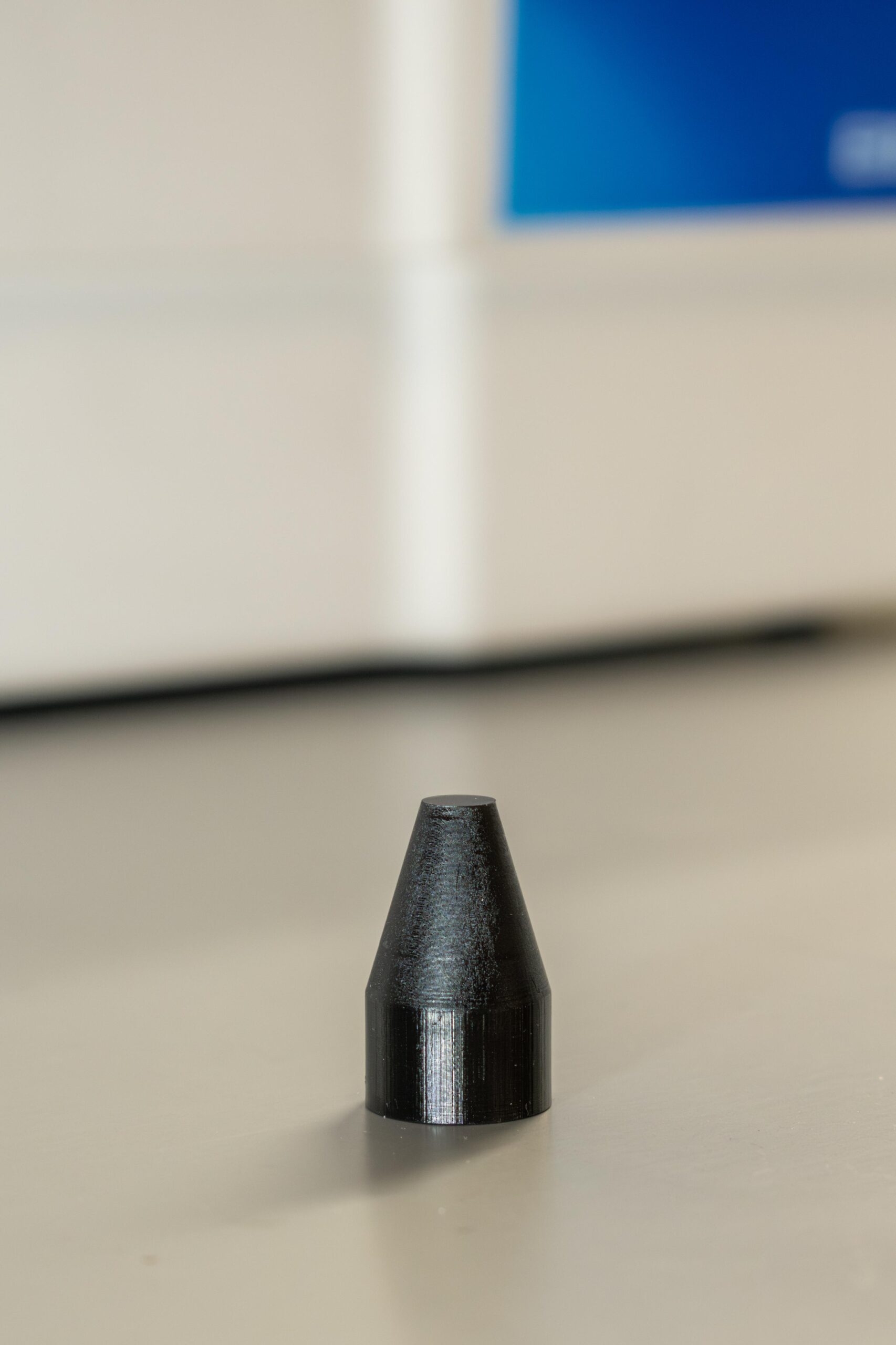
A 3D printed O-ring installation tool produced at FRCE’s Innovation Lab using the Stratasys Origin One.
MALS-14 Production Control Officer Captain Jason Moore told NAVAIR, “These types of efforts lead to expeditious capabilities, rapid fielding and sustainment, and increased aircraft and mission readiness for all warfighters and show the potential of how a more robust [AM] capability with aerospace applications can continue to benefit the service. This is a win-win for FRCE and the end-users.”
Bunting said that the raw materials used in this order were close to the entire 2024 output for the Innovation Lab, explaining, “This job was unusual because of the quantity, but the Innovation Lab does jobs like this every day. The Innovation Lab exists to be quick-turn and solve problems, to be very agile with [AM]. So this job was unique in terms of the quantity and how we were able to leverage this newer technology, but in terms of our day-to-day business, it was just what we do.”
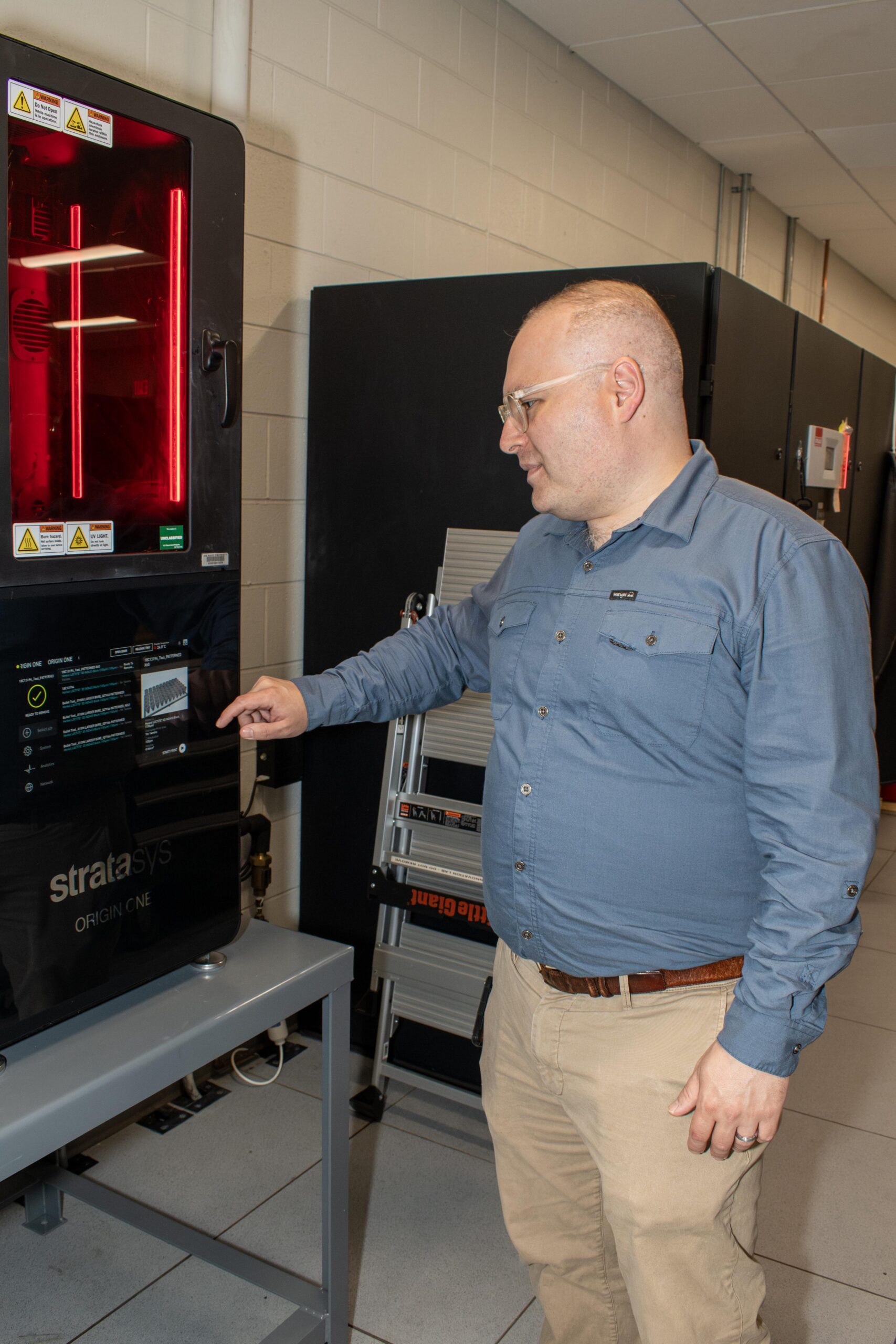
Jeremy Bunting, Lead Engineer at the Innovation Lab.
I don’t think it’s unreasonable to expect that the quantity of this order will also quickly become commonplace for the Innovation Lab and other similar organizations across the Department of Defense (DoD). With every such successful example of on-demand production enabled by AM, the DoD’s logistics support personnel are helping to build the argument that more and more of the U.S. military’s procurement needs can be met with AM.
The next big leap forward in this long-term trajectory would entail the uptake of DoD’s AM capabilities by relevant manufacturing operations serving the commercial sphere. That possibility became all the more realistic with the news recently that, in the 2026 defense budget, the U.S. House of Representatives has proposed a Commercial Reserve Manufacturing Network, which would allow the DoD to tap into excess civilian production capacity for surge demand.
In order for such an effort to be successful, organizations like the FRCE would need to share best practices with qualified manufacturers, especially regarding advanced manufacturing processes like AM, on which DoD manufacturers tend to be farther ahead when compared to their civilian counterparts. A lot of moving pieces would need to be synchronized for this potential to become a reality; however, case studies like this one do a great deal to help move the needle.
Images courtesy of NAVAIR.
Subscribe to Our Email Newsletter
Stay up-to-date on all the latest news from the 3D printing industry and receive information and offers from third party vendors.
Print Services
Upload your 3D Models and get them printed quickly and efficiently.













You May Also Like
3D Printing News Briefs, August 22, 2026: Polymers for CubeSats, Animal Mobility Devices, & More
We’re starting with defense news in this weekend’s 3D Printing News Briefs, before moving on to polymers for CubeSats and 3D printed prosthetics. We’ll end with a story about engineering...
Nikon Advanced Manufacturing Looks to the Next Frontier for AM: Space
Every kilogram sent into space comes at a cost. So engineers have spent decades finding ways to make spacecraft lighter. The next frontier will be producing some of the parts...
Amaero Builds U.S. Metal Powder Capacity for Additive Manufacturing
For metal additive manufacturing (AM) to grow in the United States, companies need more than printers. They also need a reliable supply of the powders that go into those machines....
AMPulse Asia: 6,500-Printer Farm Leads APAC Manufacturing Expansion
The first half of August brought a wave of factory plans, plant openings, and qualification work across the Asia-Pacific additive manufacturing market. Highlights include a RMB 200 million print farm...