Killer 3D Printing Applications: Tool Voids and The Hidden Opportunity in Tool Storage


Sometimes, nothing is the product. Hand tools, electric tools, factory tools, surgical tools, gardening tools, hobbyist tools, firefighter tools, and many other specialized tools can be found all over the world. Storing and organizing these tools could be a significant opportunity for the 3D printing market. As the working population ages and many countries can not find enough workers, efficiency, ergonomics, organization, and speed will become more important.
Shadow Boards
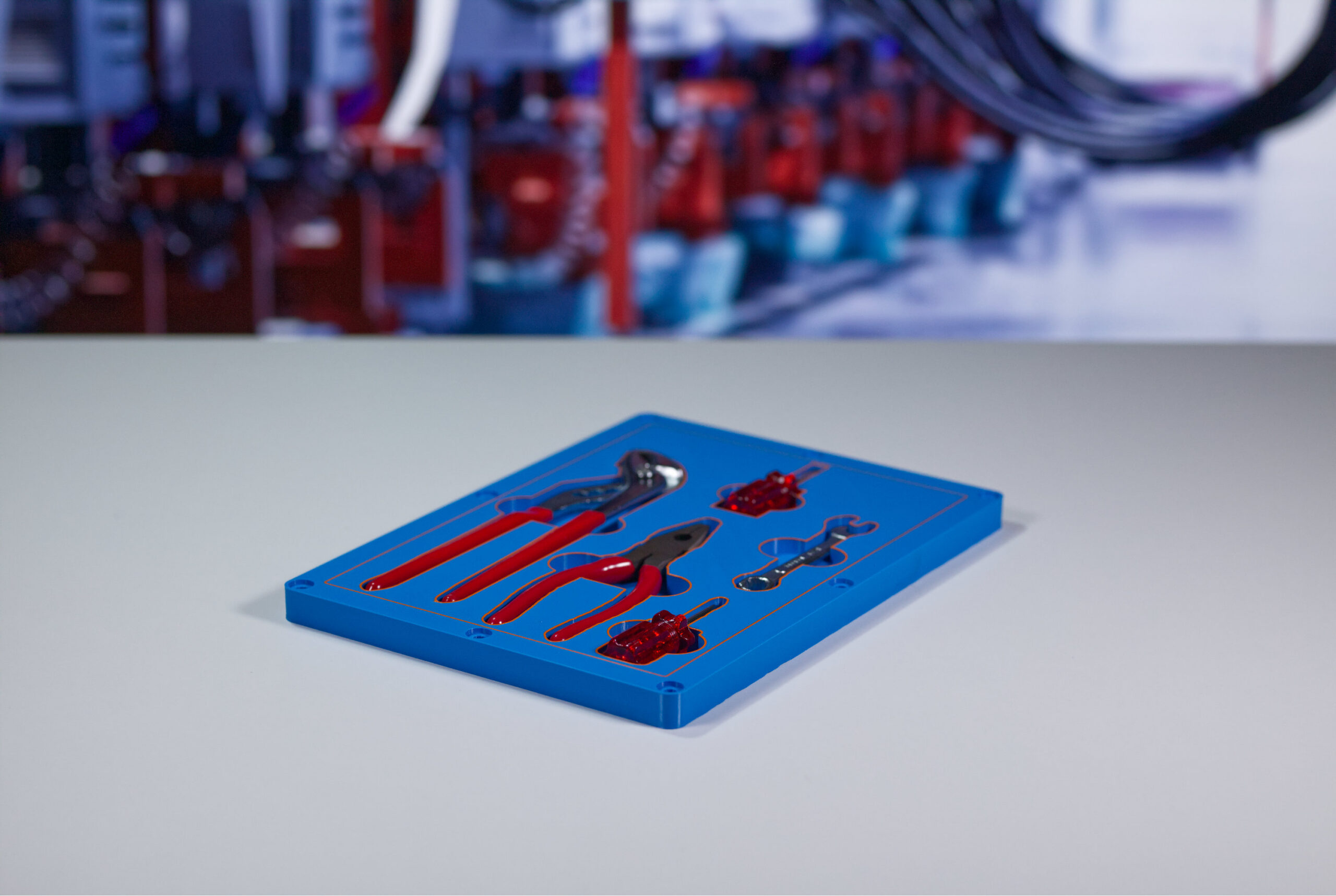
Custom shadow board insert designed to organize and track hand tools in a workshop environment. Image courtesy of Trickle.
Trinckle offers a tool that will turn images of tools into shadow boards. That is a handy and quick way to make your own foam board. Foam boards or shadow boards are places where you can specifically place tools in a place made for them. You can have a shadow board on a wall, in a drawer, in a case, or more. Workplaces could be fitted out with them, or workers could have different boards for different operations. Some could be cut from foam with a box cutter, while others could be made with laser cutting or 3D printing.
With 3D printing, you can easily make shadow boards just like the regular kind. High-quality tool brand Gedore has a foam configurator; indeed, many of the industry- or task-specific kits they make come prepackaged in the foam that you can use to place them in a bigger tray or cabinet. The company is a proponent of the 5S method, which promotes organized and tidy workshops. Beyond saving time and preventing tool loss, this is also a critical safety practice. In any workshop, you can knock over a tool that falls on you or trip over something. And in aerospace and other areas, you absolutely can not leave a tool behind. So these foam boards and inserts are not just pleasing on the eye, they’re important. They can also lock people into your tool system and promote sales generally.
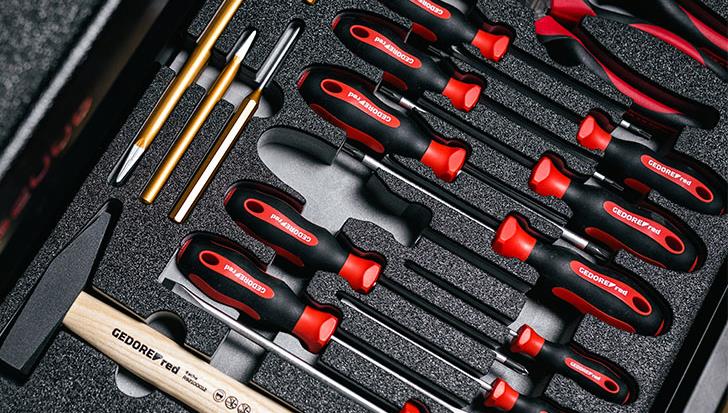
Foam tool insert system from Gedore designed for organization, safety, and fast tool access. Image courtesy of Gedore.
Kits and Cases
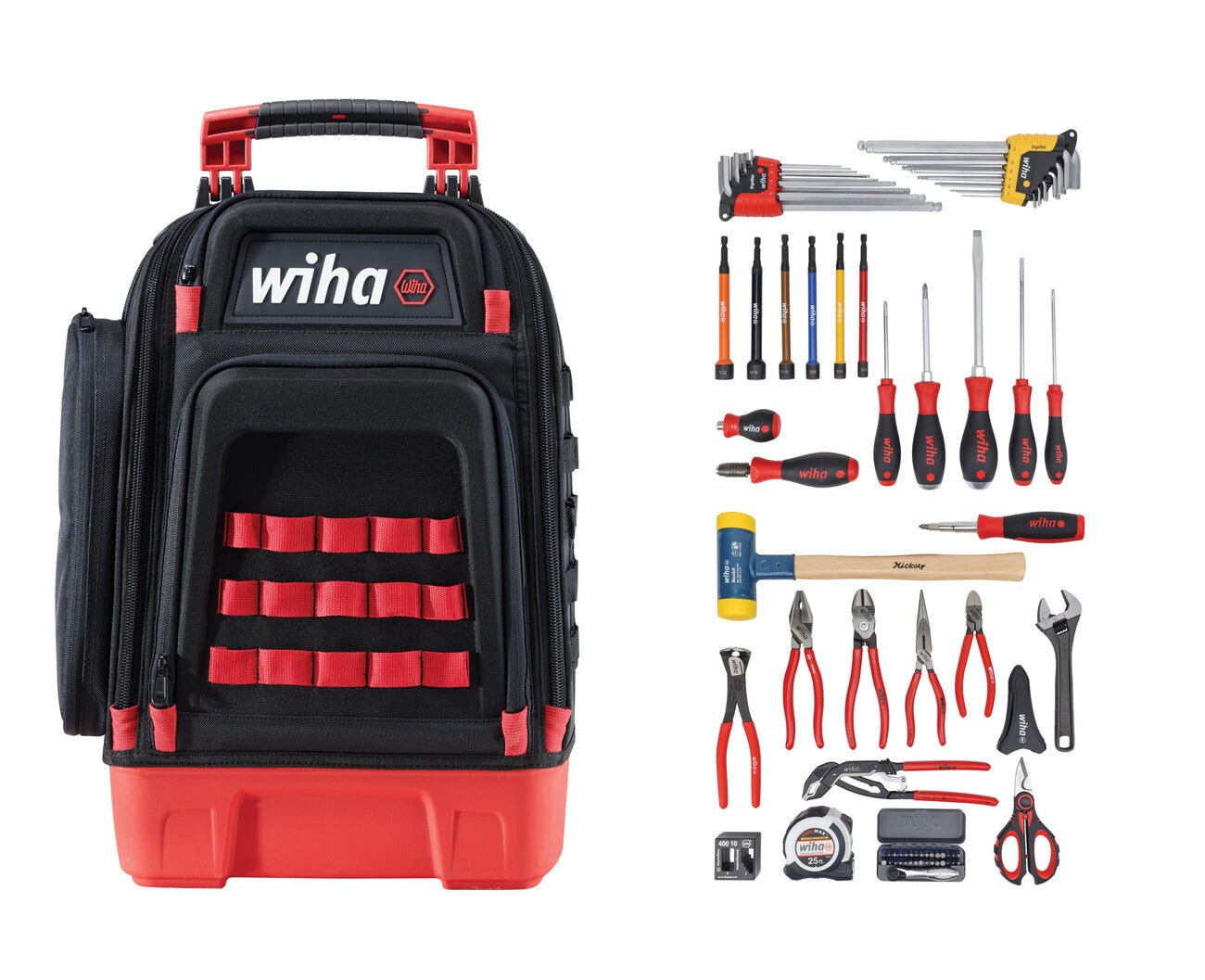
Wiha electrician toolkit and backpack system designed for mobile repair and industrial work. Image courtesy of Wiha.
But you can do more: you can make custom boards that you can take to the job site, the car, or a specific operation. Now it’s important to note that storage is already a big part of the tool business. People pay thousands for fancy Snap-On tool drawers, for example. New electricians or plumbers often buy kits like this one from Stahlwille or this e-mobility kit from Knipex. An apprentice, student, or new graduate can start their professional career with a case stocked with the most common tools they need. A wonderful gift, a good investment, and for Stahlwille, a great way to make someone a lifelong fan.
Wiha offers excellent backpacks and pouches for electricians and industrial MRO, as well as specific ones for installing electric vehicle chargers. Wera sells super handy kits that are perfect for work in the home or as a repair person, giving you the most common tools for bathrooms or heating systems, for example. Hazet has tool sets for things like hybrid and electric vehicles. Wera also has the excellent ToolCheck, a case with a mini ratchet and screwdriver paired with bits and sockets. Cimco probably makes the world’s best electrical equipment and has cases centered on these tools.
Explosive Ordnance Teams have extensive kits for the different bombs they deal with. There are tool kits for wind turbine inspectors or specific operations in a car mechanics shop. For dentists and oral surgeons, kits for particular operations let you have everything in one place. Complex surgeries can come with kits that contain tools, guides, and implants. Some kits have a strong poke yoke element, letting you see all the tools in order, step by step, along with the guides and implants in order as well.
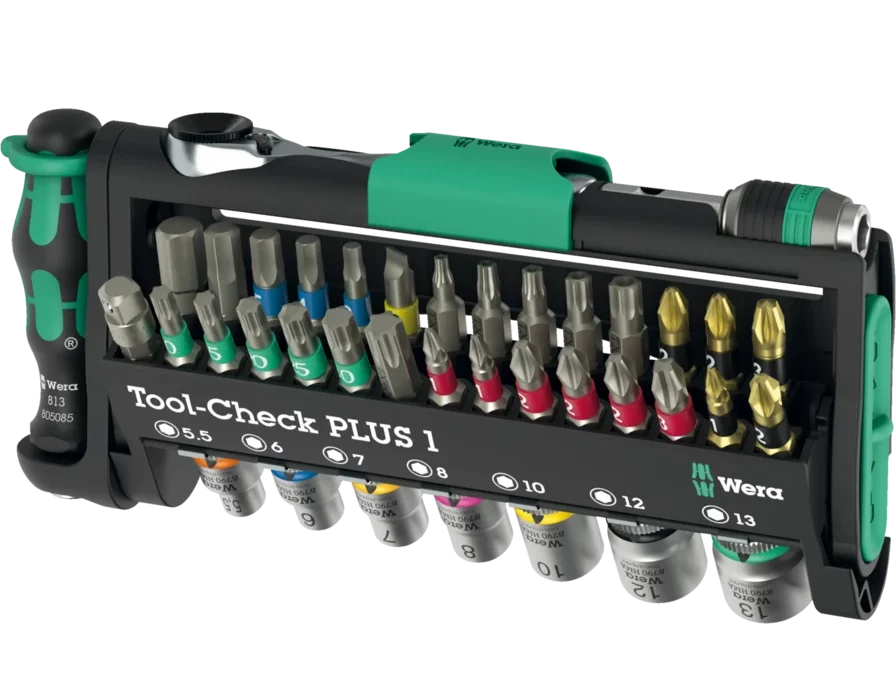
Wera Tool-Check compact ratchet and bit kit designed for portable repair and maintenance work. Image courtesy of Wera.
Power Tools
But whereas in the hand tool market there is a profusion of kits, electronic tool companies have made kits a central part of their businesses. I’m pretty sure that it all began with Festool. The German wood-centric manufacturer of high-quality tools was always about making workers safe and saving them time. Something that unites other high-quality companies such as Fein, Bosch, Hilti, and Makita. If you care about safety, worker time, and ergonomics, you’re going to make the drill safer. And then you’ll look beyond the drill to the dust workers breathe in and how they store their kits.
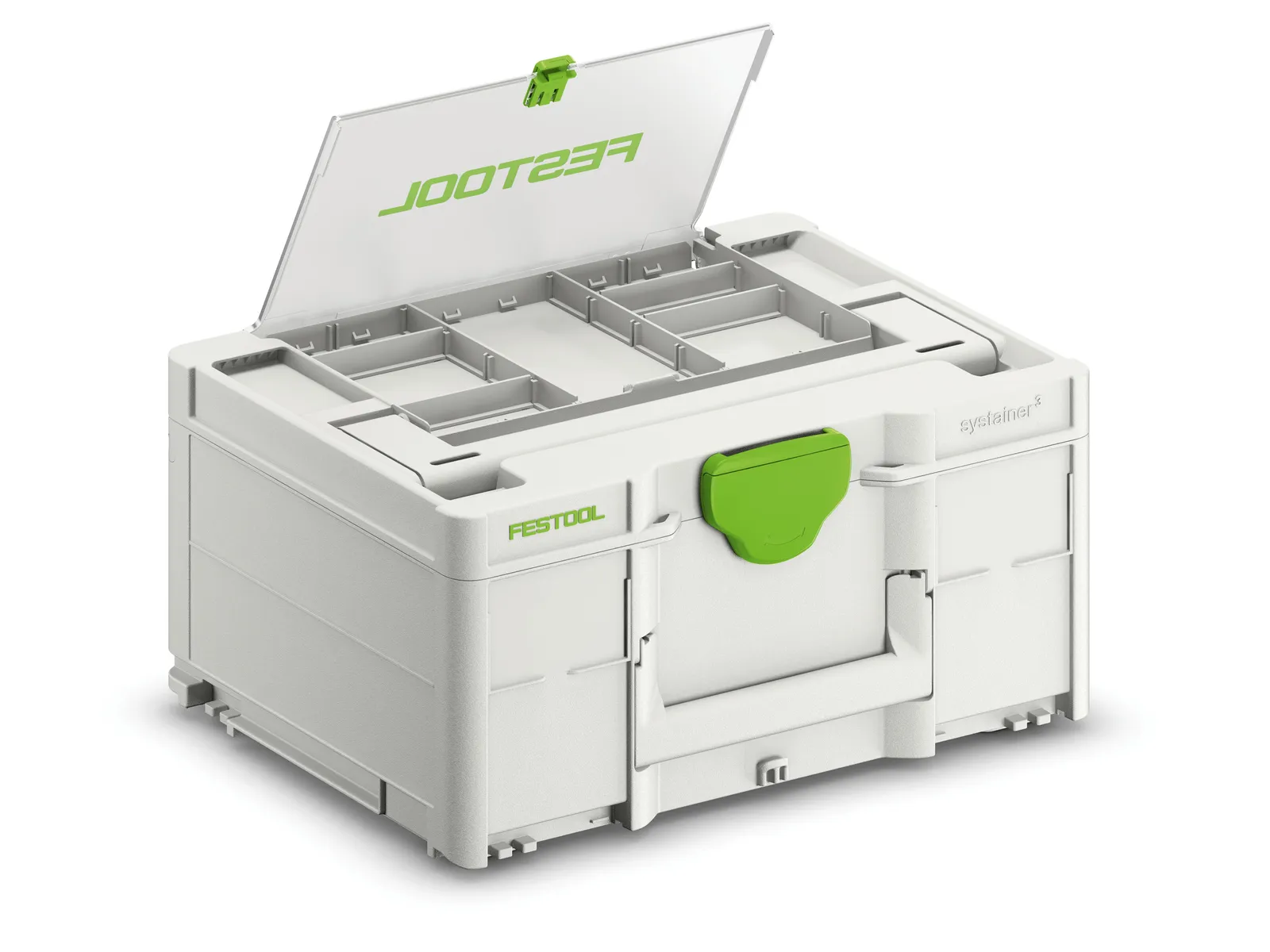
Festool Systainer storage box system used to organize tools, accessories and job-site workflows. Image courtesy of Festool.
Festool’s Systainer system family, made by a dedicated subsidiary of the same family-holding company, is a massive part of the firm’s offering. I guess that, on one level, the company found that people who like making cabinets also like organized storage, but there are myriad ergonomic and time benefits, as well as longer tool life and increased safety. The Systainer lets you click together vacuums, toolboxes, and more into one deployable unit. The high-quality boxes are relatively affordable (some of the hand tool brands sell similar boxes for twice as much). In addition to enabling easy storage, the system makes it easy to carry the firm’s dust extraction system parts to where you need to work, helping you work more safely. Since many of Festool’s tools come with integrated dust extraction, this compounds a key advantage the company has long pursued. So the tool container becomes a key part of making the worker safer and building on strengths to compound Festool’s specific advantages.
Standards (kind of)
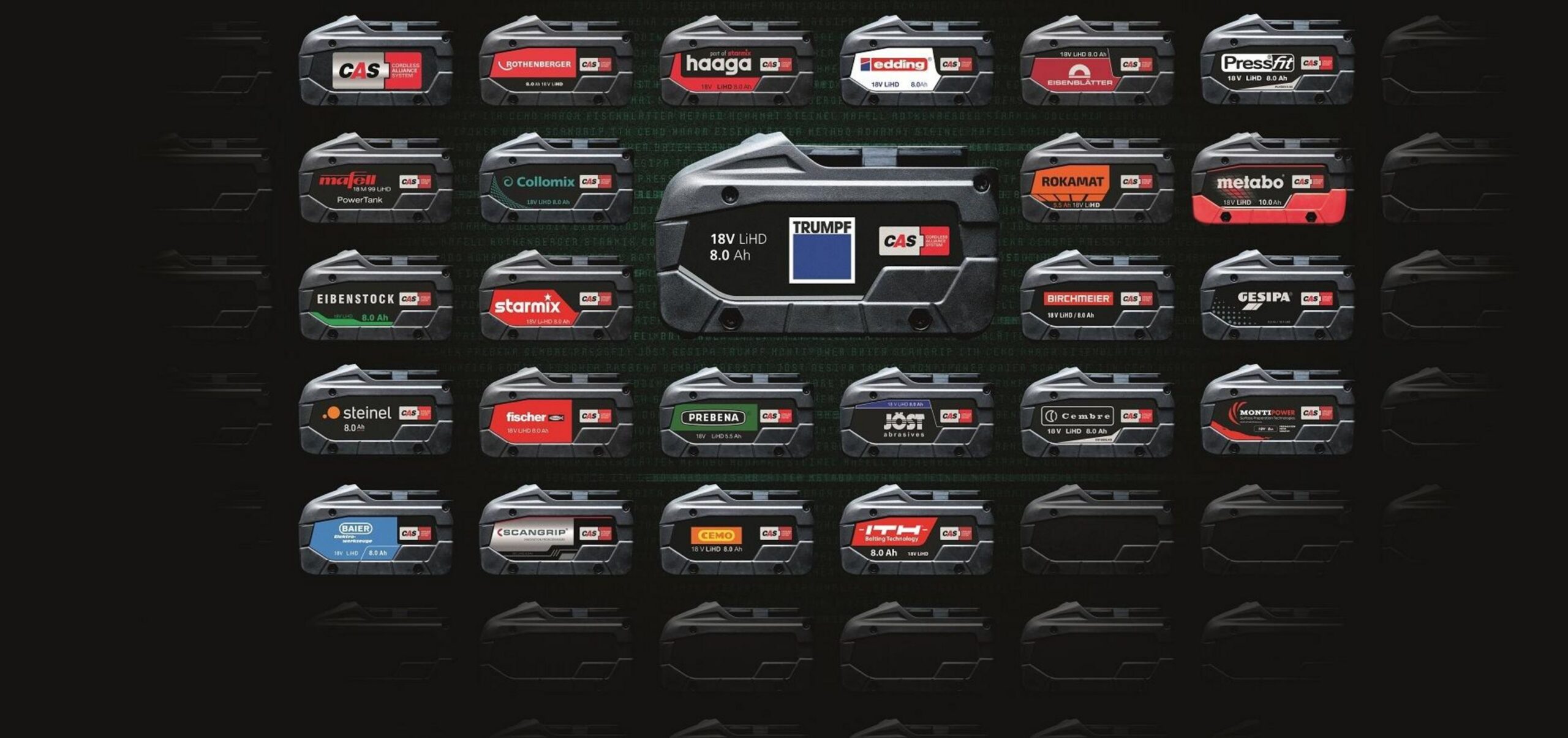
The Cordless Alliance System (CAS) battery platform connects tools from multiple industrial brands through a shared battery ecosystem. Image courtesy of CAS / Metabo.
As soon as the advantages of Festool’s strategy became apparent, everyone fell over themselves to work on better box systems. Bosch, the huge car components firm, turned to making electric tools to save itself in a downturn a 100 years ago. The spark plug and electronic systems giant is now also a huge maker of power tools. It partnered with van organization firm Sortino to create the L-Boxx a box standard used by Bosch, Fein, Wera, Wiha, Gedore, Knipex and other smaller more specialized firms.
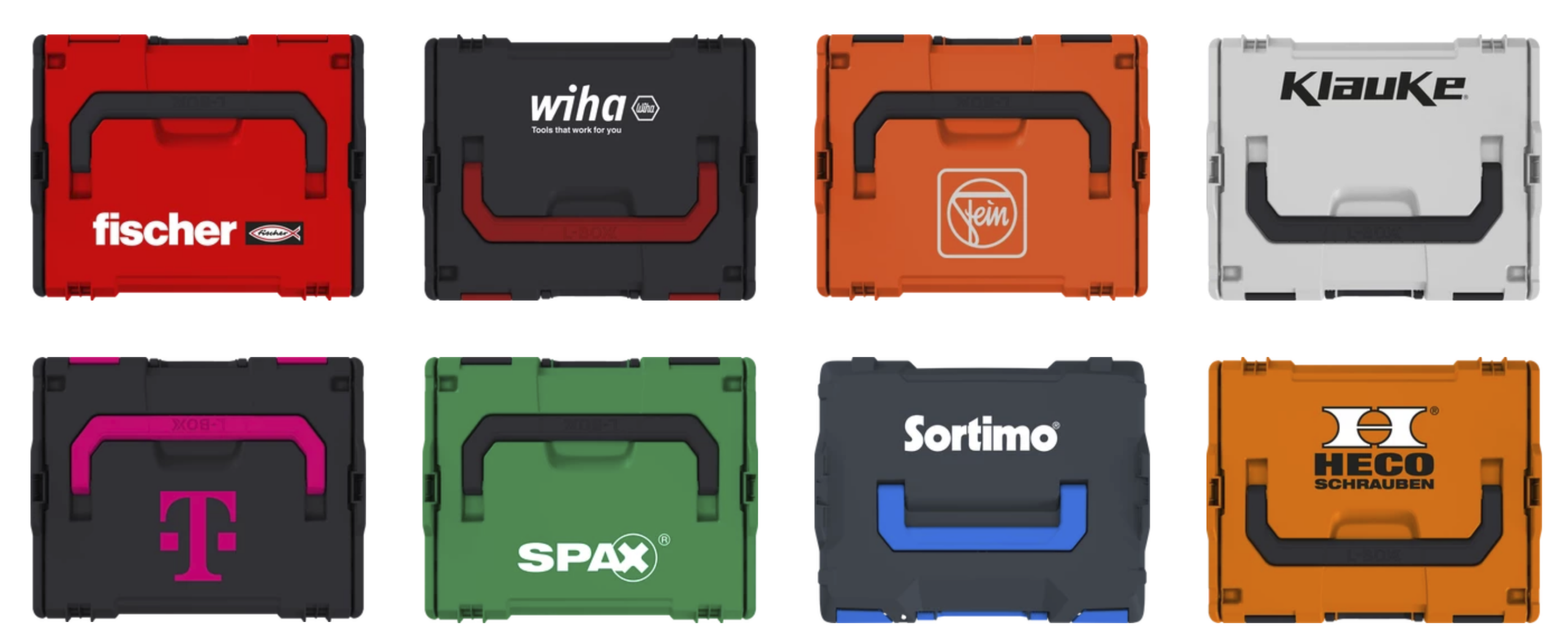
Different tool brands use the shared L-BOXX storage system developed by Sortimo and Bosch. Image courtesy of Sortimo.
This allows these firms to use a standard to make their tools interoperable with others. Similarly, many power tool companies compete on a battery platform. Investing in one platform means you’re more likely to buy new tools from that platform, so you don’t have to buy all-new batteries or carry lots of different batteries and adaptors everywhere. Makita and Ryobi have had 20- and 30-years of backward compatibility with batteries, which has built loyalty to these quality workman and entry-level home-use brands, respectively.
The CAS battery alliance, created by Metabo, unites companies such as the specialized Swiss cleaning tool company and Eibenstock a high-quality manufacturer of diamond core drills as well as drywall power tool specialists Mafell and rather unexpectedly erstwhile 3D printing firm and industrial laser and cutting giant Trumpf. I had no idea that they made power tools. An incompatible battery alliance, AMPshare, unites a lot of the same firms and is powered by Bosch, while another incompatible one, also powered by Bosch, is Power for All.
I like Bosch’s power tools, but the company has changed its batteries numerous times, and the idea of being involved in multiple alliances is just silly. Sillier still is Stanley Black & Decker, which has the Craftsman, DeWalt, and Black & Decker brands, whose batteries are often incompatible even when the tools are very similar. Milwaukee has multiple incompatible battery standards within its own brand, while its owner, TTI, only offers incompatible batteries from Ryobi, Milwaukee, and Rigid. Here, as well, old Milwaukee designs are used for Rigid and Ryobi tools, but the resulting batteries are incompatible. Again, the batteries are meant to engender loyalty and keep you inside one system with expanding tools, so this kind of stuff is crucial to the market dynamics of the tool business.
Screwing
Now, at this point, you’re probably thinking, Joris, thank you so much for this deep dive into tool brands and the surprising pseudo-standards they operate under. It may be the right moment for me to disclose a slight obsession with tools. But know that this is nothing like the obsession tool firms have with real and pseudo standards. Imagine always having to make your screwdriver meet the standards, yet still work better than other screwdrivers. Imagine always dealing with bolts that are slightly better than competitors’, so you don’t round them — and then wondering if you should make your bits for everything, just your screwdrivers, just one family of screwdrivers, just wood, or also for electric drills and other people’s systems? There are pitfalls and opportunities everywhere.
Many firms, therefore, ultimately decide to lock customers into their own ecosystems as well as the fasteners. But there are companies such as Makita that seem to consistently act to favor customers. On the whole, the tool shed is a confusing mix of standards and incompatibilities.
Tool Time
What we can do with 3D printing is use it as a universal connector set for all tools. We can make connectors, adaptors, and other tools that connect different tool systems. Now, please don’t do this for the batteries; this seems like a recipe for disaster. Aside from this, we can make many connectors to link bits and different systems.

Festool-branded 3D printing filament promoted through the company’s “#MyPrintedFestool” initiative. Image courtesy of Festool.
At the same time, we can make tool cases, tool inserts, shadow boards, and case insets for custom tool sets. Toolkits for the tools you have, regardless of the system or manufacturer. We can also make inserts for particular cases. So if you have a call out for HVAC repair or a junction box problem, you can have the right tool insert ready to go. Or you can take the empty insert and use it to collect all the necessary tools so you don’t forget one.
For bomb disposal teams or firefighters, we can give them cases for very specific events, uniting very different power and hand tools. We can also make cases optimized to keep tools safe in demanding environments. We can let you put your Festool drill in with your Wera hand tools, just like you want. We can include specific fasteners or organize the tools in the order that you use them.
A case could be all the screwdrivers, in order of use, for dismantling the MacBook Pro, or all the tools, in order, for opening and closing a junction box. Two inserts could ensure you take everything for that job. One insert could track the tools from beginning to end, while reversing the order helps you close everything up again.
If you’re an elevator mechanic servicing six main elevators, you could have six sets of bolts and bits for each elevator. On a ship, you can have inserts specific to servicing a particular engine or system. You can work with installation firms to make cases for HVAC technicians or boiler repair teams. You can make custom kits for one specific solar farm and another for the next one over.
If you always use the same drill, chuck, and bit, the enclosure might be optimized for that setup. Whatever tool journey you’re on, whatever you need, 3D printing the voids, inserts, and cases for the tools will suit your needs. We can organize your tools for life in the lab, in the shop, at home, or on the road.
Subscribe to Our Email Newsletter
Stay up-to-date on all the latest news from the 3D printing industry and receive information and offers from third party vendors.
Print Services
Upload your 3D Models and get them printed quickly and efficiently.













You May Also Like
50,000 Orders and Counting: EPlus3D & Chinese AM Services Provider Are Scaling Liquid Cooling Solutions for AI Servers
An under-appreciated story driving the additive manufacturing (AM) industry this year has been the divergence between what’s driving the market in China and what’s driving it everywhere else. Let’s start...
Additive Manufacturing Has a Major Growth Opportunity; Trust Will Decide Who Captures It
After years of overpromising, the next phase of AM growth will be won by companies that consistently deliver what they say. When I entered additive manufacturing in 2014, after 15...
Seven Trends Reveal What’s Next for 3D Printing at TCT Shenzhen 2026
TCT Shenzhen 2026 opened on October 14 in Hall 15 of the Shenzhen World Exhibition & Convention Center in Bao’an, and ran through October 16. The event brought together equipment...
AM Investment Strategies 2026 Sets the Stage for AMS 2027
AM Investment Strategies 2026 Nov. 5 · 12 p.m. ET · Free online event RESERVE YOUR SPOT ↗ A one-hour online discussion featuring some of the biggest names in 3D...