Farsoon Cuts Ribbon on 140,000-Square-Meter 3D Printing Facility

Farsoon Technologies (SHA: 688433), a leading Chinese manufacturer of laser powder bed fusion (PBF) printers, recently marked its 15-year journey with the grand opening of a new campus. The anniversary demonstrates a key moment of maturity in the larger Chinese additive manufacturing (AM) market, particularly in terms of PBF.

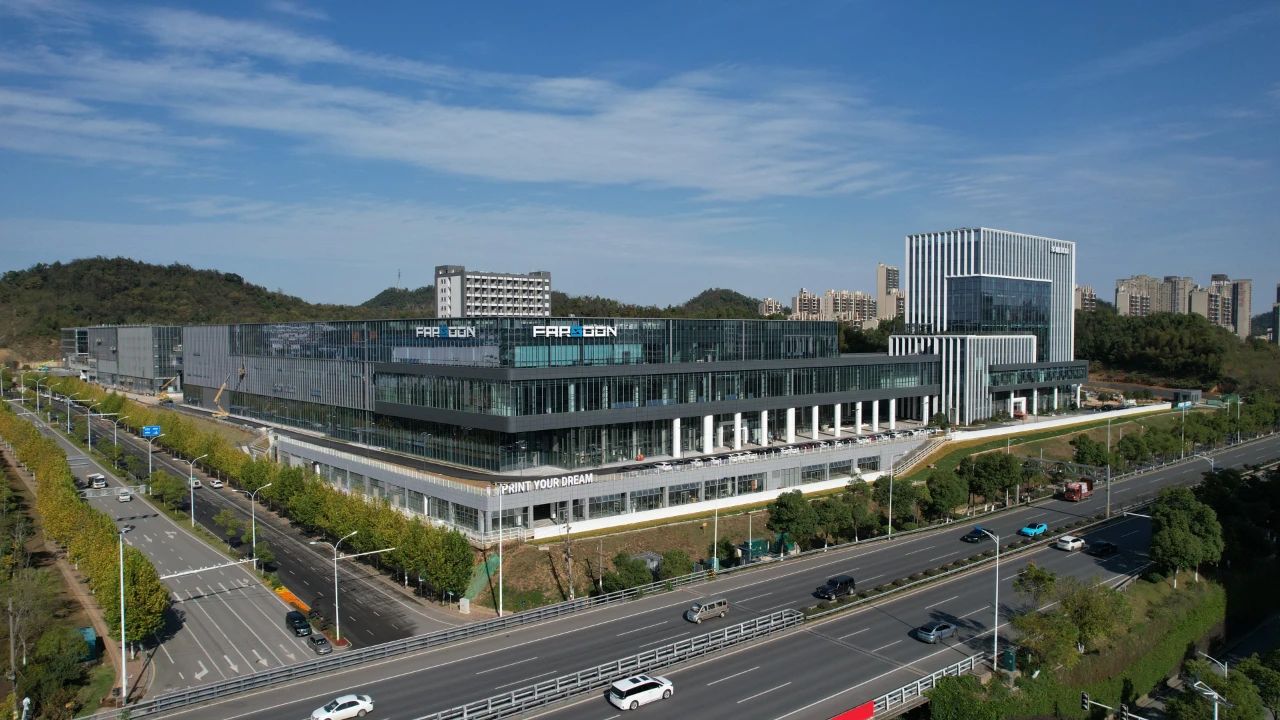
The celebration took place at Farsoon’s headquarters in Changsha, China, with over 200 guests from across the globe in attendance. This group included industry leaders, academics, customers, partners, investors, and media, who observed a ribbon-cutting ceremony, experienced guided tours of the new facilities, and participated in what was called the Additive Manufacturing Innovation Forum. Keynote speakers included representatives from the Colorado School of Mines, Siemens, CISRI New Materials Innovation Center, Jihua Laboratory, Headmade Materials, PHOTON Precision Manufacturing, and Farsoon’s R&D innovation team. Spanning 82,000 square meters, with a Gross Floor area of 140,000 square meters, Farsoon’s new campus features a large-scale industrial 3D printer production center, international innovation research hub, advanced R&D laboratories, and service production lines.
As significant as the achievement is for Farsoon, the company has seen increased competition a key Chinese competitor. PBF printer manufacturer Bright Laser Technologies (BLT) has been growing at an extreme rate, thanks in part to government support. In April 2023, BLT broke ground on a 163,200-square-meter facility, which already augmented 290,000 square meters in sites that were already built or under construction. The vertically integrated firm not only manufactures metal 3D printers, but produces powder and operates one of the world’s largest service bureaus, which includes Apple as a client.
In terms of financial performance, the two companies are also tight competitors. With a market cap of CNY 10.98 billion, Farsoon has a profit margin of 21.75%, with a return on equity of 9.98%. It also boasts revenues of CNY 629.7 million and net income of CNY 136.98 million, alongside a strong cash reserve of CNY 1.13 billion. BLT’s market cap is higher at CNY 12.963 billion. However, BLT’s financial performance lags behind Farsoon’s, with a profit margin of 10.62% and a return on equity of 4.02%. Nevertheless, BLT generates nearly double the revenues of Farsoon at CNY 1.22 billion, with roughly double the cash at CNY 2.37 billion. Notably, both companies are heavily investing in their growth, as indicated by their negative levered free cash flows, reflecting their aggressive expansion and development efforts.
The news of the ribbon cutting comes as the Western additive industry has finally begun to recognize the growth speed and strength of the Chinese 3D printing sector. According to “The State of Chinese Additive Manufacturing: Market Opportunity Brief” from AM Research, China’s AM market is expected to reach $8 billion a year in hardware sales by 2032. It’s no surprise then that the ribbon cutting was attended by leading names from the U.S. and Europe. And, while Formnext Chicago was cancelled, there’s no sign that Formnext South China, rebranded as Formnext Asia Shenzhen, will be.
Subscribe to Our Email Newsletter
Stay up-to-date on all the latest news from the 3D printing industry and receive information and offers from third party vendors.
Print Services
Upload your 3D Models and get them printed quickly and efficiently.













You May Also Like
AI Design and Point-of-Care Integration Headline ADDITIV Medical 2026
Medical additive manufacturing is expanding rapidly inside major healthcare institutions. In 2026 alone, hospital systems including Indiana University Health and Sheffield Teaching Hospitals launched dedicated point-of-care 3D printing facilities to...
GKN Aerospace’s UAV Demonstrator with 3D Printed Engine Avoids ITAR Regulations
The US CIA director recently made an unannounced visit to Moscow that has naturally raised much speculation, while the EU and NATO have now officially accused Russia of being behind...
The Business Case for 3D Printed Stents
A new 3D printed stent developed at New York University (NYU) does not look like the devices doctors typically use today. Instead of a simple tube, the prototype resembles a...
3D Printing Financials: 3D Systems, Prodways, and Align Build on Positive Momentum
The latest earnings from 3D Systems (NYSE: DDD), Prodways (EPA: ALPWG), and Align Technology (Nasdaq: ALGN) show that the 3D printing market continues to move forward. Some businesses are growing...