Artec Studio 19: New Software Introduces AI Photogrammetry


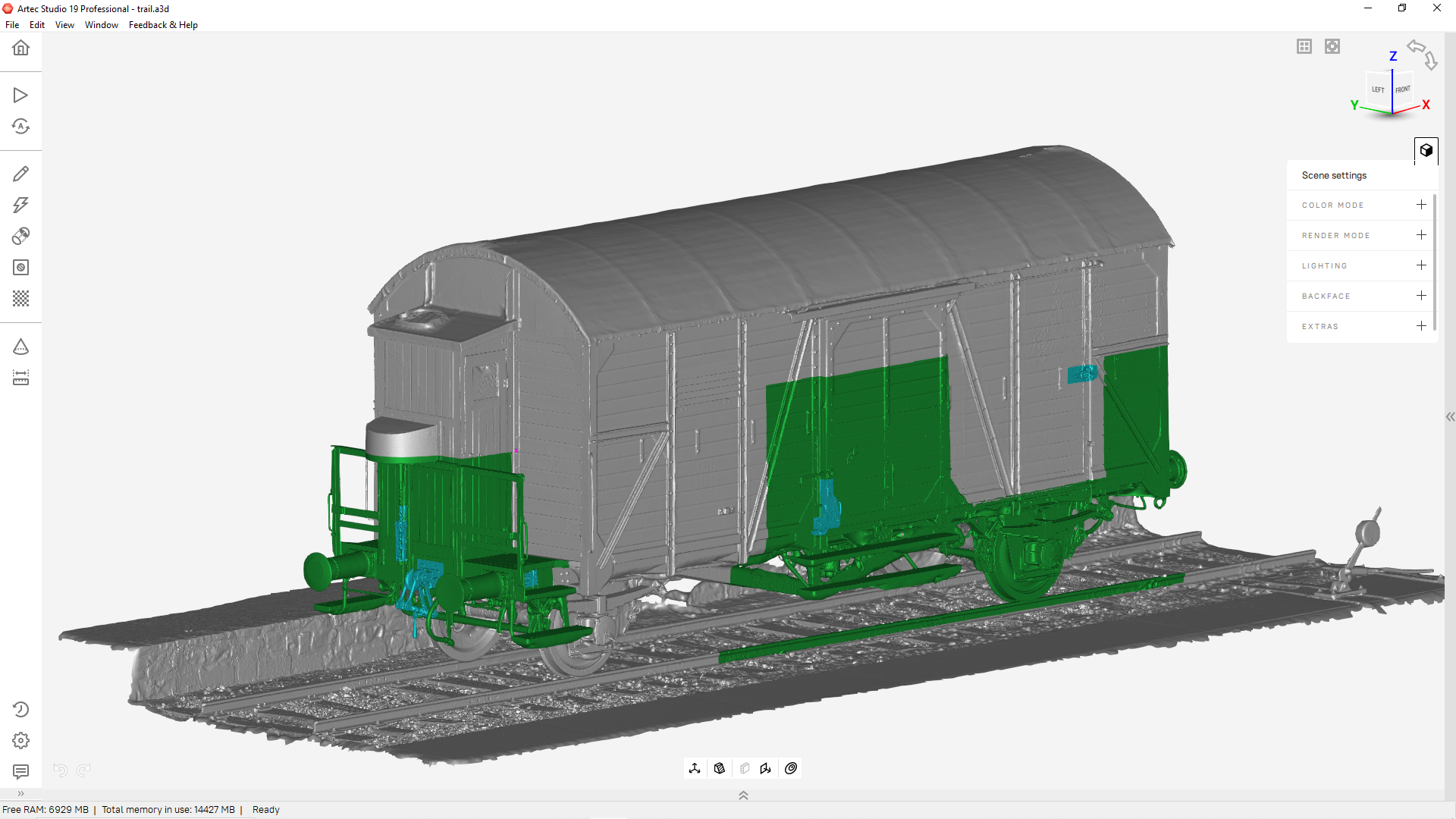
Artec 3D, the Luxembourg-based leader in 3D scanning solutions, has released Artec Studio 19, the latest update to its Artec Studio software. As with all of the company’s updates to its signature software platform, Artec 3D has aimed to make the user’s experience with the latest version of Artec Studio akin to “upgrading to a new scanner”.
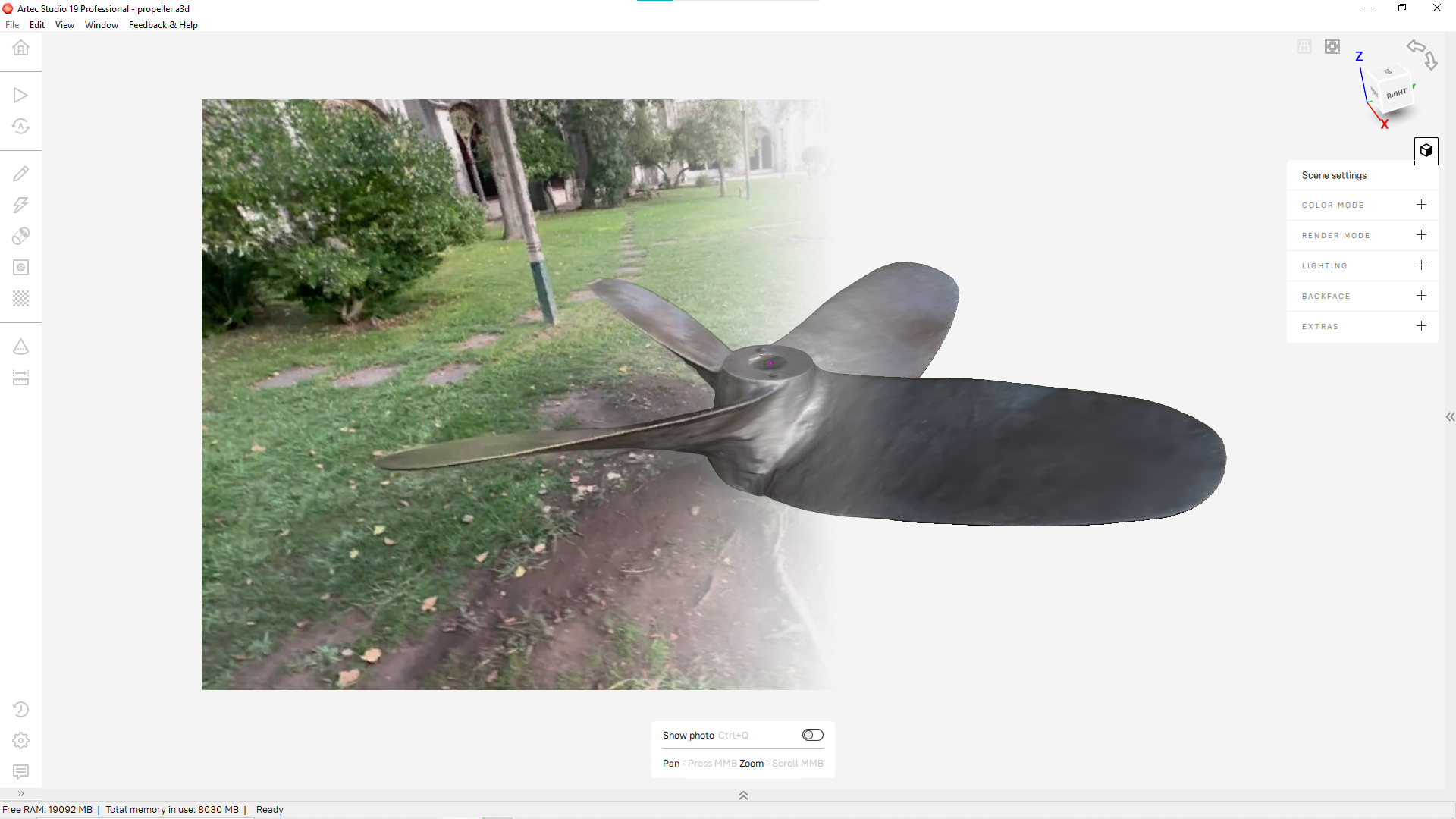
In fact, Artec Studio 19 has broadened the platform’s reach beyond users of 3D scanners, making the software usable for anyone with the ability to take digital photographs and videos, thanks to AI Photogrammetry. According to an NVIDIA blogpost, ‘photogrammetry’ is “the process of capturing images and stitching them together to create a digital model of the physical world”.
This means that users can upload 2D photographs and videos to Artec Studio 19, and the software’s neural engine will process those images into 3D models. Additionally, for images that are captured with 3D scanners, AI Photogrammetry enhances the details that are most difficult to capture, including black and shiny surfaces.
Attendees of Formnext 2024 in Frankfurt, Germany (November 19-22) can learn more about Artec 3D and Artec Studio 19 at booth G21 in hall 12.1.
In a press release, the company’s CEO, Art Yukhin, said, “Artec Studio 19 represents the next step in the evolution of our industry-leading software. With AI Photogrammetry and extensive new 3D modeling, reverse engineering, and quality inspections tools, AS19 empowers professionals and opens the door for anyone to explore the limitless possibilities of 3D technology.
“For professionals working in fields like reverse engineering, manufacturing, and CGI, it’s not just an invaluable workflow tool, it offers a reliable interim solution when 3D scanners are unavailable. At the same time, hobbyists can also use smartphones to create high-quality 3D models on the go.”
As I mentioned in a recent interview with Artec 3D’s CEO, widening the audience for 3D scanners should be a catalyst for increasing adoption of additive manufacturing (AM). With users who don’t even have 3D scanners now able to access the advantages of Artec Studio software, Artec 3D could play a far more significant role in introducing new adopters to the power of 3D technologies.
As Yukhin explained to me, one key reason for the company’s recent release of its industrial metrology scanner, Artec Point, was the extensive feedback from customers who want to stay within the Artec 3D software ecosystem for all their scanning needs. Thus, however proficient the company may be in its role as an original equipment manufacturer (OEM), Artec 3D’s software is perhaps even more critical to the brand’s success. This illustrates the extent to which generational improvements in AI have already been a primary factor behind the increasing adoption of advanced manufacturing technologies, including AM.
In turn, it won’t be surprising if (and in my opinion, when) increasing adoption of AI has a pronounced stimulating effect on expanding the pool of new AM users, sooner rather than later. The financial barrier to entry is just one of the things holding back new adopters in the AM industry. Ease-of-use may be just as important, so as the relevant technologies become more intuitive to use, the pool of potential AM customers may be less wary of the cost-of-ownership.
Images courtesy of Artec 3D
Subscribe to Our Email Newsletter
Stay up-to-date on all the latest news from the 3D printing industry and receive information and offers from third party vendors.
Print Services
Upload your 3D Models and get them printed quickly and efficiently.












You May Also Like
Additive Economics 101, Part 1: Betwixt Rolex and Ryanair
Let’s look at what matters when we make things that matter. What considerations are there, what is important, what affects cost? Look at the levers in laser powder bed fusion,...
Can Metal Recycling Help Scale Additive Manufacturing? Continuum and AM Research White Paper Takes a Look
Metal additive manufacturing (AM) is growing, but making more parts also means using more metal powder. That raises a simple question: where will all that material come from? A new...
Chinese 3D Printer OEM Targeting Market for Tiny Metal Parts Closes Pre-Series A Round
Earlier in the year, a consortium that includes China’s BLT announced a major breakthrough in using a high-precision, liquid metal UV 3D printing process to upgrade the hinge for Chinese...
3D Printing News Briefs, August 8, 2026: Seawall Funding, Defense Capabilities, Supports, & More
We’re starting with business in this weekend’s 3D Printing News Briefs, then moving on to defense. We’ll move on to young 3D printing entrepreneurs, and finish with some research out...