3D Printing Service Replique Extends Seed Investment Round


Maintenance, repair and overhaul (MRO) 3D printing platform Replique previously spun out of BASF, partnered with truck manufacturer MAN to create a materials hub that we love. Now, the firm has secured another funding round. Led by STS Ventures, the round will be used to automate 3D printing steps and processes as well as grow the Replique partner network. The firm also hopes this will enable it to integrate with ERP and other tools.

“We’re very optimistic about Replique’s future. The strong customer growth and continuous platform extension both by function and region demonstrate the team’s commitment and the value they bring to customers. The company converted numerous proof-of-concept projects successfully to serial applications with their customers,” said Stephan Schubert of STS Ventures.
“Seeing the progress of our portfolio company Replique is truly remarkable. The commitment and support from the existing investors are invaluable contributors to this success,” Chemovator Managing Director Markus Bold said.
“We are thrilled about the continued trust and further funding from our proven investors. The great relationship with our investors and their additional resources will enable us to fully focus on our core business. This seed extension enables us to further develop the necessary structures to efficiently handle the increasing number of large orders in the future, ultimately accelerating our growth and delivering even greater value to our customers,” said Replique CEO Max Siebert.
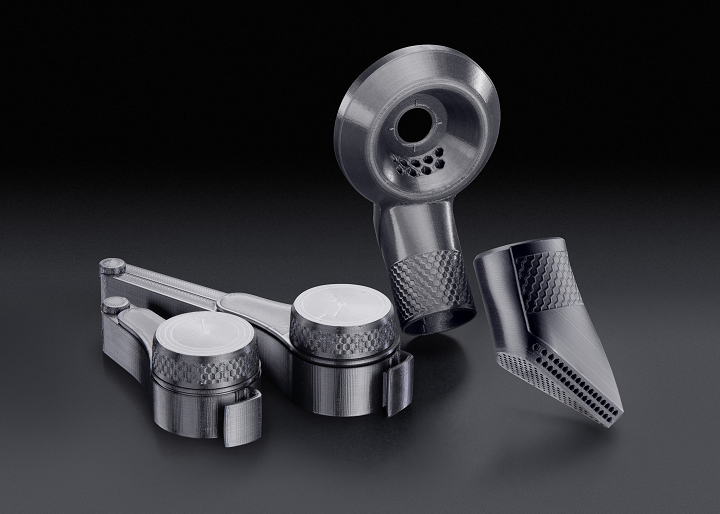
Replique has 100 production partners who handle the actual 3D printing, allowing the Replique platform to serve customers such as Danfoss, Miele, and Alstom. This asset-light platform approach is sure to appeal to investors, similar to models like Xometry. While Xometry focuses on new prototypes and parts to be manufactured, Replique’s area of interest is in spare parts.
Spare parts and the digital warehouse represent a burgeoning area for 3D printing. Companies such as Pelagus 3D, Immensa, DB Schenker, and 3YOURMIND are all exploring this application. It’s an alluring opportunity, as large industrial and manufacturing companies have billions tied up in inventory, often lying on shelves for decades. Currently, this is the standard operating procedure, with little done to reclaim or reduce this lost capital. With a digital warehouse and qualified working 3D-printed spares, stock levels can be reduced. For each new generation of equipment, less money needs to be tied up in spares. Additionally, companies can profitably offer parts that are too expensive to produce through regular manufacturing or that cannot be made because a supplier is out of business.
No one knows what percentage of parts can be successfully 3D printed as spares right now. It’s also unclear how many more parts will become available in the future as technology advances. It may be that only a few parts can be reliably and profitably 3D printed, keeping 3D-printed MRO as a niche market. Even as a niche, this can be a highly profitable and useful activity for industrial firms and companies like Replique, without requiring significant capital investment.
However, if it turns out that more parts can be 3D printed, the MRO business could eclipse the service bureau business in terms of profitability and growth. Firms could significantly free up capital through 3D printing, making this activity financially attractive for many of the largest firms worldwide. It is up to Replique and its competitors to capture the attention of CFOs and supercharge their efforts in this promising field.
Subscribe to Our Email Newsletter
Stay up-to-date on all the latest news from the 3D printing industry and receive information and offers from third party vendors.
Print Services
Upload your 3D Models and get them printed quickly and efficiently.













You May Also Like
3D Printing News Briefs, October 10, 2026: Drones, WAAM, Ceramics, & More
We have a packed 3D Printing News Briefs for you this weekend! First, America Makes celebrated the recent National Manufacturing Day with 3D printed drones, and then it’s on to...
3D Printing News Briefs, October 3, 2026: Hypersonics, Hotends, & More
We’re starting off with defense in this weekend’s 3D Printing News Briefs, as Titomic was awarded a $5 million U.S. defense contract, and VulcanForms announced a partnership with Specter Aerospace...
The Part Is Only Half the Story: Why 3D Printing Needs a Digital Thread
A 3D printed part can generate a lot of information. The challenge is keeping track of it. Manufacturers need to know which design was used, what material went into the...
Advanced Manufacturing at IMTS 2026: 3D Printing and AI and Drones, Oh My!
Last week’s International Manufacturing Technology Snow (IMTS) in Chicago welcomed over 90,000 attendees to the jungle that is McCormick Place. With over 1.17 million square feet of exhibit space, and...