FABRX Sets Up Drug 3D Printing Subsidiary in the US

British pharmaceutical printing startup FABRX is now setting up a United States based company, FABRX US. To explain the move, the company noted:
¨Having already seen a strong demand for our technology and services across the American continent, establishing a full operational base here allows us to better serve the American healthcare market and bring personalized medicine to more patients. This move is a significant step forward in our mission to revolutionize the pharmaceutical industry with pharmaceutical 3D printing!¨
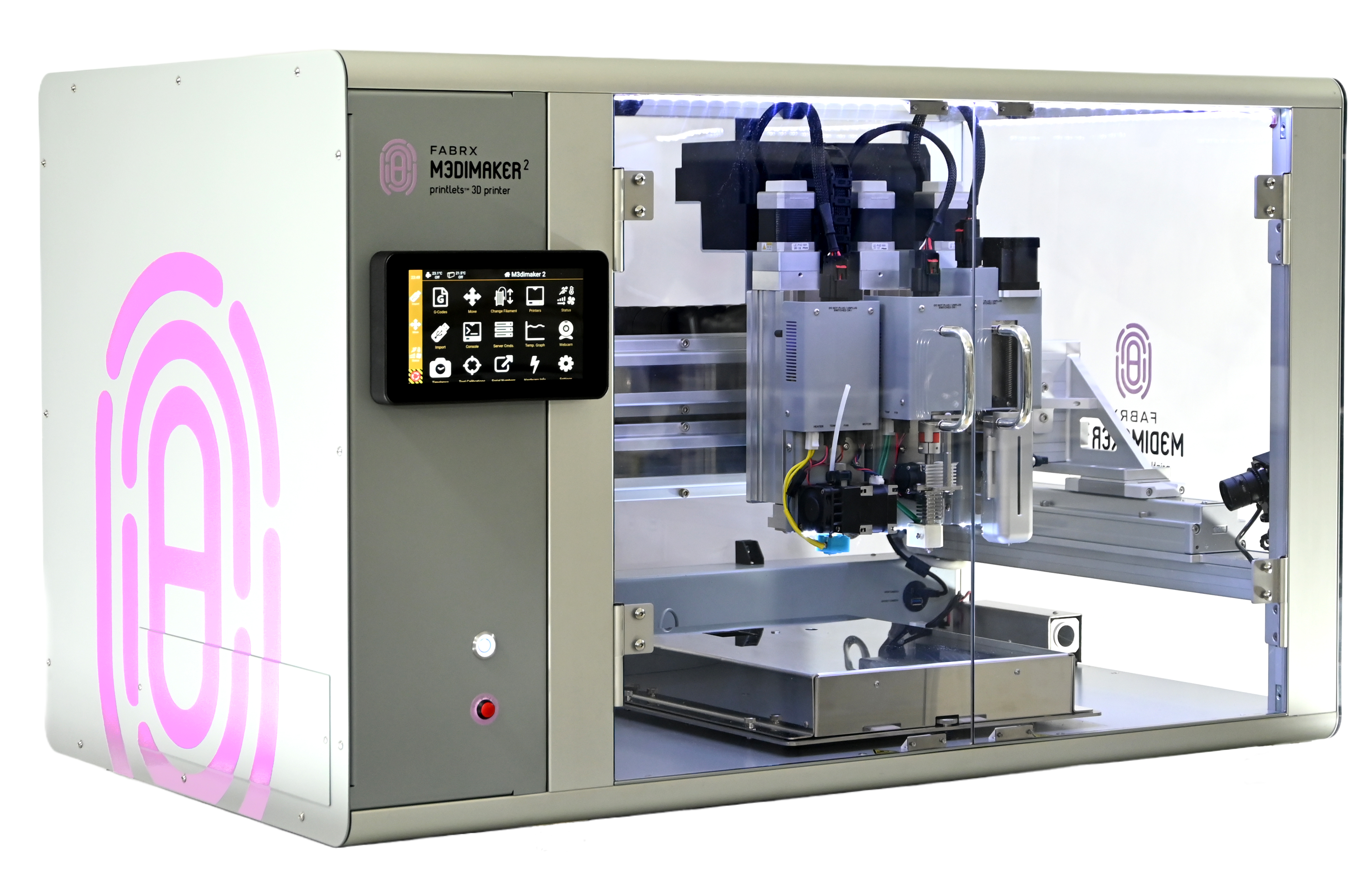
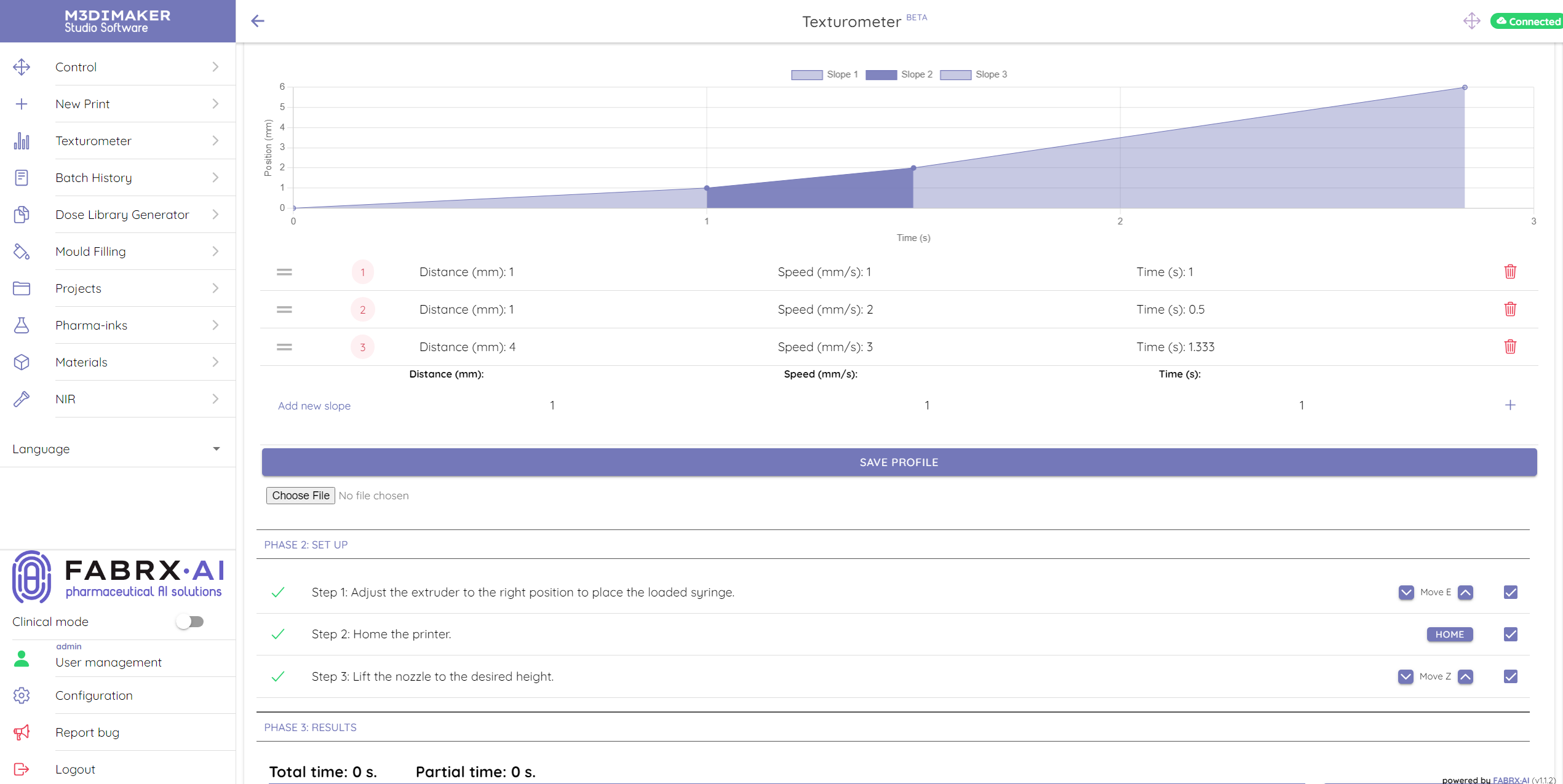
FABRX, for its part, is a UK-based startup and a University College London spinout. The company has a Spain-based subsidiary using AI and software to make new drugs possible. The company has an M3DIMAKER studio software package that helps you slice your print files and change parameters. M3DISEEN is an AI-based printability predictor. There is also a patient feedback app. They also have two Pharma 3D printers, the M3DIMAKER 1 and M3DIMAKER 2. The M3DIMAKER 1 is meant for labs and is an extrusion-based system, while the M3DIMAKER 2 has up to three print heads. Either printer can take three different print heads: one is a standard FDM head, another is a gel extrusion head, and the third is a hot melt extrusion head specifically meant for combining different powders. You can also add a UV curing unit to that head. These different heads let you deploy a wide range of active ingredients in novel ways.
FABRX also formulates pharma inks to help you get started and publishes a lot of research on pill printing. Their papers cover topics such as using MRI to study tablet disintegration, mass uniformity testing for production runs, using machine learning to predict outcomes, and implantable devices. I really like FABRX—they seem to be developing a host of solutions valuable to those exploring polypills or new dosage forms. There is real promise in personalized medicine and individual doses. For example, it’s probably a good idea that a 60-kilo person and a 120-kilo person receive different doses. Beyond this, 3D-printed drugs could bring many more innovations, including faster-acting pharmaceuticals and drugs that efficiently combine therapies in one.
FABRX’s US launch is a testimony to the immense size of the US market and a quirk in that market that sees many thousands of compounding pharmacies flourish. These compounding pharmacies, numbering as many as 7,500, can make their own medications. They can produce individual doses or special mixes and formulations not regularly available. Unique dosage forms or combination therapies are just some of the things these compounding pharmacies can create. Working at much smaller volumes and often with very specific pharmaceuticals, it is the compounding pharmacy that will be very interested in 3D printing pills.
Pharmacies in hospitals, which often make specialized formulations, are another good market. Meanwhile, research institutes, universities, and drug companies also represent promising markets. Through 3D printing pills, you can do small production runs, make new dosage forms, change release kinetics, and more quickly and inexpensively. We all, of course, hope for individualized therapies and innovations such as the 3D printed drug Spitiram.
Until then, research remains the main market, along with the promise of these 7,500 US-based compounding pharmacies. They could gain real cost advantages and find new efficiencies through 3D printing. For them, custom drugs are their bread and butter. The general feeling is that, due to this, they will be able to quickly adopt 3D printing. It is still early days in the 3D printing pills market, but the cost savings, unique capabilities, and promise are real.
Given the opportunities, it’s strange that FABRX and CraftHealth are among the few companies looking to make our drugs more efficient and useful. Let’s hope to see much more innovation in this space.
Subscribe to Our Email Newsletter
Stay up-to-date on all the latest news from the 3D printing industry and receive information and offers from third party vendors.
Print Services
Upload your 3D Models and get them printed quickly and efficiently.











You May Also Like
3D Printing News Briefs, January 10, 2026: 3D Printing Innovation on Display at CES
Las Vegas was the place to be last week for those interested in the latest gadgets and innovative technology solutions. This year’s Consumer Electronics Show (CES) welcomed over 4,000 exhibitors to...
CurifyLabs Launches Excipient System for 3D Printed, Personalized Pet Medicine
Finnish healthtech startup CurifyLabs was founded in 2021 with the mission of transforming how we make personalized medicines. It combines specialized software, high-quality ingredients, and automated 3D printing production to deliver...
3D Printing News Briefs, December 13, 2025: 3D Imaging, Living Lung Cells, & More
We’re covering medical and dental news in this weekend’s 3D Printing News Briefs, starting with a new innovation at Boston Children’s Hospital that could become standard practice in orthopedics: 3D...
Formnext 2025: New Metal PBF 3D Printer, Serial Production Applications, & More
It’s Day 2 of Formnext 2025, where over 800 exhibitors from around the world have converged in Frankfurt for Europe’s premier additive manufacturing (AM) trade show. From exciting new printers...