3D Printed Spare Parts Come to Brazil via New Partnership

In a new development for the adoption of additive manufacturing (AM) for spare parts, SENAI CIMATEC, a prominent Brazilian technology institution, and French start-up SPARE PARTS 3D have announced a partnership that could transform the landscape of 3D printing in Brazil. This collaboration, signed on December 20, 2023, aims to provide Brazilian companies with easier access to advanced technologies for producing spare parts, potentially reducing replacement times and altering industrial operations in the country.
Brazilian industries often face significant delays, sometimes up to 180 days, in replacing essential parts, leading to halted production and financial losses. Additionally, companies are compelled to maintain extensive inventories of spare parts, incurring considerable costs. The alliance between SENAI CIMATEC and SPARE PARTS 3D proposes a solution to these challenges by integrating SPARE PARTS 3D’s expertise in spare parts inventory analysis and digitization software with SENAI CIMATEC’s AM capabilities.
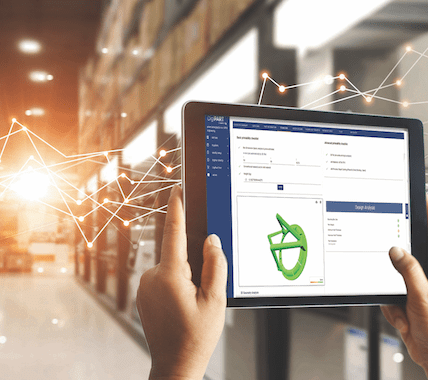
SPARE PARTS 3D, based in Singapore with offices in Paris and Doha, has developed what it calls DigiPART, a software solution for identifying, cataloging, and 3D printing spare parts. The company assists clients in digitizing and decarbonizing their spare parts supply chain using AM.
SENAI CIMATEC, located in Salvador, Brazil, stands as a premier technology and innovation center, specializing in industry-oriented solutions. With a team of over 900 professionals and expertise across multiple domains, the institution has been influential since its inception in 2002, playing a pivotal role in national and international projects.
“SPARE PARTS 3D offers to digitize spare parts inventories after analyzing them, and identifying potential parts for additive manufacturing that have an associated positive business case. SENAI CIMATEC will step in with its capacity to 3D print these parts, mechanical testing, product qualification, and inspection, from scanning to final parts,” said Bruno Caetano, SENAI CIMATEC’s executive director for new activities.
The partnership will enable the analysis of customer inventories by SPARE PARTS 3D to determine the needed quantity of parts and identify those likely to be used. SENAI CIMATEC will handle the 3D printing requests, not only for current Multi Jet Fusion technology for traditional polymers but also for new equipment capable of handling high-performance polymers, polymer composites, and metallic materials.
“By digitizing the right parts with the right industrial characteristics, mechanical properties and economics for 3D printing, these companies can help relocate parts production in the country, with reduced delivery times and a consequent reduction in carbon footprint,” said Christian Darquier, Vice President of SPARE PARTS 3D.
Digital inventories and 3D printing spare parts is a key steppingstone for the mainstream adoption of AM for end parts and may very well prove to be a killer app for the technology as governments and corporations attempt to reshore supply chains. However, such a scenario is still a far way out from full-scale implementation. In the meantime, companies like SPARE PARTS 3D, Würth, and Replique are proving out the model. Once they demonstrate the benefits, particularly for customers in the U.S. military, there’s a real possibility that the industry will be galvanized into high-growth mode.
Subscribe to Our Email Newsletter
Stay up-to-date on all the latest news from the 3D printing industry and receive information and offers from third party vendors.
Print Services
Upload your 3D Models and get them printed quickly and efficiently.













You May Also Like
The Manufacturing Race Behind the Drone Revolution
We are in the middle of a major manufacturing shift focused on the production speed and payload capacity of uncrewed aerial systems (UAS), or drones. A recent Manufacturing Dive article...
ADDMAN to Buy Up to $10.8M in Nickel 718 Powder from 6K Additive Over 30 Months
After years of buildup, we’re finally starting to see what the US metal additive manufacturing (AM) market could look like at scale. To be sure, it’s still not quite there,...
Metal AM in a Multipolar World, Part 2: How PBF and DED Could Change by 2035
The first decades of PBF development were heavily shaped by machine capability: more power, more lasers, larger build volumes, better recoating, and improved process monitoring. These developments will continue, but...
Advanced Manufacturing at IMTS 2026: 3D Printing and AI and Drones, Oh My!
Last week’s International Manufacturing Technology Snow (IMTS) in Chicago welcomed over 90,000 attendees to the jungle that is McCormick Place. With over 1.17 million square feet of exhibit space, and...