3D Printing in Energy Sector to Reach $17B by 2032

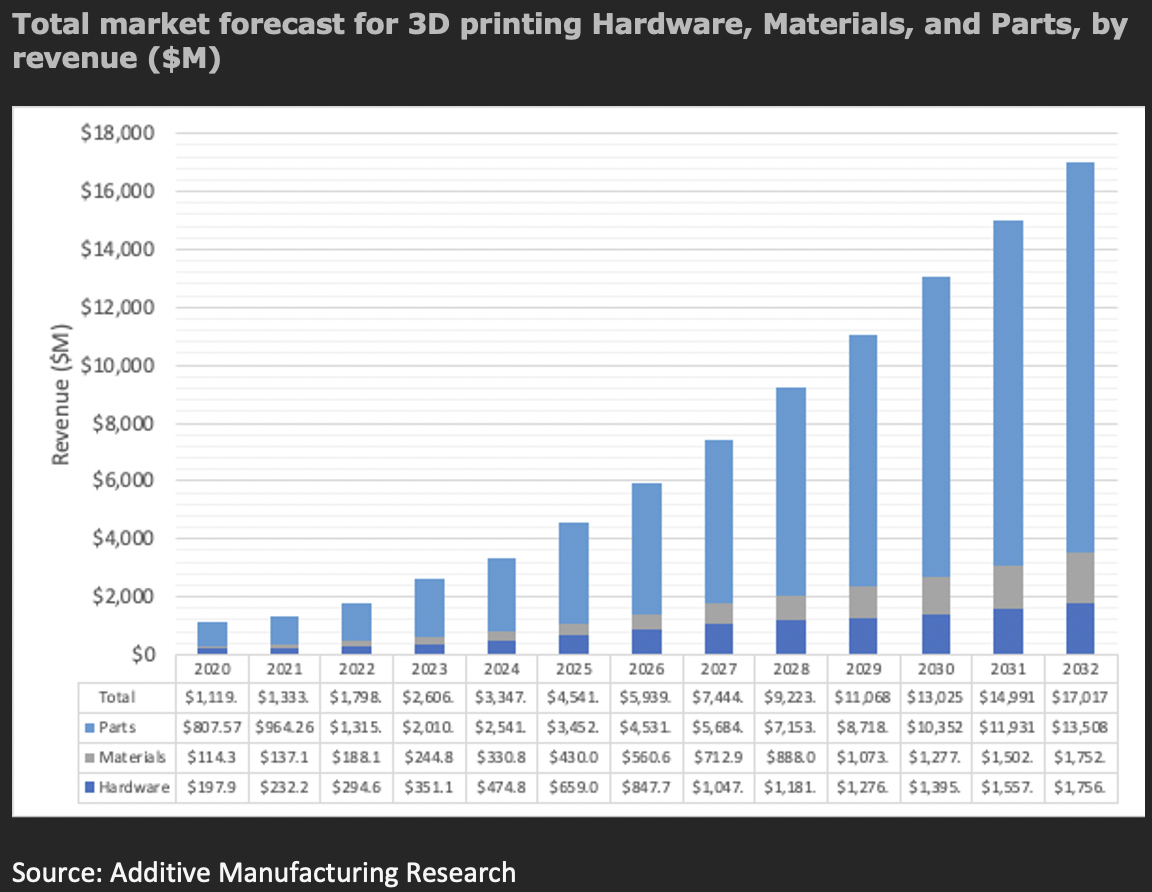
As the sector that literally fuels our entire industrial society, energy may be poised to benefit most from the adoption of 3D printing. And, according to the new titled “Additive Manufacturing in the Energy Sector: Market Analysis & Forecast” report from Additive Manufacturing (AM) Research, this means a $17 billion revenue opportunity by 2032. The study, which examines the use of 3D printing in the oil & gas, nuclear and renewable energy segments, estimates that, as of 2023, the energy market as a whole represented $2.6 billion in AM revenue activity.
As the world enters a new era of supply chain resilience and sustainability, the energy sector will surely be making use of 3D printing at an increasingly rapid rate. For oil & gas, this is largely driven by the need to make more efficient use of dwindling resources in order to get more output from less input and, therefore, offset rising energy prices. Optimized designs and logistics networks driven by 3D printing can do just that and whatever advancements are made there can be ported over to other energy segments, like renewables and nuclear, where AM offers additional benefits specific those technologies as well.
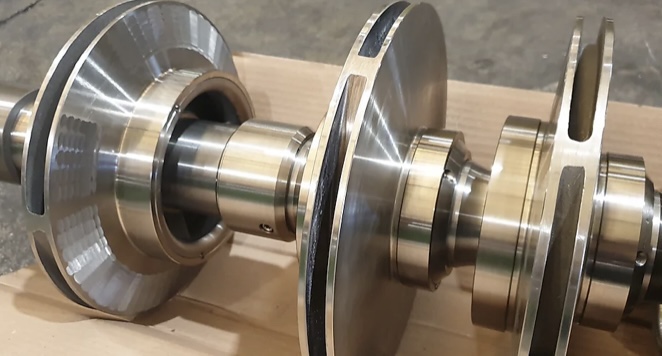
Impellers 3D printed for Shell’s Dutch refinery. Image courtesy of Shell.
“Additive Manufacturing in the Energy Sector” focuses on the present state and future prospects of additive manufacturing (AM) in this industry. It delves into how AM is evolving to offer on-demand production capabilities, minimize operational interruptions, and improve efficiency by enabling more sophisticated part designs. The piece also discusses existing obstacles, including constraints related to materials, the necessity for compliance with industry regulations, and the demand for sector-specific certifications and standards, which are currently being tackled. Furthermore, the report presents a market forecast, underscoring the substantial growth potential of AM in the energy sector, with an analysis that breaks down this potential by technology, material type, and application areas.
The report features insights into a number prominent companies and organizations, including Shell, GE Power & Renewable Energy, ExxonMobil, Baker Hughes, ConocoPhillips, and Westinghouse, along with regulatory and standard-setting bodies like the American Petroleum Institute, DNV GL, and Lloyd’s Register. Additionally, key players from the AM industry such as Stratasys, 3D Systems, EOS, Desktop Metal, and Markforged are included.
Authored by Oliver Smith from ReThink Additive, the “Additive Manufacturing in the Energy Sector: Market Analysis & Forecast” report benefits from his extensive expertise in the 3D printing industry. Oliver Smith, having recently been a part of Stratasys’ consulting division, brings over a decade of experience working with clients in 3D printing, particularly those in the energy sector.
Subscribe to Our Email Newsletter
Stay up-to-date on all the latest news from the 3D printing industry and receive information and offers from third party vendors.
Print Services
Upload your 3D Models and get them printed quickly and efficiently.











You May Also Like
The AM Applications Game: Where Additive Manufacturing Is Actually Winning
When Additive Manufacturing Research (AM Research) announced its upcoming webinar, “3DP/AM Market Insights: 2025 Review and 2026 Preview,” it pointed to a key issue for the industry: which sectors are...
MIT’s Enterprise Additive Manufacturing Program Heads to RAPID + TCT 2026
MIT will offer the class Enterprise Additive Manufacturing over the course of five days. Three and a half days will take place at MIT, while two half days will see the...
The Great AM Reset: Why Applications Will Decide Who Survives
For decades, the AM industry has been powered by an exciting narrative of endless growth and disruptive potential. We celebrated every new technology, every injection of capital, and every bold...
Bambu Lab Says 2025 Was a Breakout Year: 10 Million Monthly Users and Real Business Growth
Chinese 3D printer maker Bambu Lab reported strong results for 2025, showing that the company’s push into community and small-business 3D printing is working. The numbers suggest consumer 3D printing...