Stratasys Completes Sale of Texas 3D Printing Facility to Cumberland Additive


Amid a challenging macroeconomic environment that has impacted many publicly traded 3D printing companies, Stratasys (NASDAQ: SSYS) has announced the completion of its sale of its Stratasys Direct facility in Austin, Texas to Cumberland Additive. This strategic move, part of a broader operational transformation, comes as the company prepares to present its latest quarterly figures.
Despite the fact that the sale was initiated in May, Stratasys’ decision to sell its metal additive manufacturing (AM) facility in Austin is reflective of a strategic pivot. The sector has been struggling since its partial 2021 boost ended, with 3D printing companies shedding non-essential business elements and also laying off staff in order to survive.
While Stratasys has not dispensed with its service division altogether, like competitor 3D Systems, it has removed chunks of its Direct operations. In addition to the Austin facility, which was a substantial part of the service bureau, Stratasys completed the sale of its urethane business in September. Because the decisions to sell these sites came along with the appointment of a new General Manager of Stratasys Direct, Gurvinder Kahlon, in April, it may not seem likely that the company aims to make a total sale of the division. Instead, it is likely streamlining it.
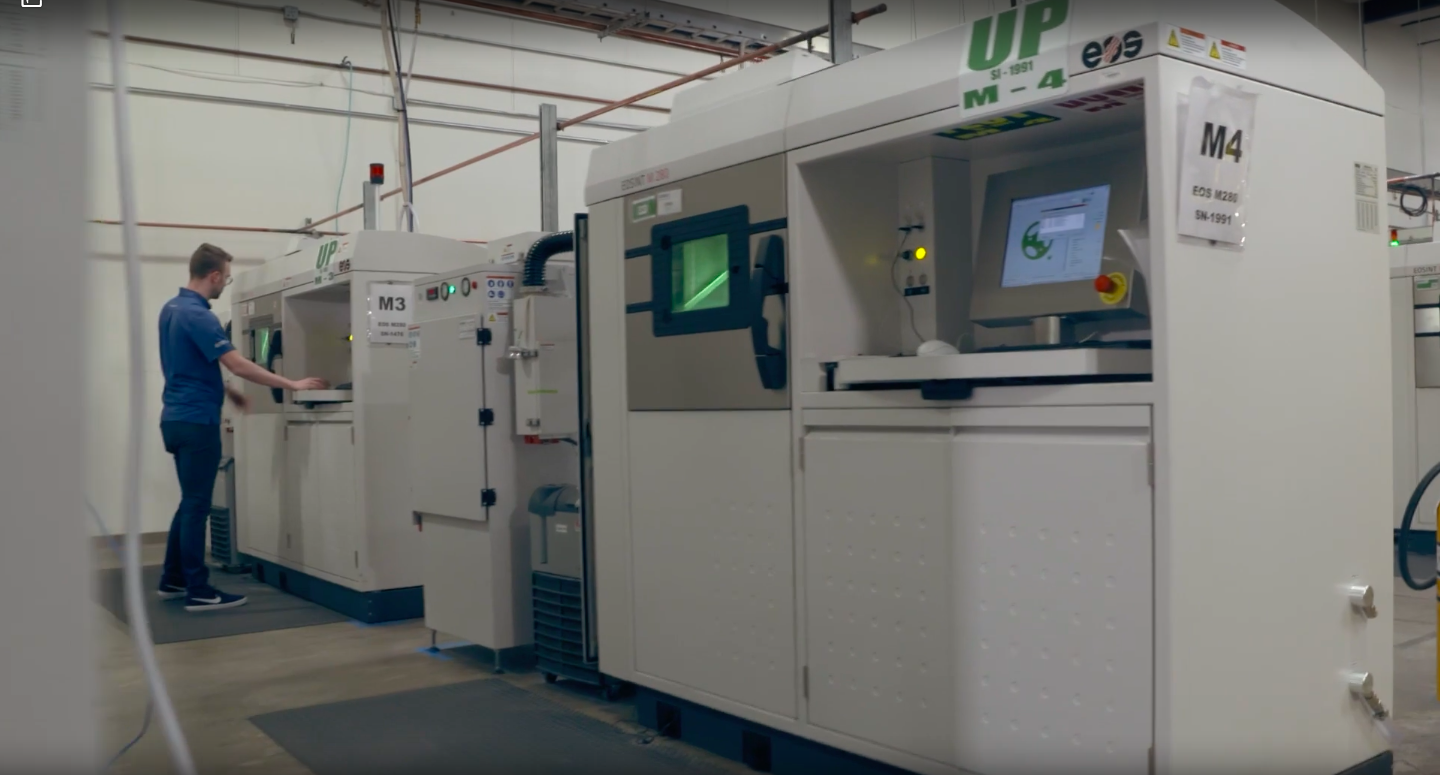
Inside a Stratasys Direct facility. Image courtesy of Stratasys Direct.
However, comparing an archived version of the Stratasys Direct website from February 2023 with its most recent version, the number of locations have been reduced significantly. Whereas, earlier in the year, the company listed its headquarters as based in Los Angeles, with nine Direct sites around the world, including one in China, the most recent edition has the main facility situated in Minneapolis with only three additional locations. A little digging on the site turns up the Chinese location, as well. This would suggest that Stratasys may be in the process of selling off its service assets. Unlike 3D Systems, which sold off its service division in two large chunks, Stratasys may be doing it piecemeal to obtain an overall better deal, while also drawing potentially less attention to the divestiture.
Kahlon said of the sale, “We are focusing Stratasys Direct to maximize synergies with our market-leading additive manufacturing business. Stratasys Direct has best-in-class technology, deep expertise, and focused management teams that are poised to deliver strong results for our customers and help them achieve their manufacturing needs.”
The news comes as Stratasys failed to complete a merger with Desktop Metal and as it presents its third-quarter figures. Analyst forecasts predict earnings of $0.030 per share, a dip from the $0.050 per share reported in the same quarter last year. Revenue expectations are also slightly lower, with Wall Street projecting $161.3 million compared to $162.2 million reported in the prior year’s quarter. For the current fiscal year, analysts anticipate a profit per share of $0.180, with estimated revenues reaching $641.8 million.
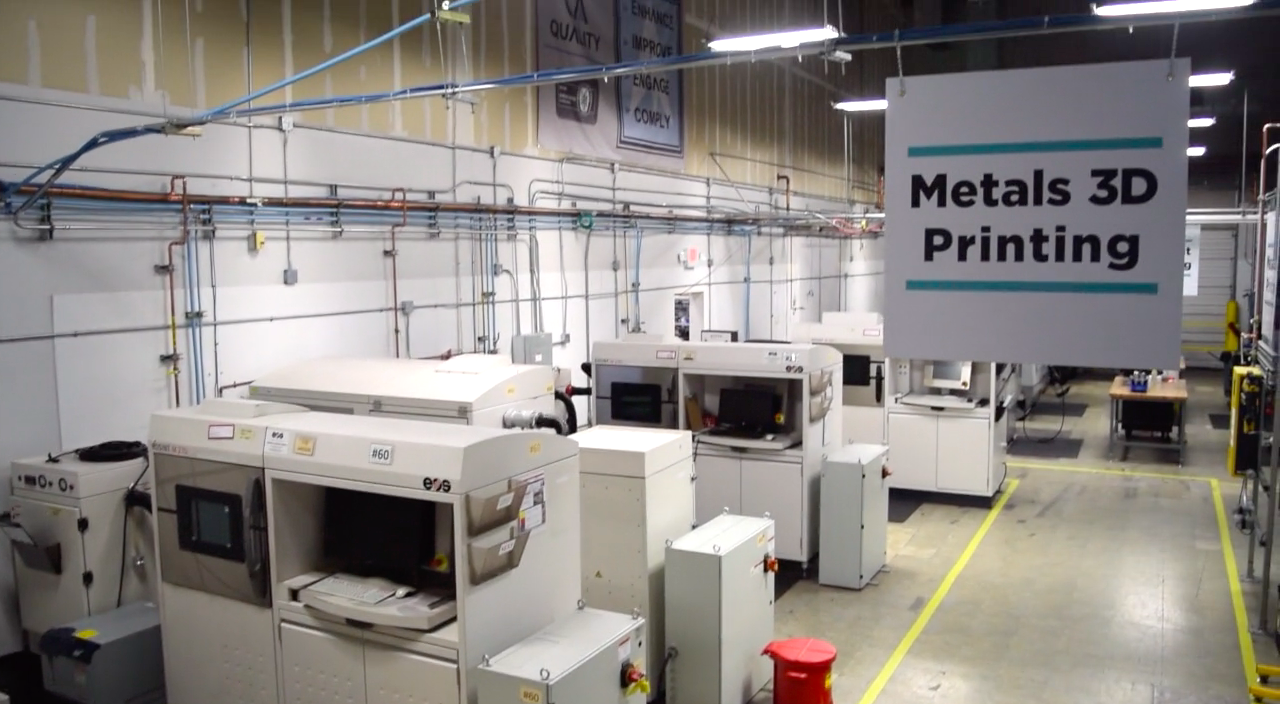
3D printing facilities at Cumberland Additive. Image courtesy of Cumberland Additive.
The buyer, Cumberland Additive, was founded in 2006 and has established itself as a leader in AM, particularly in high-performance markets like aerospace, defense, space, and energy. The firm has facilities in Austin, TX, and Pittsburgh, PA, that include metal and polymer PBF, as well as CNC machining, metal finishing, and design engineering support. Most recently, Cumberland added a JEOL electron beam 3D printer to its location at Neighborhood 91 in Pittsburgh.
The shift of original equipment manufacturers like Stratasys and 3D Systems away from service models is an important one. In the past, they have been described as acting as their own competitors, in that they are participating in a market where other service bureaus use their machines and consumables. At the same time, they rely on competitor equipment in executing AM services. This divestiture comes at a time in which private equity funds are rolling up service bureaus.
Meanwhile, firms like Cumberland represent a new generation of AM providers that are capable of focusing on high-end clientele, where the traditionally high expense of 3D printing is worth it for the value add that the technology brings to aerospace, energy, space, and defense. All of this is being driven by a combination of the general macroeconomic environment and the macro trend of re-shoring. In the case of the former, struggling machine shops and AM service bureaus have had to sell off to private equity, while in the case of the latter, the need for governments and corporations to achieve supply chain resilience has led to major government funded efforts guided by their militaries, as detailed in the recent “Additive Manufacturing for Military and Defense” from Additive Manufacturing Research.
Subscribe to Our Email Newsletter
Stay up-to-date on all the latest news from the 3D printing industry and receive information and offers from third party vendors.
Print Services
Upload your 3D Models and get them printed quickly and efficiently.













You May Also Like
The Seminal Moment: Creality’s IPO Analysis & Possible Effects
Something super important happened just a few days ago, and too few people paid attention. Creality, a pioneer in low-cost desktop material extrusion printers, went public. Creality is now listed...
As Longevity Gains Momentum, Rem3dy Health Raises £14 Million for 3D Printed Nutrition
Longevity hack or healthcare trend? The answer may depend on who you ask, but investor interest in personalized nutrition is growing as consumers search for the next longevity hack. Now,...
3Dnatives to Present ADDITIV Metals 2026: Resolving Key Barriers to Scaling Metal Additive Manufacturing
As the metal additive manufacturing sector prepares for a massive leap—with market valuations expected to climb from $6.02 billion to $7.02 billion this year—the industry is shifting its focus from...
Stratasys Dental’s Negar Movahed Says They’re “Open for Partnerships”
According to “3D Printing for Dentistry 2025: Market Study and Forecast” by AM Research, the dental 3D printing market generated $5.2 billion in revenue in 2024—that’s nearly one third of...