US Army Awards 6K Additive Five-Year Blanket Purchase Agreement for Metal 3D Printing Powders


6K Additive has received a five-year Blanket Purchase Agreement (BPA) order from the US Army Contracting Command. Intended to support the activities of US Army Development Command (DEVCOM) — probably the most important agency for advanced manufacturing R&D within the army — the BPA gives four US Army R&D organizations access to 6K’s metal additive manufacturing (AM) powders, made using its proprietary UniMelt process.
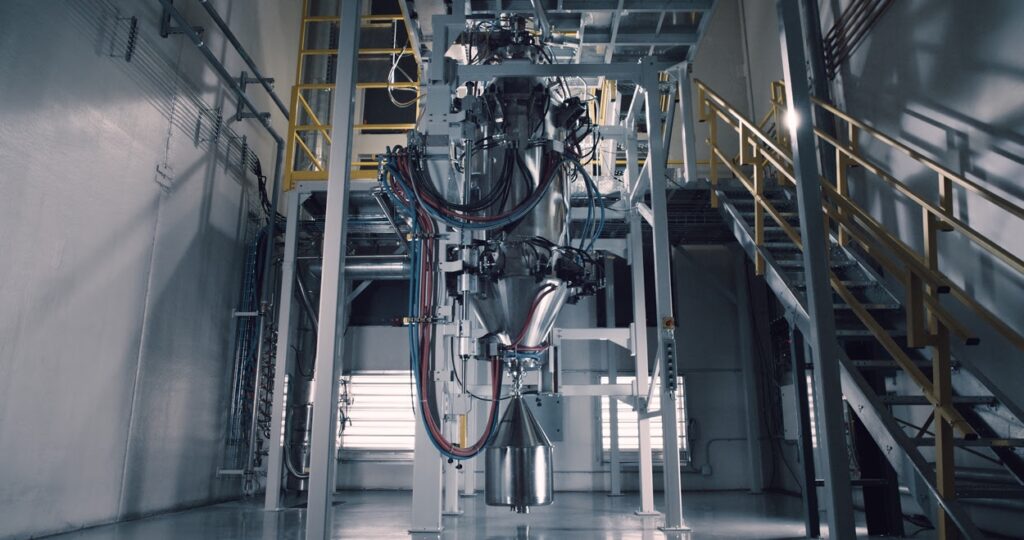
Those organizations include New Jersey’s Picatinny Arsenal, Benet Labs in New York, Adelphi Laboratories in Maryland, and Rock Island Arsenal in Illinois. One of the key differentiators of 6K’s UniMelt plasma production process is that it facilitates the manufacturing of metal powders from recycled materials, enabling the conversion of scrap metal to metal AM feedstock. The UniMelt process is compatible with nickel, titanium, copper, as well as refractory metals like tungsten.
In this case, a BPA essentially means that the four organizations mentioned above can place repeated orders from 6K for metal powders at a fixed price, with a limit to either the total amount that can be spent each year or on each order. Thus, it allows the government to order from 6K as the need arises, without establishing a new contract for each order.
In a press release about 6K Additive’s five-year BPA from US Army DEVCOM, Lieutenant Colonel Peter J. Stambersky, Retired, the Director of Federal Affairs at 6K, said, “My experience from my service in the Army provides me with a unique perspective of the agreement. Clearly, there is a benefit to 6K Additive, but, more importantly, this agreement provides the US Army DEVCOM with access to critical materials for [AM] derived from feedstock right here in the US. This agreement further establishes 6K Additive as a trusted partner for powder and as a source for reprocessing retired components from military aircraft and vehicles delivering a closed-loop, secure materials supply to the US Army.”
This deal signals that a genuinely transformational moment in the US military’s AM progress has arrived: as soon as the military can turn scrap from its overflowing boneyards into AM feedstock at scale, the bureaucracy tied to changing programs of record in the US defense budget will truly be the biggest obstacle standing in the way of the military’s going all in on AM.
Moreover, a contract like this could ultimately help address that exact problem, as well. As 6K points out in the press release, “already certified scrap” is ensured to “meet the desired specification” that has already been determined for a given part in a given program of record. If this process can be optimized to where 3D printed parts don’t have to be re-qualified, or if the re-qualification process can at least be fast-tracked digitally, it greatly simplifies — and greatly accelerates — the budgetary process related to replacing existing US military parts made with legacy techniques with 3D printed parts. This is a perfect example of the sort of project where initial success is likely to lead to exponential growth.
Subscribe to Our Email Newsletter
Stay up-to-date on all the latest news from the 3D printing industry and receive information and offers from third party vendors.
Print Services
Upload your 3D Models and get them printed quickly and efficiently.













You May Also Like
Phillips Federal Participates in Marine Corps Exercise
Phillips Federal will participate in a Marine Corps exercise that will use several additive manufacturing technologies. The 1st Maintenance Battalion, 1st Marine Logistics Group, I Marine Expeditionary Force (IMEF), will...
Ceramics 3D Printing at Ceramitec 2026
Ceramitec is a key event for the ceramics industry. Held in the lovely city of Munich, it is the leading global event for the ceramics community. With around 13,000 participants...
AM Forum Berlin 2026: Tough Love From BMW’s Timo
We’re once again in the lovely city of Berlin, at the absolutely immense Estrel Center. The congress center, a musical and theater venue, towers over the easternmost reaches of the...
Printing Money Episode 35: Notable VC and M&A Deals, with Arno Held and Alex Kingsbury
Welcome to Printing Money Episode 35 and let us be the last to wish you a happy new year. For this episode Danny is joined by Arno Held (Managing Partner,...