Turning Artifacts into Ornaments via 3D Printing Technology


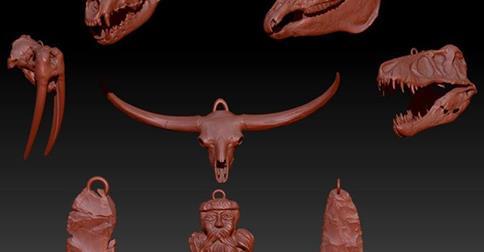 Each and every day, I am amazed by the new uses I discover for a technology that most of us have only begun to recognize in the last a couple of years. 3D printing is delivering new ways of manufacturing, but it is also enabling new ideas to come to fruition, which never would have been possible with more traditional means of creation. Over the past year, we have seen several museums all around the globe begin 3D scanning their artifacts and then making them available for download and 3D printing via the web. This is providing a means for researchers, students, and other interested parties to get a firsthand look at replicas of artifacts that normally they would not be able to see, touch, or hold.
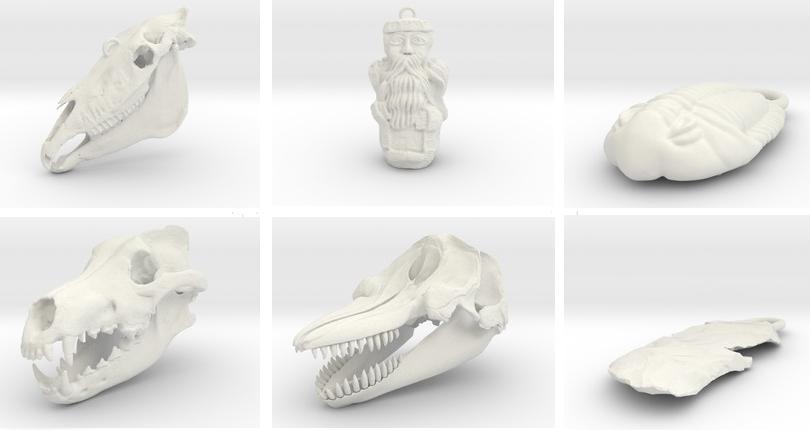
Now, one museum, the Idaho Virtualization Laboratory (IVL), is taking this concept and putting a bit of spin on it. The IVL, which is a research unit of the Idaho Museum of Natural History, located on campus at Idaho State University, has taken artifacts and created interesting holiday ornaments from them. These include the head of a Tyrannosaurus Rex, Dire Wolf, Walrus, Hagerman Horse, Killer Whale, and more. What says “Happy Holidays” better than a 3D printed ancient artifact hanging from your Christmas tree? If nothing else, they will certainly be quite the attention grabbers.
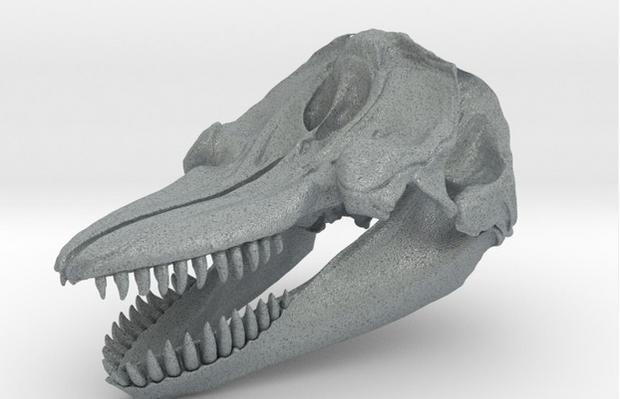
“Tis the season and we want to give back to all of you that have been so kind as to follow our shenanigans and work,” explained representatives of the IVL on their Facebook page. “To that end we are GIVING away a line of Christmas ornaments!”
So far, ten designs have been added to the IVL Shapeways shop, with more slated to be added soon. Anyone can download these designs for free; the costs on Shapeways cover just the materials/printing prices. Printed ornaments’ prices range from just $4.58 for the Crabtree Blade ornament in white nylon plastic, up to $30.97 for the Hagerman Horse, printed in polished metallic plastic.
This is a terrific example of how 3D printing has brought to market products which would simply not have been feasible to manufacture prior to the technology becoming available. Without the need of expensive molds, additive manufacturing greatly reduces the cost of production, making it just as affordable to create and sell one unit of a product as it is to create 1 million.
What do you think about these ornaments? Have you purchased one for your Christmas tree? Discuss in the 3D Printed Artifact Ornament Forum thread on 3DPB.com.
Subscribe to Our Email Newsletter
Stay up-to-date on all the latest news from the 3D printing industry and receive information and offers from third party vendors.
Print Services
Upload your 3D Models and get them printed quickly and efficiently.












You May Also Like
3D Printing News Briefs, June 13, 2026: Management Changes, Project Calls, & Wheelchairs
We’ll kick this weekend’s 3D Printing News Briefs off with some advisory board and management changes, and then move on to project call news. We’ll end with some heartwarming stories...
Researchers Combine AI and Bioprinting to Create Tiny Blood Vessel Networks
If 2026 has a theme in bioprinting, it may be blood vessels. Researchers can already print incredibly sophisticated tissues. The harder part is keeping those tissues alive. Without a network...
University of Arkansas Researchers Test Metal 3D Printing in a Mars-Like Atmosphere
If humans eventually establish a long-term presence on Mars, they will face a major manufacturing challenge almost immediately. Tools will break. Parts will wear out. Equipment will need repairs. But...
UT Researchers Use 3D Printing to Develop “Tabletop EUV Lithography” Process
Photolithography, the semiconductor manufacturing process whereby lasers transfer patterns onto chemical layers coating a substrate, is one of the most amazing industrial processes humanity has ever created. It is also...