Saudi Arabia’s NAMI to Begin Qualifying 3D Printed Oil & Gas Parts

National Additive Manufacturing & Innovation Company (NAMI), an AM services bureau based in the Kingdom of Saudi Arabia (KSA) capital of Riyadh, announced at the AM Conclave in Abu Dhabi (September 13-14) that the company has taken a key step towards being able to qualify parts produced with AM for the oil & gas sector. NAMI is a joint venture between Dussur, a KSA government investment fund, and US 3D printing industry pioneer, 3D Systems (NYSE: DDD).
Representatives from DNV, one of the world’s most important classification societies — especially for the oil & gas and maritime sectors — visited the NAMI facility in Riyadh for an audit on September 11, along with Aramco’s Consultant Services Department (Saudi Aramco is one of the stakeholders in Dussur). According to a NAMI press release, the audit entailed “reviewing NAMI’s AM facility documentation, production, and quality control procedures, evaluating the effectiveness of traceability of the parts through the deployment of NAMI’s AM procedures, and witnessing the Build Process Qualification (BPQ) build”.
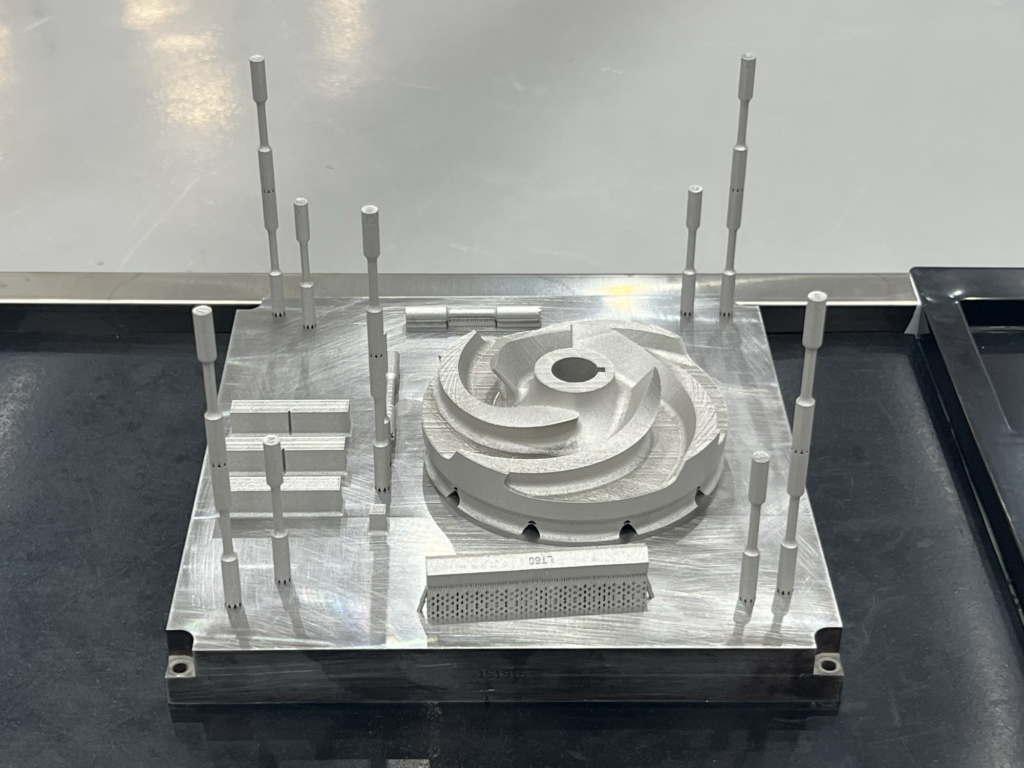
This process adheres to DNV’s Joint Industry Project (JIP) Phase I and Phase II guidelines for the oil & gas sector, which will ultimately allow NAMI to qualify parts for both critical and non-critical applications. NAMI hopes to achieve DNV’s Acceptable Means of Compliance (AMC) Level 1 for powder bed fusion (PBF) parts by mid-October, which involves demonstrating success at BPQ, and intends to complete Part Qualification and Production Specification (AMC Levels 2 and 3) by the end of this year.
Assuming it continues to succeed on the road to receiving DNV’s AM Facility Certification, NAMI will become the first facility within 3D Systems’ network to be able to qualify oil & gas parts. 3D Systems is also part of the DNV JIP Phase III that began in 2022, an endeavor which not only aims to build on the success of the first two phases by making the qualification process more comprehensive, but also includes multiple tracks aiming to quantify and leverage the sustainability potential of AM for the oil & gas sector.
In a recent post about Shell’s certification of a 3D printed valve with US manufacturer Bonney Forge, I wrote, “every certification milestone reached [for AM in the oil & gas sector] is a quantum leap for the overall landscape.” Because of its association with the world’s most powerful oil company (and “the most profitable company in the history of the world”), NAMI’s activity is signaling that the entire oil & gas sector is about to cross a critical historical threshold in its AM progress. When that happens, 3D Systems is poised to be a major beneficiary.

Not many companies have global networks of 3D printers in place and working relationships with some of the world’s largest manufacturers. The fact that 3D Systems does means that as soon as qualification happens, any member of the company’s manufacturing network with the right platforms can theoretically become suppliers of oil & gas parts. With the price of oil looking like it’s finally returning to levels that will sustain KSA’s long-term infrastructure plans, the progress on this front could accelerate very quickly now that it’s getting started.
The odds for this are heightened by the fact that this autumn’s refinery maintenance season for the oil & gas sector looks like it’s going to be less comprehensive than in years past, as fossil fuel suppliers across the planet look to capitalize on mounting demand. This suggests that the maintenance seasons next year could be especially grueling, which would require maximization of productivity in every way possible to stay on track. It’s a long shot that capacity for 3D printed oil & gas parts could be far enough long to make an impact just six months to twelve from now, but the global economy has certainly led to much more unexpected outcomes in the past.
Images courtesy of NAMI
Subscribe to Our Email Newsletter
Stay up-to-date on all the latest news from the 3D printing industry and receive information and offers from third party vendors.
Print Services
Upload your 3D Models and get them printed quickly and efficiently.











You May Also Like
Alloyed Develops New 1000°C Alloy for 3D Printed Flight-Ready Jet Engine Parts
Nickel-based superalloys and music (Bing Crosby and Fred Astaire, for starters) were best in the 1930s. Inconel and Hastelloy were invented in that decade, along with Scotch tape, the car...
Scaling AM Suppressor Production: Oerlikon AM & ATLIX Rise to the Challenge
End-of-barrel suppressors, oftentimes referred to as silencers, function by capturing and redirecting high-pressure propellant gases through carefully engineered internal structures and channels. By disrupting the gas flow before it exits...
From Material Maturity to Fleet Execution: What Comes Next for Additive Manufacturing in the U.S. Navy
Additive manufacturing is steadily moving from experimental use toward routine application in U.S. Navy shipbuilding, sustainment, and much more. In recent years, the Navy, working through its Maritime Industrial Base...
Fully Automated, “Continuously Re-Nested” Industrial 3D Printing: AMIS Launches AMIS Runtime
Automation is already a pillar of global manufacturing strategy, even as its practical limitations for continued expansion signal that manufacturers will require quite some time to figure out how to...