3D Printing Firm Boston Micro Fabrication Lands $24M in Series D Round

Boston Micro Fabrication (BMF), a 3D printing original equipment manufacturer (OEM) specializing in microscale platforms, raised $24 million in its Series D financing round, following its $43 million Series C round announced in July, 2022. The Series D round was led by Guotai Junan Securities Co. of Shanghai, one of China’s largest investment banks.
In addition to bolstering its marketing efforts and “strengthen[ing] its global collaborations” in high-value sectors like medtech, BMF states that it will use its latest funding influx to support the robust R&D program behind the company’s unique Projection Micro Stereolithography (PµSL) technology. Along with an R&D center in its hometown of Boston, one in Tokyo, and two in China (Chongqing and Shenzhen), BMF also opened the San Diego Research Institute (SDRI) in September, 2022.
BMF’s microArch 3D printers operate with micrometer (μm) resolution, including what the company touts as the highest-resolution 3D printing platform on the market, which can produce parts with features at the 2μm scale. As such, BMF has a significant edge in any vertical that prioritizes precision above all else, like medical devices, microfluidics, and electronics.
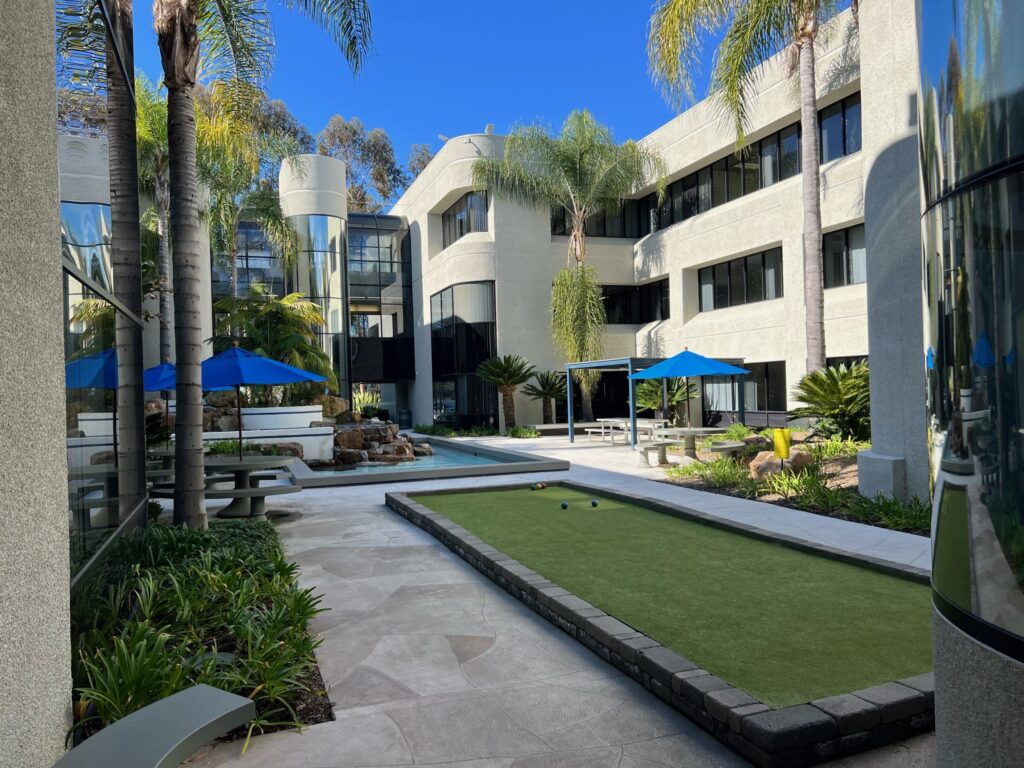
BMF’s San Diego Research Institute
In a press release about its $24 million Series D round, BMF’s CEO-Global, John Kawola, said, “We’ve proven we can meet the needs of our customers, but we know that our technology can do more. Through our Research Institute in San Diego and multiple efforts on other projects being developed globally, we’re entering an era of self-driven innovation to identify new opportunities that are uniquely enabled by our technology. This funding ensures we can continue our unwavering commitment to our customers and partners, while giving us the resources to power new innovation.”
The co-founder and CEO of BMF, Xiaoning He, said, “Miniaturization, precision, and complexity of devices are the major trends in industrial development. Despite this market pressure, traditional manufacturing processes struggle at the smaller scale companies are now demanding. BMF’s technology can play an essential role in meeting this need.”
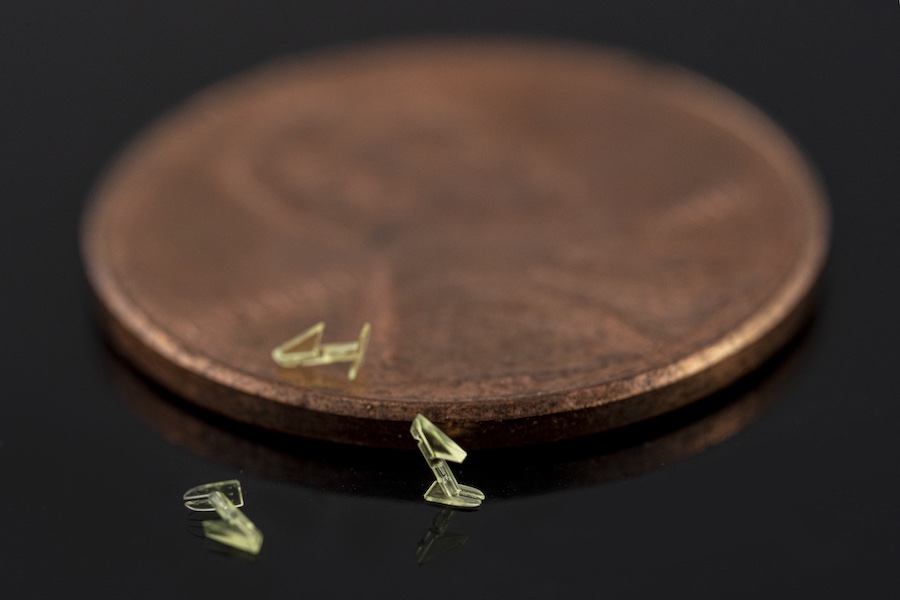
Although almost all of the materials compatible with BMF platforms are polymers, two of the company’s printers — including one of the highest-resolution machines, the microArch S230 — are compatible with ceramic. This is noteworthy not only because of the potential for growth in the semiconductor sector associated with the capability for ceramics AM, but also insofar as it hints at the possibility that BMF’s greater R&D efforts could lead the company to embrace a more diverse range of materials down the road.
The more that 3D printing is associated with applications like producing metal parts for the next version of the Apple Watch Ultra, the higher is the likelihood that BMF, among others, is seriously considering the cultivation of a metals portfolio. That also makes the company’s emphasis on its R&D center in San Diego especially intriguing, given how important that city is to the US semiconductor ecosystem.
Finally, perhaps the most notable aspect of the announcement is that it came just a day after the Biden administration issued an executive order targeting US investments in four high-tech areas, including chips and microelectronics. Considering how globalized BMF’s operations are — and in this context, the company’s two Chinese R&D centers (including one in the “Chinese Silicon Valley”, Shenzhen) are specifically relevant — such efforts by the Biden administration might be expected to pose quite a challenge.
Instead, regardless of the uncertainty outside of the US, the fact that BMF has an R&D foothold in San Diego that can be supported by ample amounts of the company’s own funding highlights the resilience of its corporate strategy, as well as the possible importance of BMF’s technology to the emerging next era of US chip manufacturing. Indeed, the fact that the company’s Series D round was led by one of China’s largest investment banks may itself even highlight the extent to which the Biden administration’s policies are succeeding at reorganizing certain areas of US manufacturing back within the domestic ecosystem.
Images courtesy of Boston Micro Fabrication
Subscribe to Our Email Newsletter
Stay up-to-date on all the latest news from the 3D printing industry and receive information and offers from third party vendors.
Print Services
Upload your 3D Models and get them printed quickly and efficiently.











You May Also Like
Stratasys Partners With Defense Prime Heavyweights to Qualify SAF PA12 for Industrial 3D Printing
Perhaps the most valuable lesson that the additive manufacturing (AM) industry has learned in its technical maturation era over the last five years or so is that you can’t really...
Via EOS Partnership, Texas’s ACMI Is the First Customer for the AMCM M 8K 3D Printer
EOS’s two major announcements in the last few months have been the launch of the EOS M4 ONYX at Formnext 2025 and the news from a couple of weeks ago...
Reuniting ExOne and voxeljet: An Investor’s View on Building a Global Industrial Sand Printing Leader
Authored by Whitney Haring-Smith, Chair of the Board, ExOne Global Holdings & Managing Partner, Anzu Partners At Anzu Partners, we invest with conviction in industrial technologies that create categories—and then...
VulcanForms Raises $220M as Investors Back Scaled U.S. Metal 3D Printing
VulcanForms has closed a $220 million Series D funding round, a large vote of confidence at a time when investment in 3D printing has become more selective. Investors are backing...