BASF Forward AM to Debut Ultrasim 3D Lattice Engine Software at RAPID + TCT

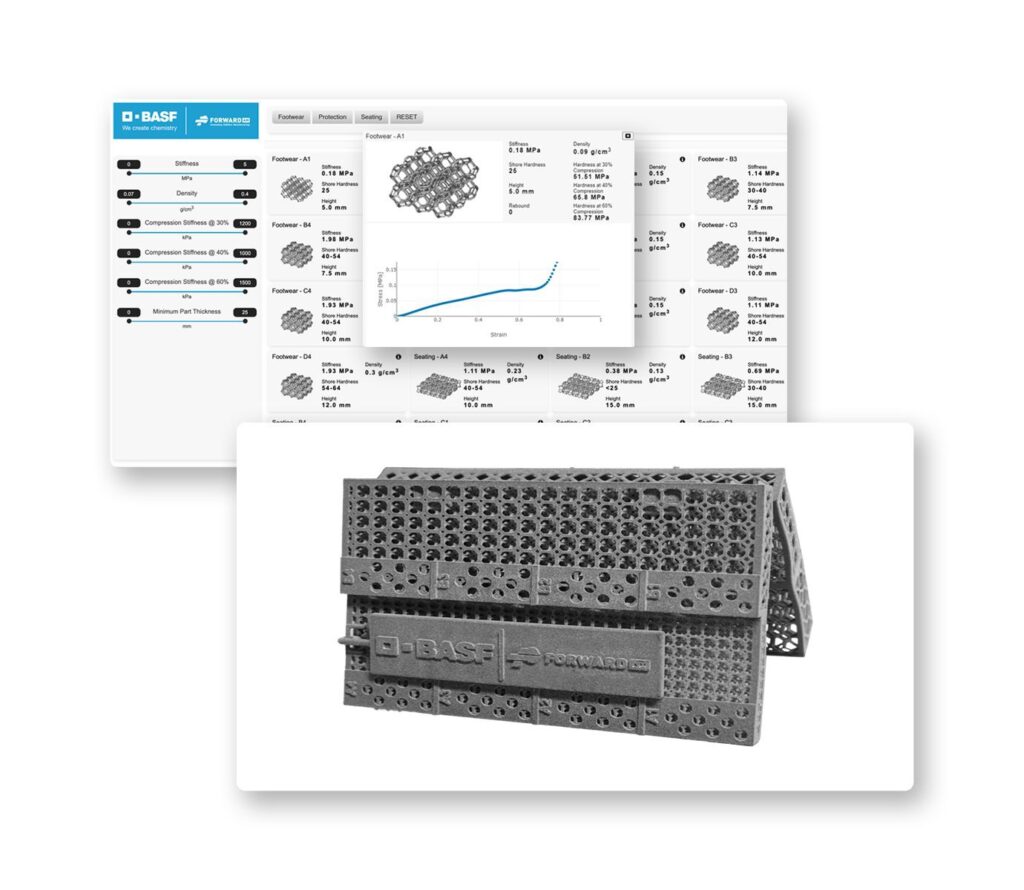
BASF Forward AM, the 3D printing brand of the world’s largest chemical producer, announced that it will introduce its new software platform, Ultrasim 3D Lattice Engine, at RAPID + TCT 2023 in Chicago (May 2-4). The generative design engineering software will allow users to create parts according to a library of lattice patterns that have already been validated for parts produced in a wide variety of sectors.
BASF Forward AM worked on Ultrasim 3D Lattice Engine with Hyperganic, a German software startup specializing in algorithmic engineering for additive manufacturing (AM). Specifically, Ultrasim 3D Lattice Engine utilizes Hyperganic’s voxel engine, which is also the backbone of the company’s flagship software series, Hyperganic Core.
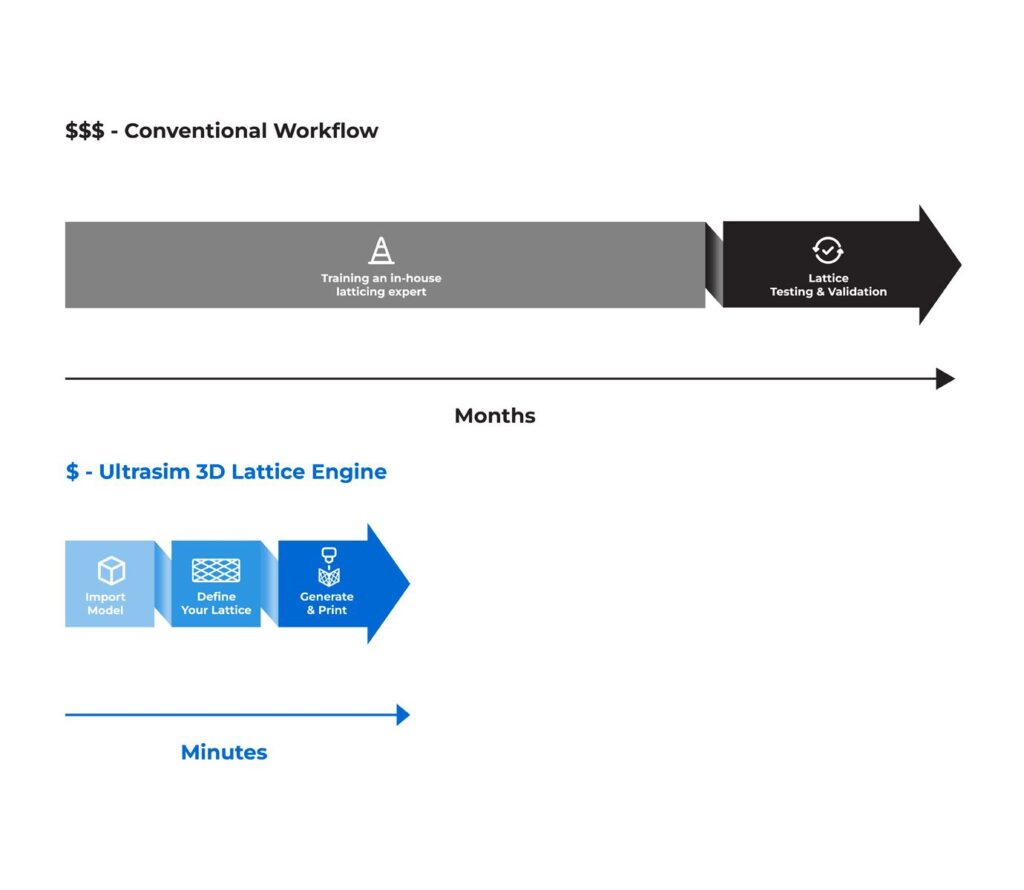
In addition to getting to talk to the BASF Forward AM team about Ultrasim 3D Lattice Engine at RAPID + TCT 2023, attendees will also have two other opportunities to see the software in action. First, at the Beer and Beams Lattice Engine Workshop (Booth #2445) on Tuesday, May 2nd, from 4:00 to 6:00 PM, guests will be given the opportunity to test out the new software. Then, on Wednesday, May 3rd, at 1:30 PM, Florian Fischer and Stijn Paridaens, CEO of AM service bureau Ziggzagg, will demonstrate how to use Ultrasim 3D Lattice Engine (Booth #4320).
SmarTech Analysis projects that, at 20 percent in 2022, 3D printing software is growing faster than any other segment. As was evident at last year’s RAPID + TCT — and as is clear from the daily unfolding of industry news — progress in software is accelerating AM as both a technology and a business, and engineers’ increased leveraging of the advantages of generative design is one of the main explanations for that development. Most significantly, generative design allows companies to drastically reduce the time and manpower devoted to the design process, which, of course, speeds up and reduces the cost of the entire production cycle.
Although many generative design platforms for AM now exist, there are many obvious virtues to the concept of this one, and observers of the industry should pay close attention to the feedback from the initial rollout. Aside from the excitement surrounding Hyperganic, which developed its software for many years leading up to its public launch in 2022, this particular generative design platform is the work of the world’s largest chemical producer, as well as the largest supplier of AM materials.
BASF’s involvement implies that users can expect software that is unusually compatible with their own platforms, while also providing better-than-average reliability of printed parts thanks to the company’s library. As such, users will certainly have very high expectations, which can always be tricky. But if the initial rollout is positive, then the platform should catch on rather quickly.
Subscribe to Our Email Newsletter
Stay up-to-date on all the latest news from the 3D printing industry and receive information and offers from third party vendors.
Print Services
Upload your 3D Models and get them printed quickly and efficiently.













You May Also Like
Creality K3 Opens for Pre-Order at $849, Advancing Multi-Color 3D Printing
Creality has officially opened pre-orders for the Creality K3, its latest flagship K Series 3D printer, starting at $849 in the United States. Recognized as an IFA Innovation Awards 2026...
Beyond the Printer: HP and DyeMansion Tackle the Future of Prosthetics
Making a custom orthotic or prosthetic device involves much more than producing the final part. Patients need to be measured, devices must be designed to fit their bodies, and finished...
3D Printing News Briefs, October 14, 2026: Bolus, Aerospace Tooling, Water Filter, & More
In today’s 3D Printing News Briefs, we’re starting with medical news, as Myrava has received FDA 510(k) clearance for its 3D printed bolus. Moving on to aerospace and metals, AML3D...
Can India’s AM Push Help Make it a Viable Supplement to China?
Diversifying manufacturing supply chains to locales outside of China has nothing to do with actually cultivating “substitutes” to the Chinese economy. The real stakes are these: China is an irreplaceable...