Part Density Measurement from Dimensionics Could Usher in Era of 3D Printing Quality Control


If the industry is to industrialize 3D printing, it will need automated tools to help reduce part cost while maintaining and increasing quality. It will need tools for conveyancing, de-powdering, de-stressing, resurfacing and QA as well. Dimensionics Density has released a metrology tool that the company hopes will help machine users dial in additive manufacturing (AM) processes more quickly and test parts by determining their density.
“As geometric complexity increases, density determination of AM parts becomes more difficult using commonly used density determination technologies. Dimensionics Density’s solutions can easily determine the density of freeform parts and highly complex AM parts and can measure density repeatably to 0.001 g/cm 3,” stated Philipp Pruesse, head of Sales for Dimensionics Density.
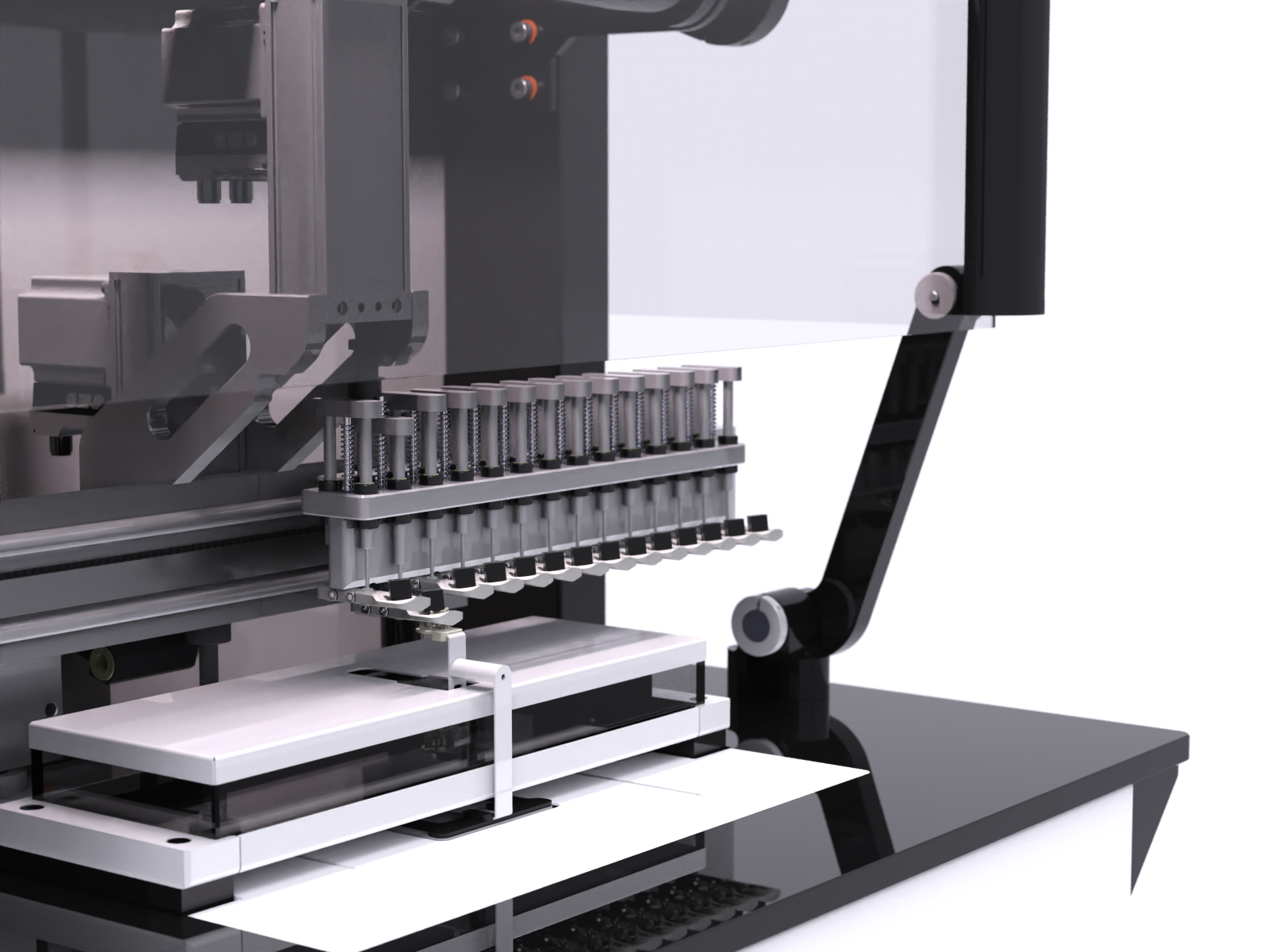
What Dimensionics Density does is use the good, old philosopher-in-the-bathtub Archimedes Principle. It automatically weighs test coupons and components in two different media with highly precise scales. One of these media is air, the other is rather mysterious sounding: “a defined liquid medium with a known density.” This could be anything really. Milk, maybe? The process takes two minutes and can measure 18 parts, while paying special attention to keeping them well-centered to improve repeatability.
Part porosity has been a bugbear for 3D printing for many years. It can be variable and has led to many industries not adopting AM because they think that the densities are not adequate. The company even points to a possible danger with density, in that inadequate density can lead to part failure. The firm notes:
“Porosity in AM parts…can weaken the mechanical strength and stability of the parts, reduce their durability, and make them more susceptible to failure under stress. Porosity can also affect the thermal and electrical properties of the parts and make them less resistant to high temperatures, corrosives, and other environmental factors. In addition, porosity can limit the ability of the parts to hold liquids, gases, or other materials, which can impact their performance in specific applications.”
The really tricky thing is that keyholes, unfused areas, and other porosity issues can appear due to a number of factors. Process variability, packing, machine errors and problems with the gas or powder can all cause porosity to appear. Furthermore, testing sometimes calls for cutting up the part or or using a CT scanner. Some porosity may also require Hot Isostatic Pressing to be suitably reduced. Perhaps to control the price of production, then, you’d then like to measure density after printing and once again later in the process. So, a low-cost process that is easy and quick could be key.
I really believe that highly automated quality assurance and testing equipment for AM has a bright future. Many in the industry will need it if they want a high-volume, high-quality, lower-cost future. Companies focusing their efforts on making or customizing equipment to automate testing processes for AM could really create value for the industry. Achieving and maintaining quality in a simpler manner could potentially be achieved with surface-roughness scanners, CT machines and the like adapted specifically to work well with AM parts and processes. These could really aid people particularly if the software, data, and loading and unloading of the machine were easy to integrate into an AM workflow. For now, the market for this kind of equipment is very small, including only the most exigent and large players in a nascent sector. But, this market is growing apace, as illustrated in the “Automation, Additive Manufacturing and the Factory of the Future” report from SmarTech Analysis. Just as Solukon established an early lead in de-powdering of large metal powder bed fusion builds, a company can become a standard in our industry. Move in well and with force and a good product now could become a de facto standard for the fast growing industry of the future.
Subscribe to Our Email Newsletter
Stay up-to-date on all the latest news from the 3D printing industry and receive information and offers from third party vendors.
Print Services
Upload your 3D Models and get them printed quickly and efficiently.












You May Also Like
3D Printing News Briefs, June 13, 2026: Management Changes, Project Calls, & Wheelchairs
We’ll kick this weekend’s 3D Printing News Briefs off with some advisory board and management changes, and then move on to project call news. We’ll end with some heartwarming stories...
Researchers Combine AI and Bioprinting to Create Tiny Blood Vessel Networks
If 2026 has a theme in bioprinting, it may be blood vessels. Researchers can already print incredibly sophisticated tissues. The harder part is keeping those tissues alive. Without a network...
University of Arkansas Researchers Test Metal 3D Printing in a Mars-Like Atmosphere
If humans eventually establish a long-term presence on Mars, they will face a major manufacturing challenge almost immediately. Tools will break. Parts will wear out. Equipment will need repairs. But...
UT Researchers Use 3D Printing to Develop “Tabletop EUV Lithography” Process
Photolithography, the semiconductor manufacturing process whereby lasers transfer patterns onto chemical layers coating a substrate, is one of the most amazing industrial processes humanity has ever created. It is also...