US Army Awards Wichita State $100M for 3D Printing & Digitization of Ground Fleet

The National Institute for Aviation Research (NIAR) at Wichita State University (WSU) has been awarded a $100 million contract by the US Army, for R&D into advanced manufacturing methods for the army’s ground transportation fleet. The initial projects of the five-year agreement will focus on metal additive manufacturing (AM), specifically the qualification of laser powder bed fusion (LBPF) and directed energy deposition (DED) methods for producing metal automotive parts.
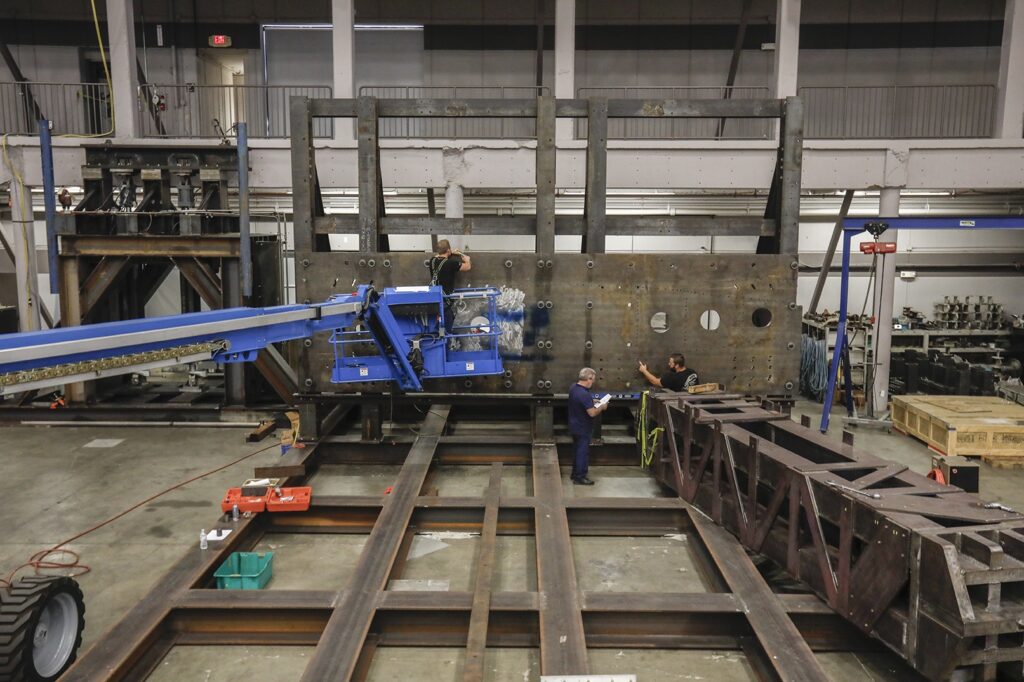
Titled the Modernization of Integrated Technology for Ground Systems (MINT-GS) award, the contract was granted by the Materials Division, Advanced Manufacturing, part of the US Army Combat Capabilities Development Command (DEVCOM) Ground Vehicle Systems Center (GVSC), headquartered at Detroit Arsenal in Warren, Michigan. In addition to WSU, the agreement also covers nine other universities that are qualified to receive funding from the contract, including Alabama’s Auburn University, home to the National Center for Additive Manufacturing Excellence (NCAME). Thus, the MINT-GS project so far spans three states — Kansas, Michigan, and Alabama — that are critical to the US auto industry.
In a WSU press release about the $100 million contract, NIAR’s executive director, John Tomblin, commented, “Through this program, the US Army GVSC will capitalize on multiple areas of expertise at Wichita State, including advanced materials development and qualification expertise. It is a unique opportunity for the Wichita manufacturing industry and WSU students to connect with a new division of the US Army.” Kansas’ senior US senator, Jerry Moran (R), said, “Wichita State and NIAR continue to support critical missions for our US military, and this contract with the Army is a testament to the great work being done at WSU. This new contract will help make certain our service members have the resources necessary to fight and win our nation’s wars and protect our national security.”
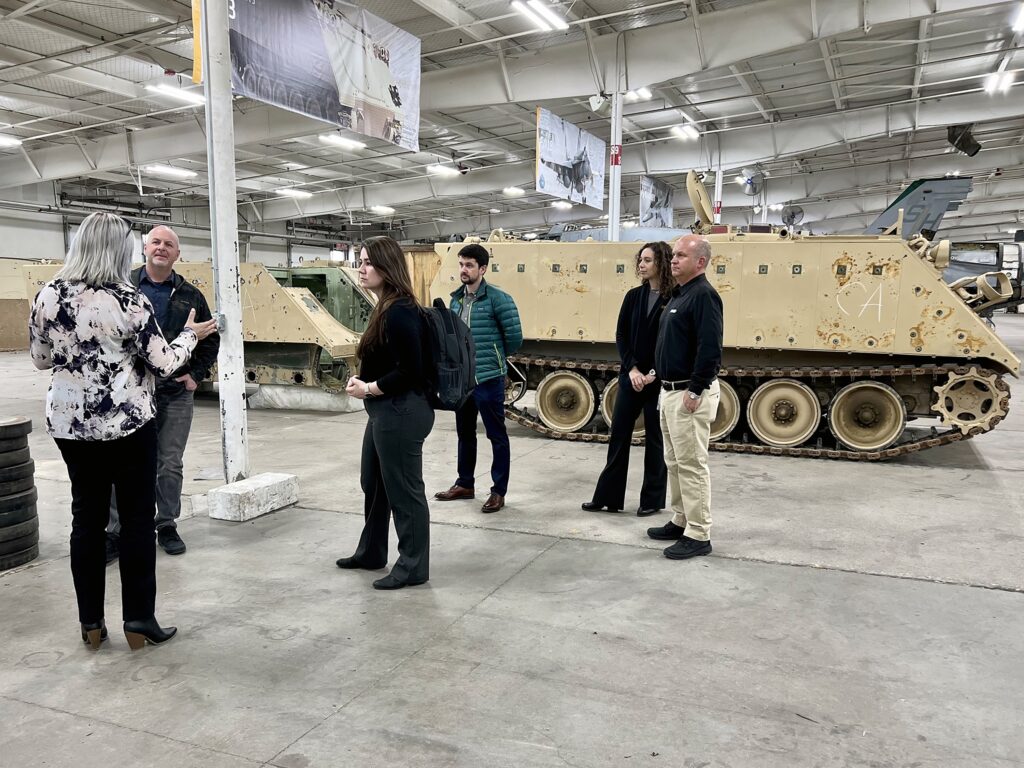
Although it is not clear if President Biden’s recent executive waiver was the catalyst for this project’s approval, the timing and the purpose of the waiver seem notable. The waiver lifts the $50 million cap on military spending without congressional approval, related to “critical supply chains for electronics, kinetic capabilities, castings and forgings, minerals and materials, and power and energy storage.” The WSU initiative certainly qualifies for at least two of the categories, and, depending on the particular scope of the program, could theoretically qualify for all of them.
In any case, the executive waiver has paved the way for precisely this sort of project to proliferate, and its public announcement should accelerate the already quickening pace of investments in American advanced manufacturing, and especially such manufacturing that is tied to defense. Relatedly, the 82nd Airborne Division’s Innovation Lab at Fort Bragg recently announced that it had started its first training course for AM. (It seems clearer and clearer that all the new factory workers in the US that aren’t robots will, soon enough, be veterans.)
Finally, it seems worth thinking about that the contract for a ground transportation fleet is going to a center for aviation research. The MINT-GS award matches the largest grant for WSU of 2022, which also went to the NIAR: $100 million from the Air Force for digital engineering. One of the long-term hopes for AM is that it will allow manufacturers for heavy industry to easily produce parts for any sector, which would revolutionize the versatility of fixed capital. It is the stated aim of the R&D program funded by the MINT-GS award, to directly translate know-how gained in aviation research into similar innovation in the automotive industry.
Images courtesy of Wichita State University
Subscribe to Our Email Newsletter
Stay up-to-date on all the latest news from the 3D printing industry and receive information and offers from third party vendors.
Print Services
Upload your 3D Models and get them printed quickly and efficiently.











You May Also Like
From Material Maturity to Fleet Execution: What Comes Next for Additive Manufacturing in the U.S. Navy
Additive manufacturing is steadily moving from experimental use toward routine application in U.S. Navy shipbuilding, sustainment, and much more. In recent years, the Navy, working through its Maritime Industrial Base...
Industrial Additive Manufacturing Reaches Its Most Important Inflection Point
Additive manufacturing is entering the most consequential period in its evolution. After years of experimentation and uneven adoption, the industry is showing renewed momentum, shaped by supply-chain pressures, and a...
Scaling Beyond 10 Printers: When Support Becomes a Bottleneck
The leap to industrial-scale 3D printing is a support problem, not a hardware problem. A 3D print farm is a centralized facility that uses a large number of 3D printers...
Reshoring Requires Rules of Engagement
Reshoring manufacturing in the U.S. is a stated national priority. Policymakers, industry leaders, and defense planners agree that domestic production capacity is essential for economic resilience, national security, and long-term...