Engine Giant Cummins to Invest $1.5 Billion in New Technologies

Indiana-based Cummins, one of the world’s largest engine manufacturers, announced that the company will be investing $1.5 billion in new technologies for clean energy generation and storage by 2027. As part of the long-term plan, Cummins also announced that it will be rebranding its New Power division under the name Accelera.
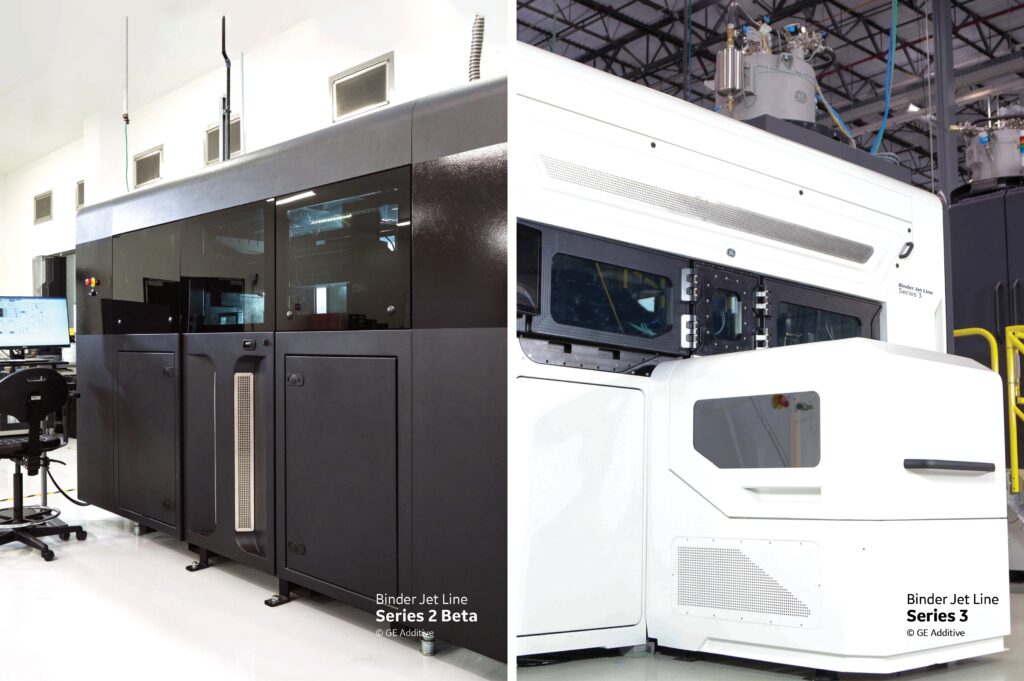
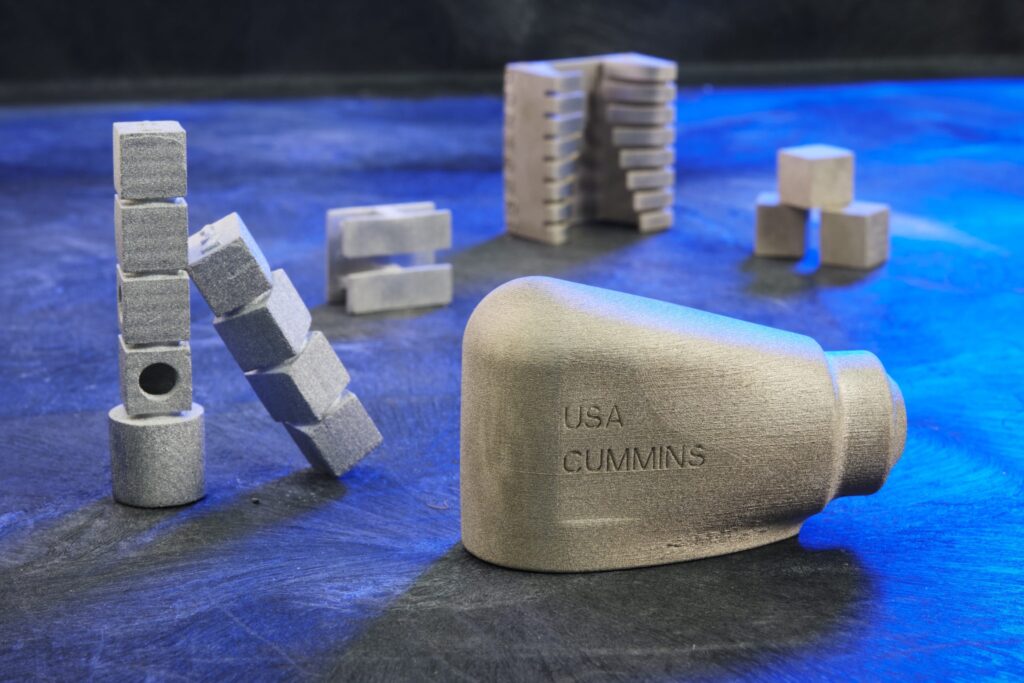
Cummins has extensive experience in deploying metal additive manufacturing (AM) in its supply chains. It was among the first customers to own one of GE Additive’s metal binder jetting platforms, and commercialized its first metal printed part, a lance tip adapter for diesel engines, in early 2021. Additionally, Indiana is home to the Emerging Manufacturing Collaboration Center (EMC2), which also heavily relies on GE’s binder-jetting system. Thus, substantial portions of the $1.5 billion are virtually guaranteed to end up in the AM sector, especially given that the aim of the funds is decarbonization.
Along those lines, Cummins has joined a growing list of American industrial powerhouses that, in just the last couple of weeks, have announced plans to invest enormous sums towards the advancement of the US’s manufacturing base. Last week, GE announced that the company will spend over $450 million on shoring up its American manufacturing capacity. This week, along with Siemens announcing a $220 million investment in a North Carolina advanced manufacturing center for the rail industry, a handful of major defense-related AM spending projects were also rolled out.
In an interview with Reuters, the chief executive of Cummins, Jennifer Rumsey, commented, “We are actively evaluating the portfolio of what businesses we have. It is important to recognize that the core of our destination zero strategy is about zero emissions solutions and advanced solutions.” Rumsey was referencing Cummins’ own corporate goal of net-zero emission by 2050, which is currently the benchmark for the biggest emitters amongst governments, institutions, and corporations across the planet.
The key to understanding the relationship between the Cummins strategy and AM lies in a question Reuters apparently posed about “[r]aw material shortages for engine components”. In response, Rumsey simply said, “We are still working through that backlog.”
The Biden administration recently lifted the $50 million cap on money that can be spent by the Department of Defense (DoD) without congressional approval, specifically regarding “critical supply chains for electronics, kinetic capabilities, castings and forgings, minerals and materials, and power and energy storage”. Relevantly, Cummins was awarded a crucial power generation contract by the DoD in November, 2022.
Also relevant was another announcement by the Biden-Harris administration, made the same day as Cummins’ announcement, that the administration will be taking further action on clean energy targets, including $6 billion in funding to bolster the decarbonization of US industry. Along with the $2 billion-plus combined announced by GE, Siemens, and Cummins, the government funding brings the total to over $8 billion in US investments in advanced manufacturing and clean energy over the last eight days.
Subscribe to Our Email Newsletter
Stay up-to-date on all the latest news from the 3D printing industry and receive information and offers from third party vendors.
Print Services
Upload your 3D Models and get them printed quickly and efficiently.













You May Also Like
3DPOD 316: Beehive’s Gordie Follin on 3D Printed Engines and More
Gordie Folin had deep experience in engineering at Pratt & Whitney, GE, and GE Aviation before becoming the Chief Product Officer at Beehive Industries. Among his achievements, he served as the...
3DPOD 315: Dirk Simon, from BASF to Farsoon to FKM, and now Square New Business
Dirk Simon had already spent years in the chemicals industry before joining and pioneering BASF‘s 3D printing effort. We get to hear how that firm looked at 3D printing and...
Printing Money Episode 42: Q2 2026 Public Markets 3D Printing Earnings Analysis with Troy Jensen, Cantor
Welcome to Printing Money Episode 42. Troy Jensen (Managing Director, Cantor) returns, joining Danny Piper (Managing Partner, NewCap) to review Q2 2026 publicly traded 3DP/AM company earnings reports. Troy’s quarterly...
3DPOD 314: Debinding, Sintering, and Metal Binder Jetting with Stefan Joens, Elnik Systems and DSH Technologies
Stefan Joens of Elnik Systems sells ovens. Their debind and sintering equipment powers a lot of high-volume binder jet and MIM production. We learn about Elnik and its origins. But...