Siemens Expands in India to Industrialize 3D Printing and Digitize Supply Chains

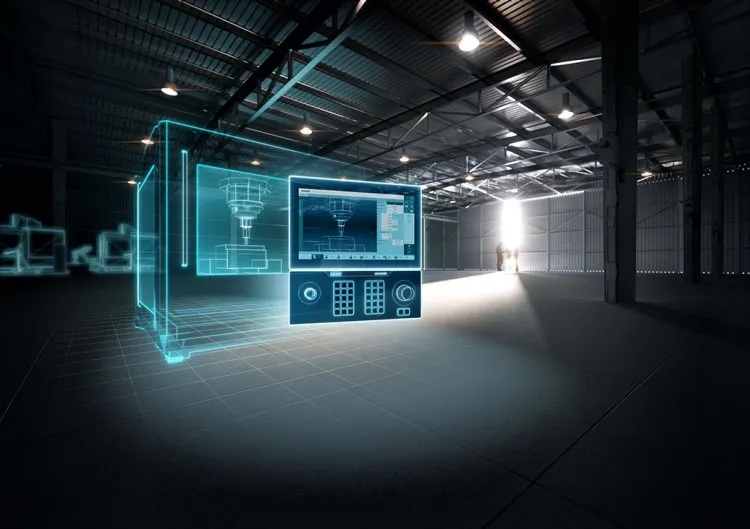
German manufacturing giant Siemens AG announced that the company will be increasing its product offerings in India, in particular those related to the digitalization of the machine tool industry. Among other things, this will entail Siemens’ placing an emphasis on bringing its software and networking solutions for additive manufacturing (AM) to the Indian machine tool sector.
Additionally, Siemens will be selling products designed specifically for the Indian machine tool industry through its Xcelerator marketplace, which the company describes as an “open digital business platform featuring a curated portfolio of IoT-enabled hardware and software.” Siemens will have the relevant product offerings on display at IMTEX 2023 (January 19-25), in Bangalore.

In a press release about the company’s growing focus on digitalizing the Indian machine tool industry, Achim Peltz, CEO of Motion Control, Digital Industries for Siemens AG, commented, “The machine tool industry in India can harness the enormous potential of production data for designing, realizing and optimizing operations to achieve scale and profitability. Our portfolio for the machine tool industry enables flexible and sustainable action both in the construction of machines and in their application.”
This announcement comes only a few days after Siemens announced that the company has signed a €3 billion ($3.25 billion) agreement to deliver and service 1,200 electric trains to India over the next 35 years. This is not only Siemens’ largest train-related contract in India, but the largest ever such deal in the company’s history.
The Indian market’s importance to nations in NATO and the EU is rapidly growing, not only because India serves as a counterbalance to Chinese economic dominance, but also simply because of the need to diversify the geographies of global supply chains. If India can become an advanced manufacturing hub over the next decade, then that will alleviate, at least to some extent, the supply chain bottlenecks in the South China Sea. Thus, China also obviously stands to gain in the long run, from the opening up of greater trade infrastructure just south of some of the central links in Belt and Road.
Finally, Siemens is demonstrating a fascinating case of synergy with itself here, by signing a massive infrastructure contract in India, then targeting the critical areas of the supply chains that will be largely responsible for providing the parts for that contract. Since Siemens has to deliver the first trains in only 24 months, and all of them within 11 years, the deal’s success will require an almost constant buildup of Indian manufacturing capacity the entire time. Along those lines, $3.25 billion might be how much the deal is worth now, but soon enough it should prove to be worth much more than that.
Images courtesy of Siemens
Subscribe to Our Email Newsletter
Stay up-to-date on all the latest news from the 3D printing industry and receive information and offers from third party vendors.
Print Services
Upload your 3D Models and get them printed quickly and efficiently.













You May Also Like
The Money Behind AM: What to Watch at AM Investment Strategies 2026
For years, simply being a 3D printing company could attract attention from investors. New machines, new materials, faster speeds, and the promise of mass production were often enough to get...
3D Printed Football Helmets Are Amazing Business. They’re Also So Much More
NFL football is by far the most popular sport in the US, followed by college football (a state-of-affairs oddly similar to the fact that the world’s largest air force is...
Continuous Composites Wins Navy SBIR for 3D Printed UAVs
In a diversification effort, Continuous Composites has decided to seek work outside of the courtroom. The company that has been successful in defending its patent portfolio in composite 3D printing...
When Data Becomes the Differentiator: Qualified Material Data is Changing the Future of Structural Additive Manufacturing
For years, additive manufacturing has promised engineers greater design freedom. The challenge wasn’t printing the part—it was proving the part belonged on an aircraft. Designing a lightweight bracket or consolidating...