Desktop Health’s SmileGuard Dental 3D Printing Resin Receives Full FDA 510(k) Clearance


Desktop Health, a business within the Desktop Metal umbrella, has recently announced that its SmileGuard light-curable biocompatible resin has received full U.S. Food and Drug Administration (FDA) 510(k) clearance. The company will now begin selling the resin to dentist offices across the United States and could dramatically cut the time it takes patients to get the necessary dental and orthodontic equipment by 3D printing it rather than traditional manufacturing it.
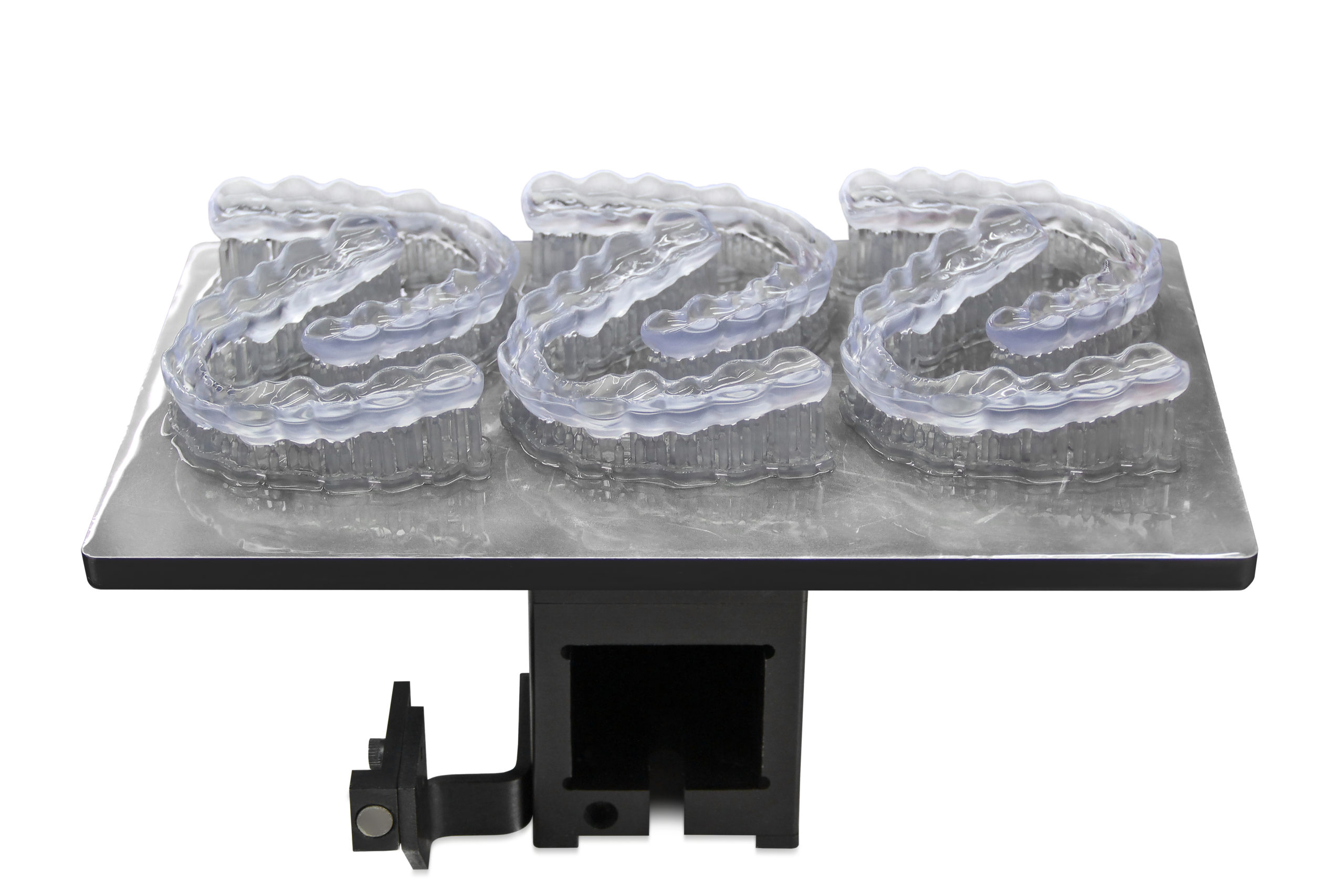 Mouth guards printed with SmileGuard on build plate.
SmileGuard has been in development for over two years, begun with the goal of developing a material that not only was comfortable for patients to wear, but durable enough that they wouldn’t have to replace their mouth guards every few months. Desktop Health boasts that SmileGuard provides the perfect balance of comfort and strength needed for any bite splint, night guards, or mouth guard a dentist might need to prescribe. The material also offers high impact resistance to handle a patient’s grinding, clenching, and gnashing of teeth.
According to Ric Fulop, Founder and CEO of Desktop Metal, he states, “Every year, dentists and orthodontists prescribe millions of bite splints or night guards to prevent patients from clenching and grinding their teeth. These conditions can cause pain, headaches, sleep disruption and also damage teeth. When made using traditional techniques, these devices typically require several steps and several visits to make the final product. It takes time to diagnose a patient, make impressions, and then manufacture custom-fitting for the patient. Now with this resin, dentists and orthodontists have a fast, easy and reliable way to produce custom-made devices while the patient waits at the office. This is another milestone in dental innovation.”
The resin could be a great tool for dentists to add to their arsenal. The fact that it will cut the typical turnaround times to get a patient a mouth guard from 2-3 weeks to one hour may be the biggest advantage. Now, all a patient has to do is to go into their local dentist, get their mouth scanned and, within an hour or so, have a night guard printed to protect them against teeth grinding ailments. Granted, the guard needs to be polished, but still all of this can be delivered within one business day.
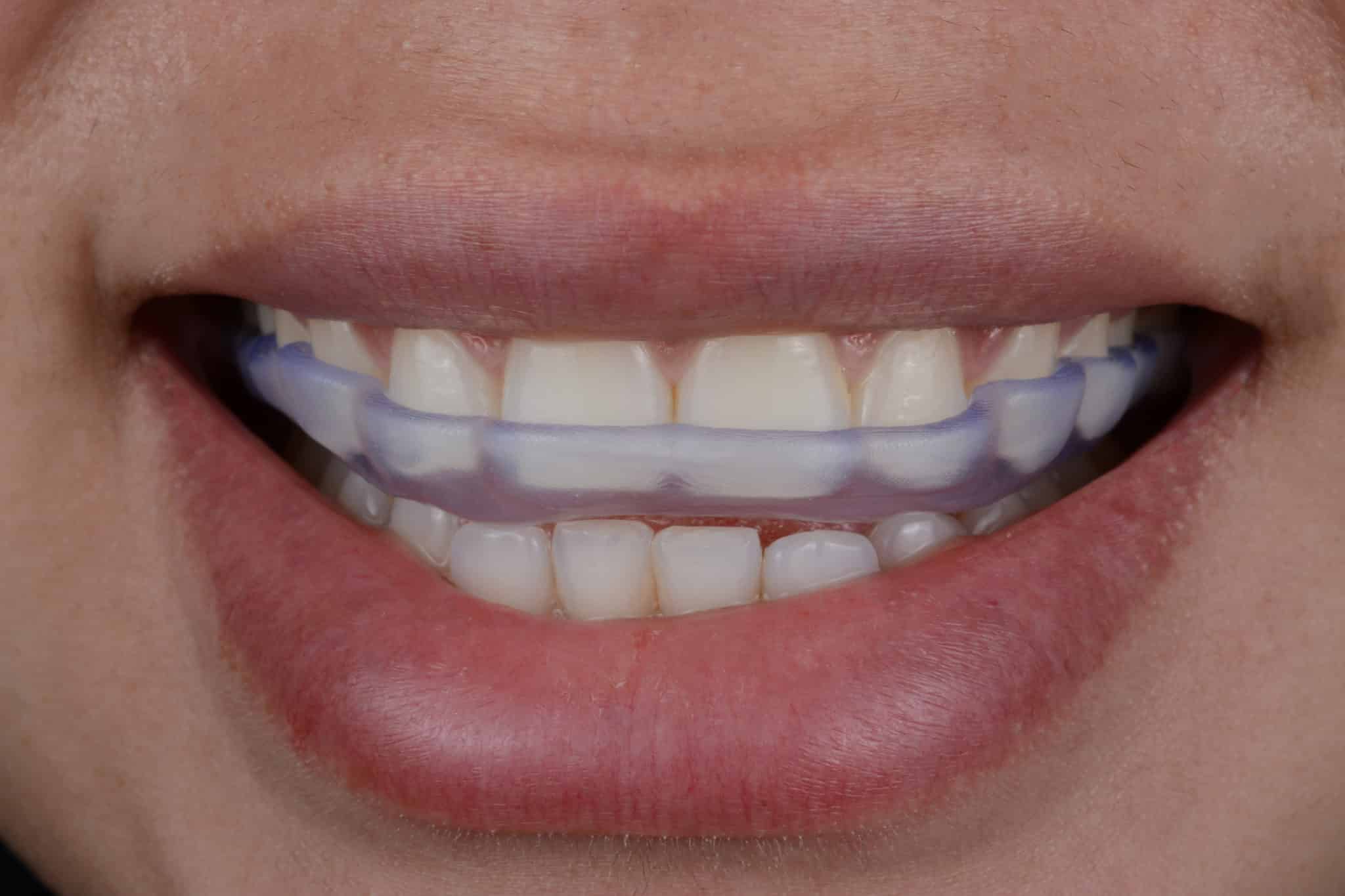 Dental Guard Printed with SmileGuard
The resin may be hitting the market at the perfect time too. This area of dentistry is quickly growing and 45% of dental labs are already 3D printing oral equipment. If Desktop Health’s SmileGuard resin can break into this booming market it could give them a financial flow for years to come.
The new material represents a clear advancement for the dental industry and 3D printing industry as a whole. With the FDA’s 510(k) clearance it again legitimizes this technology and the benefits 3D printed biomedical materials can bring. The dental industry was one of the quickest to adopt 3D printing into its practices and with the progress we are seeing, we are excited to see the next innovation that comes from this field.
Subscribe to Our Email Newsletter
Stay up-to-date on all the latest news from the 3D printing industry and receive information and offers from third party vendors.
Print Services
Upload your 3D Models and get them printed quickly and efficiently.













You May Also Like
AM Investment Strategies 2026 Sets the Stage for AMS 2027
AM Investment Strategies 2026 Nov. 5 · 12 p.m. ET · Free online event RESERVE YOUR SPOT ↗ A one-hour online discussion featuring some of the biggest names in 3D...
With Its Latest $200M Round, ICON May Be Running Away With the 3D Printed Construction Market
I used to view ICON, the Austin-based additive construction (AC) firm, as one of a handful of companies that could realistically consider itself the leader of the 3D printed construction...
How Should Businesses Build New Business? Dirk Simon Weighs In — Part 1
Dirk Simon had deep experience in materials and chemistry before joining the 3D printing industry. Instrumental in BASF and Farsoon’s market introduction, Dirk has spent a lot of time thinking...
3D Printing Services Near $2.5B as AM Market Shifts Beyond Hardware
The additive manufacturing market may be growing again, but one of the more interesting numbers behind that recovery has little to do with selling 3D printers. AM services generated nearly...