Conflux Achieves AS9100D Aerospace Certification for 3D Printed Heat Exchangers

Conflux Technology is one of the few firms focusing directly on the potentially lucrative additive manufacturing (AM) application of 3D printed heat exchangers. The Aussie startup is now in an even better position to drive that application forward, as it has achieved certification standard AS9100D. This means that its heat exchangers are a step closer for use in aerospace.
3D Printing Heat Exchangers
Launching from the world of F1 racing in 2015, Conflux saw heat exchangers as a key application area for AM technology. By 2017, it had released its first design and soon, took on some crucial industry backers. This included AM Ventures, which was involved in a $6 million Series A round. It’s already on the road to developing new heat exchanger models, including a water charge air cooled variety. It has also partnered with GKN Additive to broaden the availability of its products.
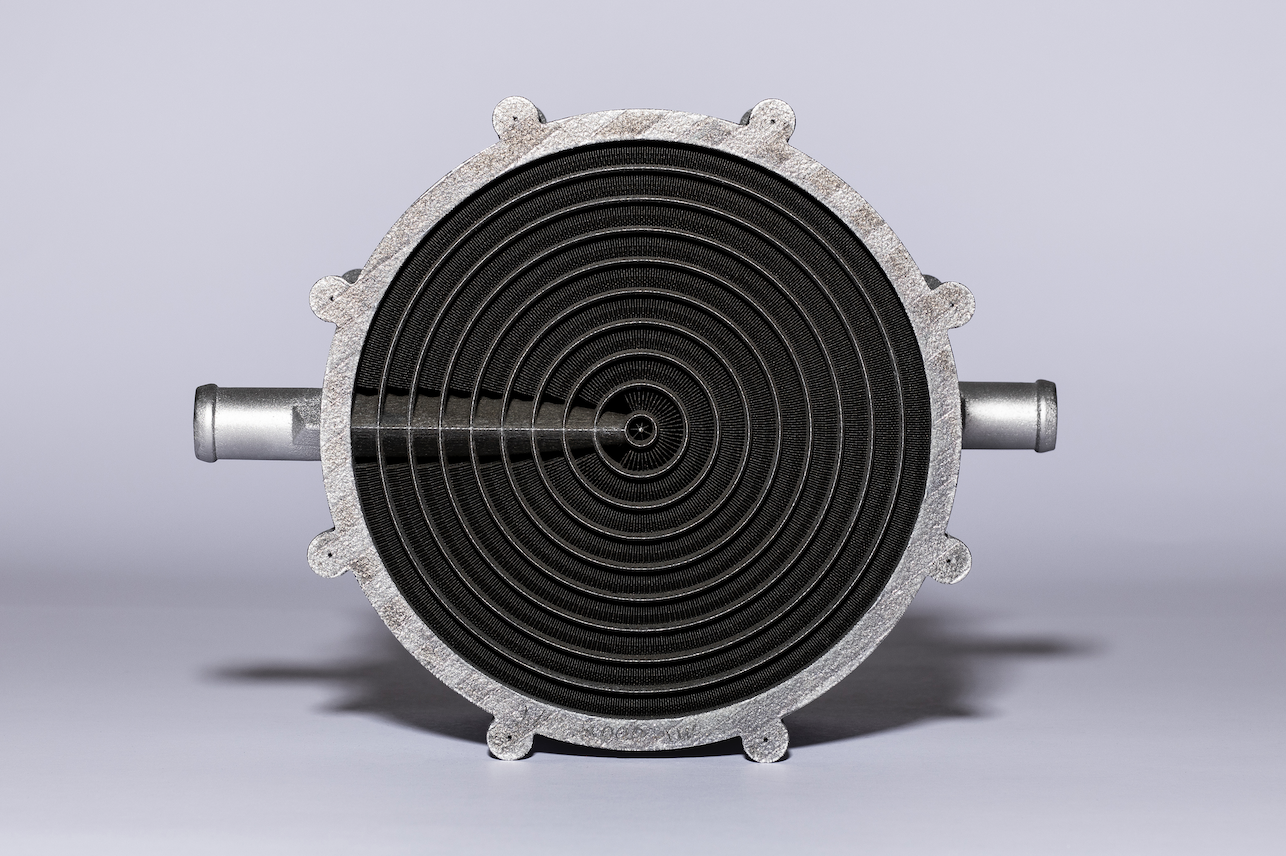
A water charge air cooler heat exchanger from Conflux Technology. Image courtesy of Conflux Technology.
AM Ventures Managing Partner Arno Held described the benefit of 3D printing heat exchangers, saying, “Heat exchangers are one of the biggest applications in 3D printing. Highly complex geometries enabling a more efficient thermal management in order to reduce energy consumption and waste of materials require highly qualified experts who are capable of mastering the best manufacturing technologies and software tools. This is exactly what makes the Conflux team unique in this world.”
Taking Off in Aerospace
As it seeks to commercialize its technology, Conflux is aiming for the skies. Aerospace companies, in particular, are looking for ways to optimize efficiency, thereby reducing their dependence on jet fuels, increasingly rare and volatile in price. For this reason, the AS9100D is key. An international Quality Management System standard for the Aerospace, Space and Defense, the certification is even more substantial than the ISO9001:2015 and is over seen by International Aerospace Quality Group, a certification scheme led by several major Aerospace primes.
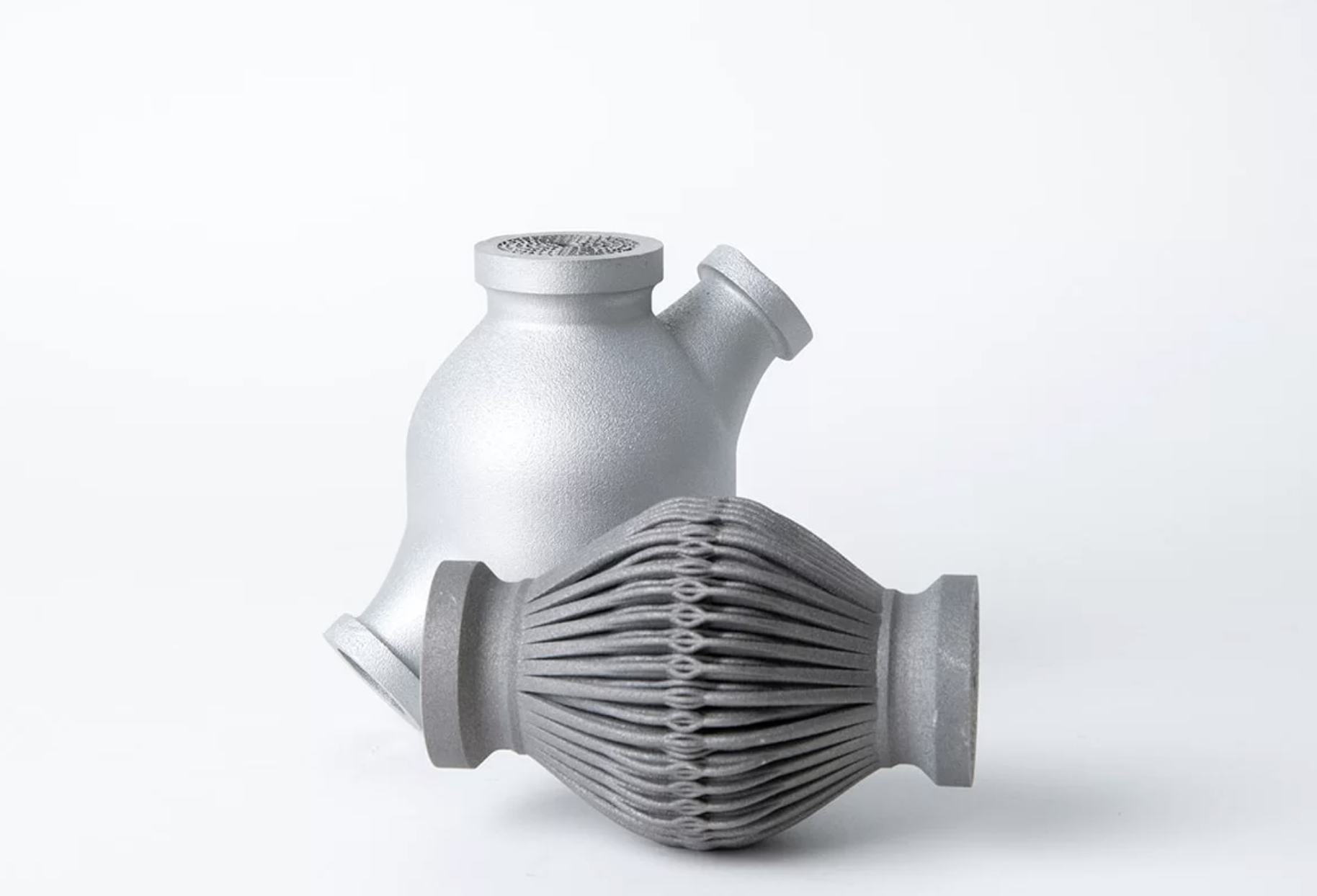
A Conflux heat exchanger
The auditing process, which occurs over six months, is being performed by Andrew Milner, who previously performed certification for several aerospace/defense companies before joining Conflux as Business Analyst and Quality Assurance expert. Milner said of the latest achievement, “This marks a considerable step up in our Quality Assurance strategy, and will demonstrate the organization’s commitment to providing the highest standards of quality and technical excellence to our customers.”
Having completed the first stage of its certification, Conflux believes it will finalize the process by the beginning of 2023. As it does so, multiple other firms are beginning to catch on to focusing on application-specific opportunities for 3D printing. Holo, for instance, is dedicated to 3D printed copper heat sinks. Additive Drives, another AM Ventures portfolio company, is targeting electric motors. Tackling one area allows these companies to perfect a given use case that can then be applied across entire industries in important ways. Once they prove crucial to their customers, one can imagine a wave of consolidation that occurs, where they are acquired piecemeal by various entities or bought all at once to create a powerful conglomerate.
Subscribe to Our Email Newsletter
Stay up-to-date on all the latest news from the 3D printing industry and receive information and offers from third party vendors.
Print Services
Upload your 3D Models and get them printed quickly and efficiently.













You May Also Like
EOS Joins the MAT‑H2 Consortium
EOS is joining the MAT‑H2 consortium. MAT is an EU-funded group that aims to do research into a hydrogen-led economy. The thinking is that hydrogen will be a clean energy...
Where the Money is Going, Part Two: Why All Roads Lead to AI
In Part One of this article, Vanesa Listek expertly described the major themes driving infrastructure investment so far this decade, illustrating how the same concerns are driving both public and...
DTU 3D Prints New Fuel Cell Design With 5x Power Boost
Technical University of Denmark (DTU) researchers have used Lithoz ceramics 3D printing to make more efficient hydrogen fuel cells. With a part made from Lithoz Yttria Fully Stabilized Zirconia (8YSZ),...
Fraunhofer ILT Tests 3D Printed Titanium Reactors to Generate Hydrogen Onboard Heavy Vehicles
The Aachen-based Fraunhofer Institute for Laser Technology (Fraunhofer ILT) is to research titanium aluminide hydrogen reactors and heat exchangers. The hope is that lightweight, better-performing 3D printed components will make...