Terran Orbital To Go Public in $1.58B SPAC Deal

Terran Orbital will go public through a merger with blank-check firm Tailwind Two Acquisition (NYSE: TWNT) in a deal that would value the nano- and micro-satellite manufacturer at $1.58 billion. Terran will get $345 million in cash as part of the newly announced transaction, including a $50 million private investment in public equity (PIPE) round from Florida backer AE Industrial Partners and long-term Terran investor Lockheed Martin. Once the transaction is closed in the first quarter of 2022, Terran Orbital will be listed on the New York Stock Exchange (NYSE) under the ticker “LLAP.”
As a pioneer of small satellite developments, Terran Orbital is a one-stop shop for space manufacturing capabilities and delivering persistent, high-resolution intelligence data. Founded in 2013, the company worked under the radar for years, establishing relationships across a broad range of civil, military, commercial, and classified customers. Today, it boasts partnerships with some of the biggest brands in aerospace, including Lockheed, SpaceX, and PredaSAR, and reports yearly revenues in the $25 through $35 million range.
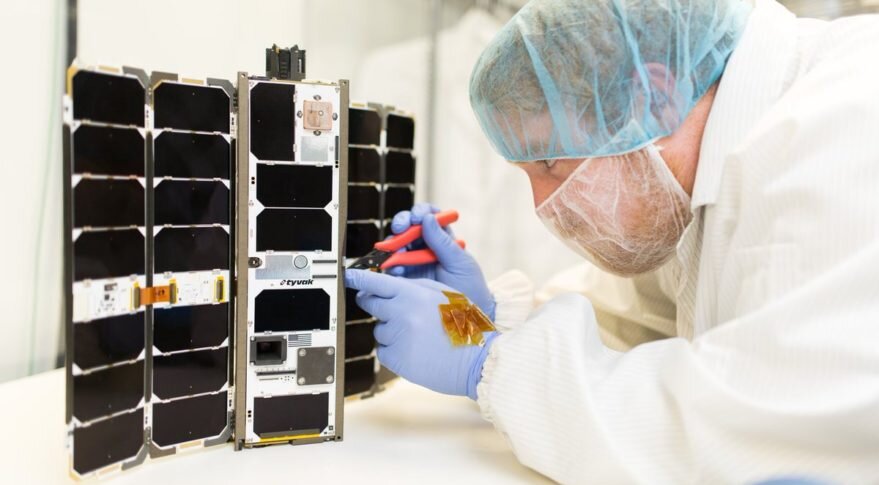
EchoStar orders S-band smallsats from Terran Orbital. Image courtesy of Terran Orbital.
Satellite solutions are a huge opportunity right now, and Terran Orbital is on a mission to industrialize the smallsat industry. As part of an ongoing expansion strategy, the company announced last month plans to develop a $300 million, 660,000 square foot manufacturing facility near Cape Canaveral with 3D printing capabilities to accelerate spacecraft delivery to market. The site will also produce the highest quality, technologically advanced, printed circuit board assembly with extensive electronic storage vaults.
With the development of one of the largest vertically integrated satellite manufacturing plants globally, Terran Orbital hopes to capitalize on a high-growth, high-margin business with a $9 billion pipeline. Based on this estimate, Boris Becker, President of Satellite Solutions at Terran, has projected annual revenues of almost $1 billion for the company by 2026.
“Right now, we have a backlog of 75 million dollars on funded contracts. We are going to grow our capacity, initially in Irvine [California] and further with our planned 660,000 manufacturing facility capable of building multiple satellite models based on our proven platforms and customer needs,” said Becker during an investor call on October 28, 2021. “We are the new space. We are building the vessels that will sail into the new maritime, meeting our customer’s needs for exploration, commerce, and security.”
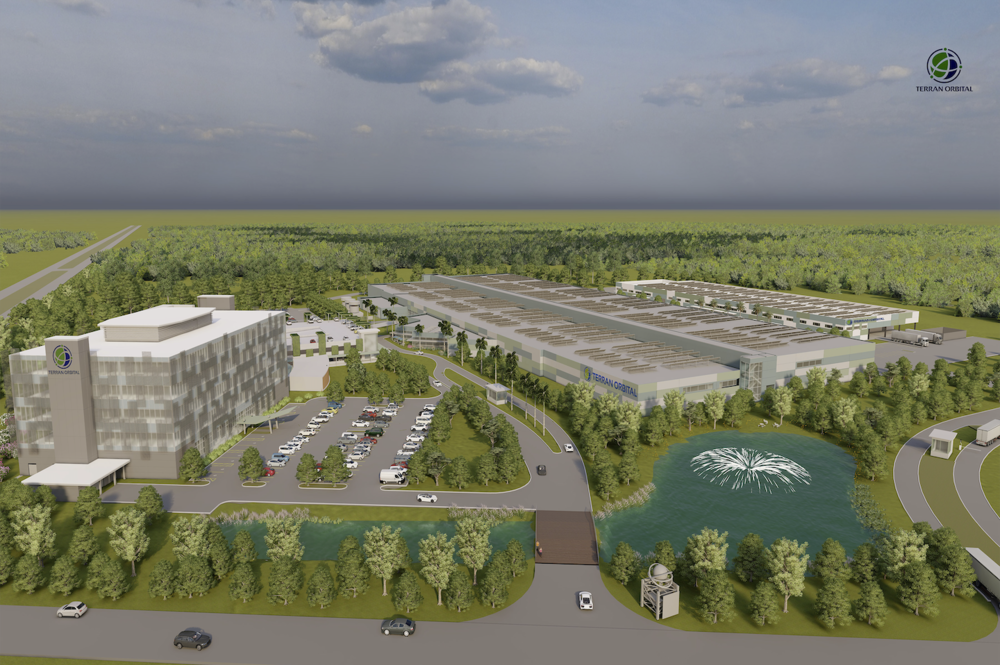
Rendering of Terran Orbital’s satellite construction facility in Florida. Image courtesy of Terran Orbital
In addition, Terran Orbital is capitalizing on its fully integrated manufacturing capacities to launch one of the most advanced earth observation constellations of small satellites. Once operational, it will unlock a high-growth, high-margin data-as-a-service business model that, according to CEO and Co-founder Marc Bell, will be “truly transformational.” This will result from highly persistent, real-time earth imagery as a service that will make Earth observation data more abundant and accessible than ever before.
The satellite space industry will undoubtedly play a critical role in the future of space infrastructure and exploration. As a result, Terran is gearing up to deliver products to customers that would otherwise take weeks or months to make. Eager to fix this shortage, Terran has even announced new commercial partnerships with BigBear.ai, a new leader in artificial intelligence (AI) and decision dominance, and mission-critical space solutions provider Redwire to develop and enhance next-generation AI and space offerings. Bell said Terran is the largest independently-owned manufacturer of small satellites in the United States and could grow even more.
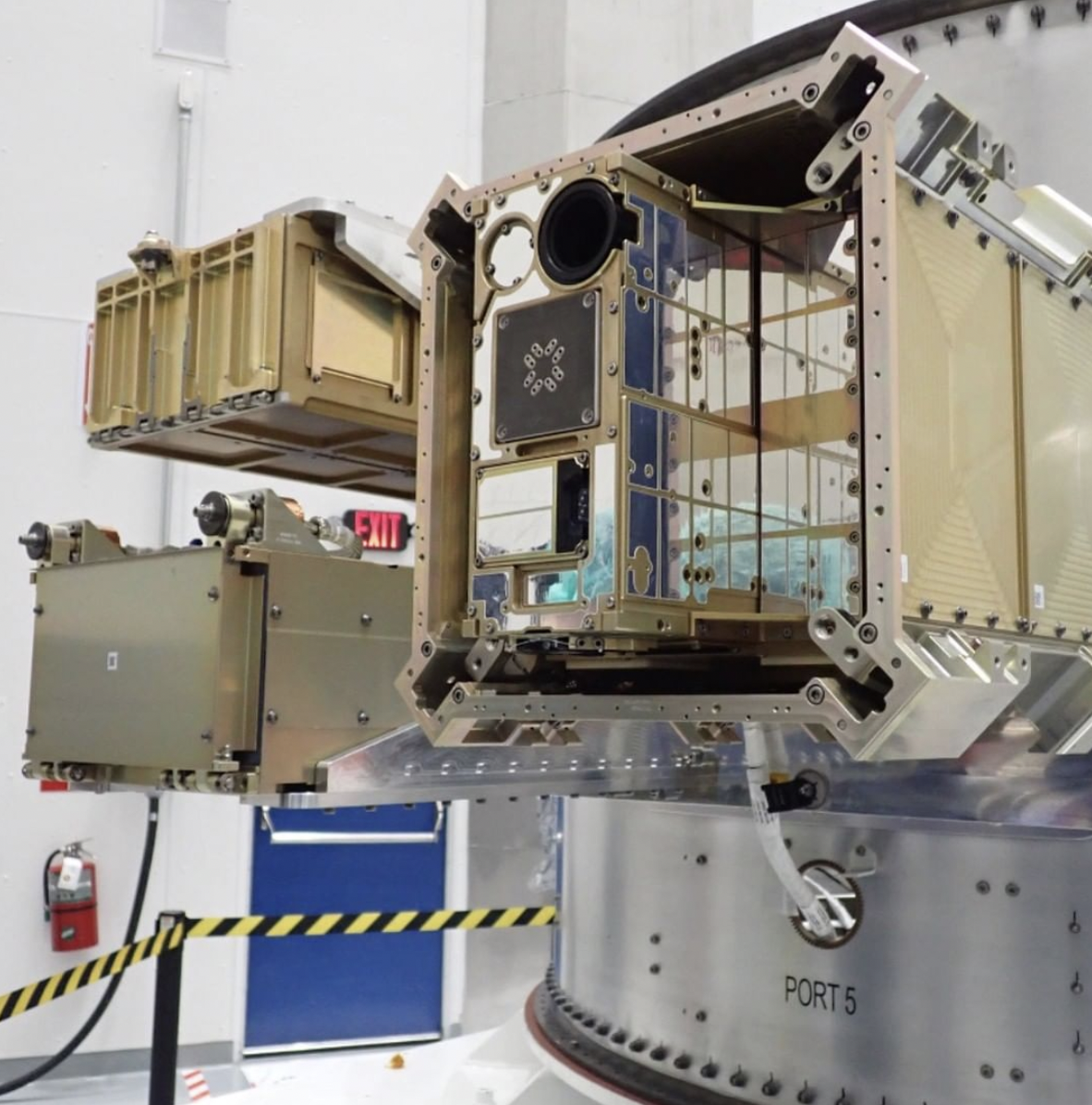
Successful integration of Terran Orbital satellite into SpaceX Falcon 9 Transporter 2. Image courtesy of Terran Orbital via Instagram
News of the deal comes when SPAC mergers in the US are facing a wave of litigation under the scrutiny of the Securities and Exchange Commission (SEC). Since the SPAC boom took off last year, the merger deals have raised roughly $83 billion in gross proceeds from 237 transactions in 2020 and $138 billion in 2021.
SPACs are companies with no business operations set up for the sole purpose of raising capital through an initial public offering to buy an existing company. Even though the rate of these types of deals has slowed down, Terran is joining a wave of space companies going public via blank-check merger deals, such as Rocket Lab, Astra Space, Redwire, and Virgin Galactic.
All of these companies have one thing in common; they are leveraging 3D printing for spacecraft production. Ever since NASA, SpaceX, and several other leading businesses began relying on additive manufacturing to solve complex engineering issues over a decade ago, the use of the technology has now trickled down to pretty much all space-related efforts.
Seeking more efficient spacecraft manufacturing, most space businesses today rely on 3D printing technologies to produce specific parts for rockets, satellites, and other space vehicles, just like Terran will in its upcoming Florida facility. With space ventures becoming one of the most publicized trends in years and thousands of small satellites set to launch over the next decade, Terran Orbital is ideally positioned to meet the sector’s demand, offering proven, innovative, cost-effective small satellites for governments and private companies.
Subscribe to Our Email Newsletter
Stay up-to-date on all the latest news from the 3D printing industry and receive information and offers from third party vendors.
Print Services
Upload your 3D Models and get them printed quickly and efficiently.











You May Also Like
3D Printing Financials: Velo3D Lists on Nasdaq and Tightens Its Path to Profitability
After months of cost cuts and restructuring, Velo3D (Nasdaq: VELO) says it’s turning a corner. The company, which recently uplisted to Nasdaq under the ticker VELO, reported its latest quarterly...
Outlaw3D: FBI Director’s 3D Printed Gun Gifts Destroyed in New Zealand
During a visit to New Zealand this July, FBI Director Kash Patel cut the ribbon on the bureau’s first standalone office in Wellington. At the same time, he presented senior...
Daring AM: Changing Landscape for 3D Printed Guns
3D printed guns continue to draw attention from lawmakers, tech platforms, and law enforcement. Difficult to trace, these ghost guns can be made at home with a 3D printer and...
“Ghost” Guns: The New Normal?
The rise of 3D printing has transformed manufacturing, offering innovations in medicine, architecture, and aerospace. But with any technology, progress brings challenges. Nowhere is this more evident than in the...