China’s Belt and 3D Printed Road: Embrace and Extend

China has publicly advocated for increased adoption of high-tech and innovative technologies across the country. The Made in China 2025 industrial policy is just a part of a concerted effort by Chinese policymakers to take the nation from just being the world’s workshop to being its cleanroom and lab. China wishes to lead in high-volume and high-quality manufacturing. From being a country where things are assembled, it wants to be a country where they are invented and developed. So, not Designed in California and Made in China, but Designed in China and Made in China.
As discussed in the previous article, we can typically see that China is growing in technological prowess and capability stage-by-stage for different markets and technologies. To sum up these stages, we can conclude that, on the whole:
- Long term strategic goals are made.
- These are included in five-year plans
- Plans are localized.
- Clusters are activated.
- Research and commercialization are stimulated.
- Funding is brought in.
- Foreign expertise is sought.
- China’s national competence is developed.
- Products and companies are internationalized.
- And the resulting prowess is then used to rinse and repeat the process for new adjacent technology.
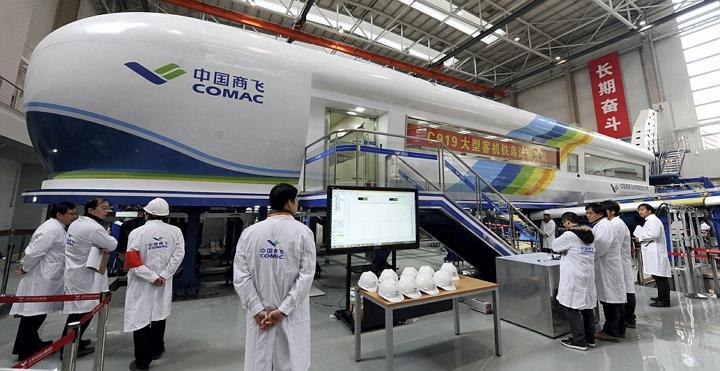

Zhao Tong, Managing Director of Arburg China (second from right), and Huan Yin, Business Development Director (fourth from right), officially opened the Arburg Prototyping Center in Shanghai in March 2021. The location now has four Freeformers for AM. Image courtesy of Arburg.

3D printed rudder actuator developed and manufactured by Liebherr-Aerospace
Subscribe to Our Email Newsletter
Stay up-to-date on all the latest news from the 3D printing industry and receive information and offers from third party vendors.
Print Services
Upload your 3D Models and get them printed quickly and efficiently.











You May Also Like
“A More Complete End-to-End Solution”: Stratasys Launches Post-Processing Partnership Program
I think it’s safe to say that post-processing is no longer considered the “dirty little secret” of 3D printing that it once was, with users realizing that finishing is just...
Why SiC-Dedicated Additive Manufacturing Is Gaining Industrial Relevance
Silicon carbide is not a material problem—it’s a manufacturing one. Silicon carbide (SiC) has become a critical material across semiconductors, aerospace, energy, and defense. Its exceptional thermal stability, chemical resistance,...
Championing a Made-in-America Future for Additive Manufacturing
As the additive manufacturing industry continues its rapid global evolution, one theme has risen to the top of strategic conversations: the importance of strengthening domestic production to support national competitiveness...
Friendshoring and Additive Manufacturing: Turning Australia’s Research Strength into Commercial Impact
Global supply chains are being re-written. After decades of globalisation driven primarily by cost efficiency, geopolitical tensions, trade disputes and pandemic-era disruptions have exposed the risks of concentrating manufacturing and...