
Why SiC-Dedicated Additive Manufacturing Is Gaining Industrial Relevance


Silicon carbide is not a material problem—it’s a manufacturing one.
Silicon carbide (SiC) has become a critical material across semiconductors, aerospace, energy, and defense. Its exceptional thermal stability, chemical resistance, and mechanical strength make it indispensable for extreme operating environments.
Yet despite its advantages, the industrial adoption of SiC has lagged behind expectations. The reason is not the material itself, but the lack of manufacturing systems capable of producing SiC components efficiently, reliably, and at scale.
Why SiC Has Always Been Difficult to Manufacture
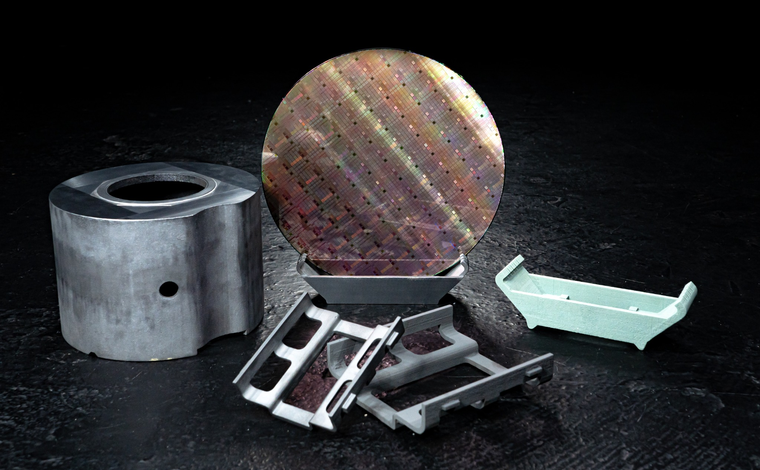
From a manufacturing perspective, SiC presents fundamental challenges. SiC powders are typically non-spherical, with low flowability that makes uniform powder spreading difficult. Forming consistent, defect-free layers is far more complex than with conventional ceramic powders.
In addition, SiC’s extremely high hardness accelerates equipment wear and significantly increases the difficulty of post-processing. These characteristics narrow the process window and amplify sensitivity to even small variations in operating conditions.
As a result, SiC components have traditionally relied on slip casting, CIP(Cold Isostatic Pressing), and machining-intensive processes—methods that provide stability, but at the cost of long lead times, high tooling requirements, and limited design flexibility.
Why Generic Ceramic 3D Printers Struggle with SiC
Additive manufacturing has long been viewed as a potential solution, but adoption for SiC has been slow. Most ceramic 3D printers are designed as general-purpose systems optimized for oxide ceramics such as alumina or zirconia.
Oxide ceramics typically use more spherical powders with stable flow behavior and wider processing windows. SiC, by contrast, demands precise control over powder deposition, binder penetration, green strength, and IR curing conditions.
In generic ceramic AM systems, this mismatch often leads to uneven powder layers, insufficient green strength, distortion or cracking during curing and post-processing, and poor process repeatability.
What Changed with MADDE’s SiC-Dedicated Printing
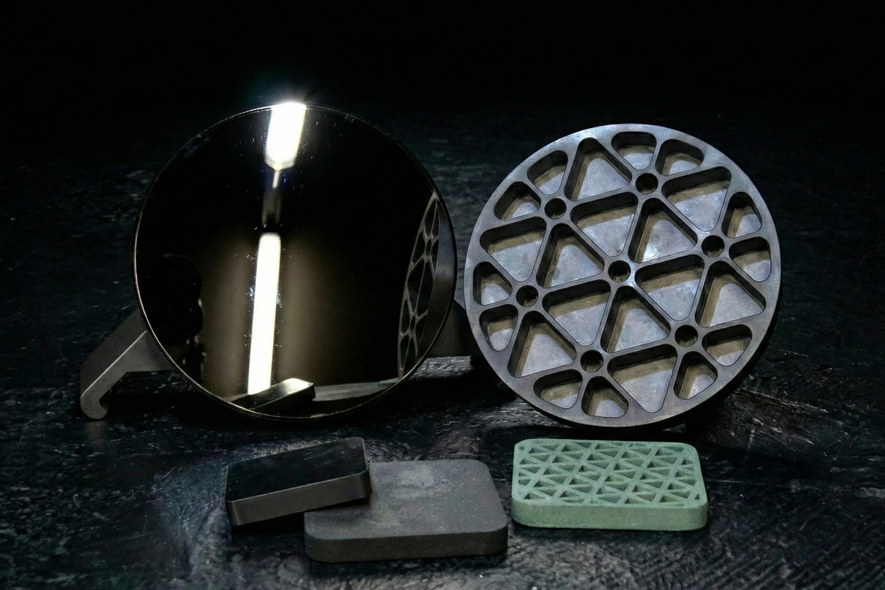
To address these constraints, MADDE pursued a different approach: developing a binder jetting platform engineered specifically for SiC, rather than adapting existing ceramic printers. Printer architecture, powder handling, binder delivery, and IR curing parameters were all designed around the realities of non-spherical, high-hardness SiC powders.
This material-focused approach has delivered tangible industrial results. Lead times that once stretched over several months have been reduced to a matter of weeks, while manufacturing costs have been significantly lowered by eliminating tooling and reducing machining requirements.
For industries such as semiconductor equipment and extreme-environment applications—where low-volume, highly customized parts are common—these improvements are not incremental. They fundamentally change how SiC components can be sourced, designed, and deployed.
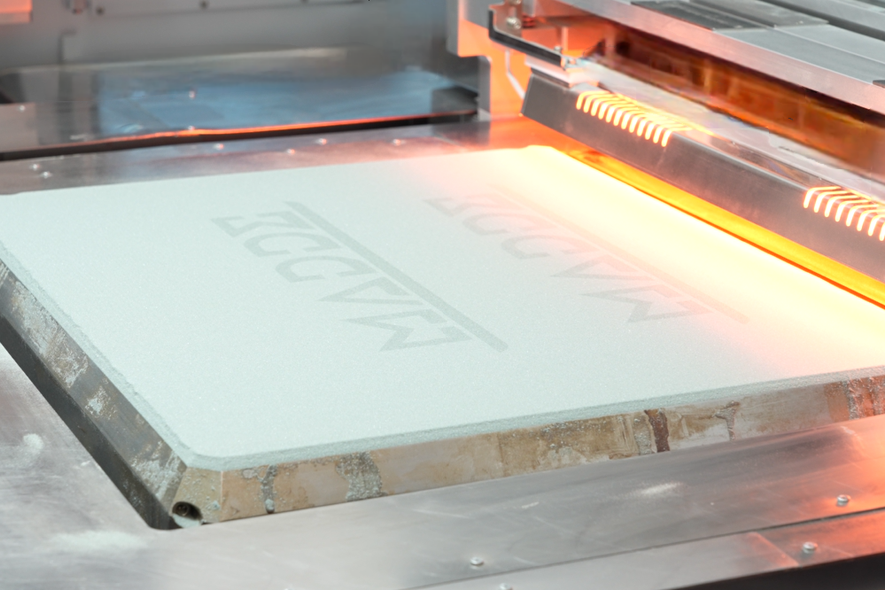
Today, SiC additive manufacturing is moving beyond experimental trials and becoming a viable production option, offering predictable quality, repeatability, and economic benefits. With dedicated systems and optimized processes, the traditional advantages of additive manufacturing—design freedom, rapid iteration, and flexible production—are finally being realized for SiC.
From Capability to Scale
Building on its SiC-dedicated additive manufacturing capability, MADDE has been rapidly expanding its customer base across industries such as semiconductor equipment and space applications. This capability has moved beyond technical validation and is now translating into repeatable industrial production and stable supply.
On this foundation, MADDE is preparing to scale its manufacturing operations, with plans to expand production capacity toward 2027 in response to growing industrial demand.
MADDE is a Platinum Sponsor for Additive Manufacturing Strategies (AMS), a three-day industry event taking place February 24–26 in New York City. The conference brings together industry leaders, policymakers, and innovators from across the global AM ecosystem. MADDE’s CEO Shinhu Cho will also present a talk on “Silicone Carbide Binder Jetting for Extreme-Environment Applications.” Registration is open via the AMS website.
Subscribe to Our Email Newsletter
Stay up-to-date on all the latest news from the 3D printing industry and receive information and offers from third party vendors.
Print Services
Upload your 3D Models and get them printed quickly and efficiently.













You May Also Like
10 Years of Multi Jet Fusion: Onsite at HP’s Vancouver, Washington Facility
At this year’s RAPID event in Boston, HP Additive Manufacturing Solutions celebrated ten years in the additive manufacturing (AM) market. The company ushered in the milestone with several innovations, including...
These 3D Printed Lattices Can Sense Damage Before Failure
A new paper, “Full-Field Damage Monitoring in Architected Lattices Using In situ Electrical Impedance Tomography,” points to lattices being able to detect damage. This could really help composites in critical...
3D Printing News Briefs, October 3, 2026: Hypersonics, Hotends, & More
We’re starting off with defense in this weekend’s 3D Printing News Briefs, as Titomic was awarded a $5 million U.S. defense contract, and VulcanForms announced a partnership with Specter Aerospace...
3D Printing News Briefs, October 1, 2026: Defense, Enclosures, & More
In today’s 3D Printing News Briefs, we’re starting with defense news, first from Massivit and then from AML3D. Then we’ll move on to U.S. manufacturing of a new large-format LPBF...

























































