Robotics Firm Makes Lookalike Avatars for Concept Video Game with 3D Scanning

Back in the 1990s when I was growing up, fighting games like Mortal Kombat and Street Fighter were all the rage, and I, like my peers, enjoyed playing them. However, I always wished they had a wider variety of characters from which to choose. These days, 3D scanning is often used to create realistic avatars for applications such as shopping, virtual reality, and, as it so happens, video games. Our editor, Michael Molitch-Hou, even designed a 3D printable game by 3D scanning himself and his environment.
Germany and Russia-based handheld 3D scanner developer Thor3D recently published a case study about their partnership with robotics and digital technologies company Fora Robotics in which its Calibry scanner was used to create a digital 3D model of a person for a mobile martial arts video game called Fight for Yourself, or FFY. With this game, you don’t just select any character—you can play as, or against, an avatar that looks just like you!
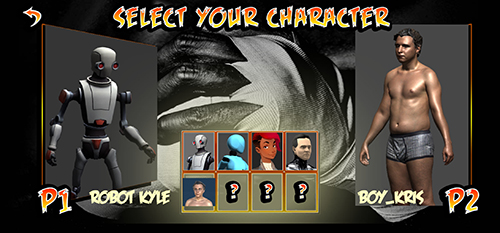
Game menu.
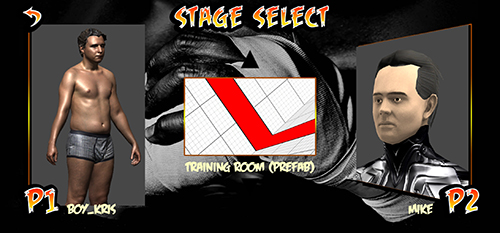
Selecting the location of the battle.
As GiantBomb explained, “That bad guy looks awfully familiar… probably because it’s you. This is for games where you fight yourself or an evil version of yourself.”
Fora Robotics’ goal, as the Thor3D case study explains, is to “digitize real people and upload them into a game where anyone can control their own avatar.” A larger, more overarching aim is to develop a pipeline that will make it extremely easy for people to make their own 3D avatars, animate them, and put them into mobile and/or video games.

The company used the Calibry 3D scanner, Calibry nest and 3D Max software, and an anthropometric suit to make a test run of its avatar-creating abilities for its FFY concept game. The first step was using the Calibry scanner to create a digital copy of a person; because the avatar will be wearing sport shorts later in the game, the model needs to be digitized without clothes.

Untextured scan of the model
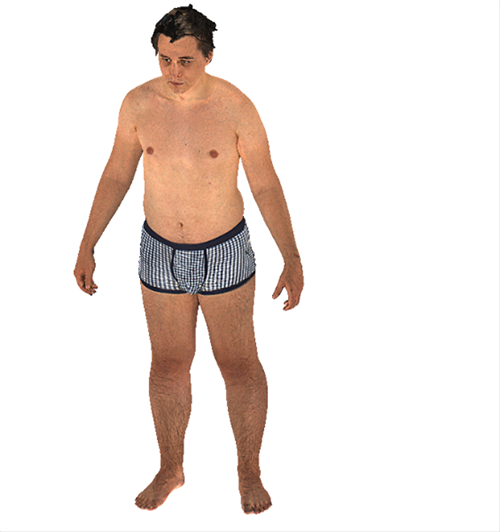
Textured scan of the same model
This is followed by animating the character, which can be a little slow-going but should be worth it in the end when an avatar has realistic movements during gameplay. The 3D modeler really had to pay attention to the character’s anatomy in order to make the movements look natural, and motion capture technology can help. In this case, Fora Robotics used an anthropometric suit to record the movements of the actor, capturing the data in real time.
Finally, before loading the 3D model in the game, Fora Robotics made a small retopology of the avatar in the 3D Max software. This is the process of converting high-resolution models into something smaller to be used for animation. Basically, you need to create another mesh that simplifies the first HD asset so it can work in the video or mobile game.
While Fora Robotics has created a concept FFY game, it’s not quite finished, and is currently in testing.

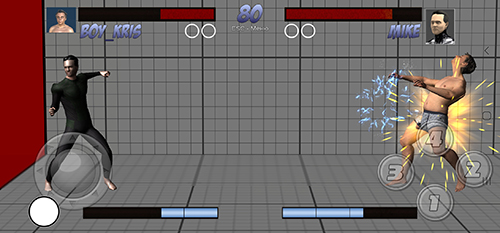
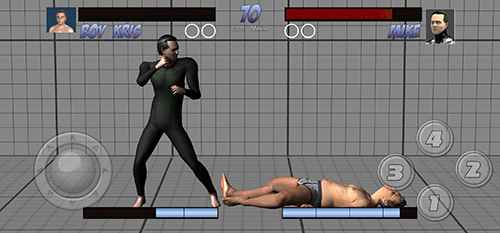
The company’s future plans are to scan professional athletes and create 3D avatars of them to add to the game. Fora Robotics is currently in the middle of negotiations with a national martial arts team for this potential project. If all goes well, game players can scan themselves into the game and compete with these professional fighters or other game character avatars. Thor3D suggested the possibility of scanning and digitizing the other employees at your job, and then arranging a competition between your colleagues’ avatars. In my opinion, this could even be a major hit at family reunions!
(Source/Images: Thor3D)
Subscribe to Our Email Newsletter
Stay up-to-date on all the latest news from the 3D printing industry and receive information and offers from third party vendors.
Print Services
Upload your 3D Models and get them printed quickly and efficiently.











You May Also Like
3D Printing Predictions for 2026: Scaling AM Through Software
For several years, we have seen additive manufacturing software play a more central role in our industry. LPBF machines achieve higher yields and can produce thinner-walled parts thanks to the...
Who Merged, Who Was Acquired, and Who Disappeared in 3D Printing in 2025
2025 was a year of change for 3D printing, with much of the year’s activity coming from mergers, acquisitions, restructurings, and company exits. Together, these moves indicate a broader shift:...
3D Printing News Briefs, December 27, 2025: Additive Construction in the U.S., Canada, & India
In this holiday weekend’s 3D Printing News Briefs, the focus is entirely on additive construction! We’ll start with news out of North America, specifically Canada and the United States, and...
A Year in 3D Prints: A Visual Journey Through 2025 in AM
2025 was a year of milestones and experimentation in additive manufacturing (AM), marked not only by technical progress but also by the mergers, acquisitions, and restructurings that reshaped the industry,...