
USC Researchers Working on Free Gaming Avatar Program Using 3D Scans

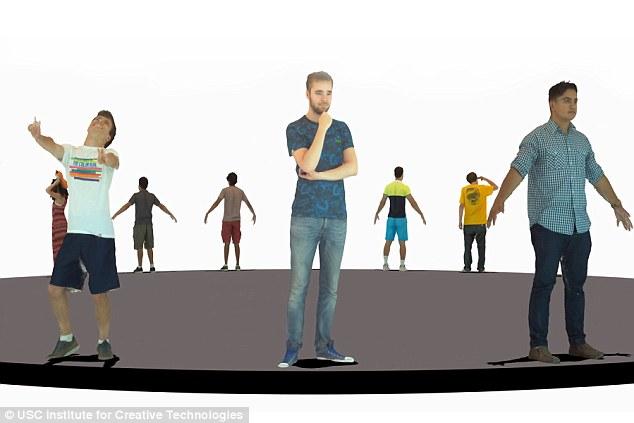
A University of Southern California research team has revolutionized modern communication by including users as part of its software. Individuals can now scan their own faces and bodies, upload these features into a simulation, and create a personal avatar. These personal avatars have applications in gaming, and they can also be used in police training and military programs. No doubt this will become a very popular concept as people create more personal ways to communicate using digital platforms.
 So far avatars have been able to be inserted in a variety of animated activities using “inexpensive sensing technology” such as Intel RealSense or Microsoft Kinect. Ari Shapiro, Research Scientist and head of Character Animation and Simulation research group, explained the goal of the project to the UK’s Daily Mail:
“We’re looking at all aspects of what makes people, people. We’re looking at how we can model a person so that it’s convincingly a person, so that it captures the essence of them. We’re trying to create a digital person that thinks, acts, and behaves like a regular person.”
A digital person who thinks and acts like a real person? Wow. In this era of the selfie, some of which are even 3D printed, this may not seem like a great achievement, but it is. Why? Because the goal is not simply to create avatars that look like us — but act like us too. If you have distinctive gestures or behaviors unique to your personality, this is what the research team is trying to capture with its new avatar technology. Until now, the kind of technology used to do this is expensive and out of touch for most people. A digital avatar which can then be rigged to emulate a specifc person’s behavior has been described as “changing the economics of the technology.”
And it gets even better. Shapiro has led this project with Evan Suma and Andrew Feng, in the works since 2014, and he explains that the goal is to make the software free to the public for the purposes of sparking creativity. Shapiro explains that they are trying to simplify the process for users:
“We’re giving everyone the ability to scan and animate themselves for free.We’re trying to foster innovation. While tools to create games and capture 3-D exist, the toolchain to bring the entire process together typically requires expert artistic intervention and a complicated set of processes.”
This software will allow its users to create an avatar of themselves in a mere four minutes, from scanning to uploading. A digital toolkit has also been designed that can be used with game engines like Unreal and Unity. The toolkit includes “scanning software, automatic rigging software, which converts 3-D models into a character, and a simulation software called SmartBody.”
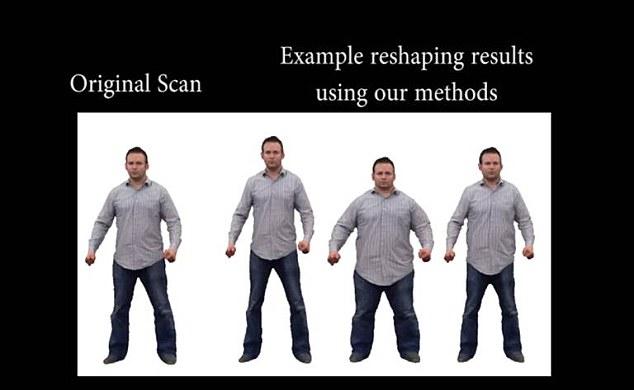
Avatars can also be autorigged and reshaped using a tool Shapiro and Feng have developed:
Shapiro predicts that there could be a revolution in social interaction as people use their own 3D avatars in gaming, trainings, and even when they are visiting virtual doctors. We will no doubt be hearing more about this new highly accessible 3D avatar technology. Discuss in the 3D Avatar forum over at 3DPB.com.
Subscribe to Our Email Newsletter
Stay up-to-date on all the latest news from the 3D printing industry and receive information and offers from third party vendors.
Print Services
Upload your 3D Models and get them printed quickly and efficiently.













You May Also Like
Kickstarter is Testing the Next Wave of Desktop 3D Printing
3D printers are raising serious money again…on Kickstarter, that is. Over the last few months, a new group of 3D printer campaigns has attracted millions of dollars and thousands of...
Stratasys vs. Bambu Lab: What’s Really Behind the $27.6M Patent Verdict?
Editor’s note: This is Part 1 of a two-part series by Xu Fanglei examining the technology and patent issues behind the Stratasys-Bambu Lab dispute. Part 1 looks at the U.S....
Bambu Lab and SUSAN FANG 3D Print for London Fashion Week
At London Fashion Week, some of the more unusual pieces on the runway came from 3D printers. Chinese fashion designer SUSAN FANG presented her Spring/Summer 2027 Air-Illusion collection at the...
Stratasys Wins $27.6M in Patent Case Against Bambu Lab; Bambu Challenges Verdict
Update, September 21, 2026: This article has been updated with a statement from Bambu Lab responding to the verdict, along with additional information about the company’s ongoing patent challenges against...
























































