Taiyo Nippon Sanso Corporation Opens 3D Printing R&D Lab

Taiyo Nippon Sanso Corporation (TNSC) has announced the opening of a new 3D printing lab, which it has dubbed the “Additive Manufacturing Advanced Room”. The project is yet another by the Japanese multinational industrial gas manufacturer to introduce additive manufacturing (AM) to its operations.
The lab is located at its Yamanashi Laboratory, where it will serve as a central location for research and development of 3D printing technologies. In it, the company has already installed Sapphire systems from VELO3D, LENS machines from Optomec and 3DPro gas management systems, which rely on TNSC’s own proprietary gas technology.
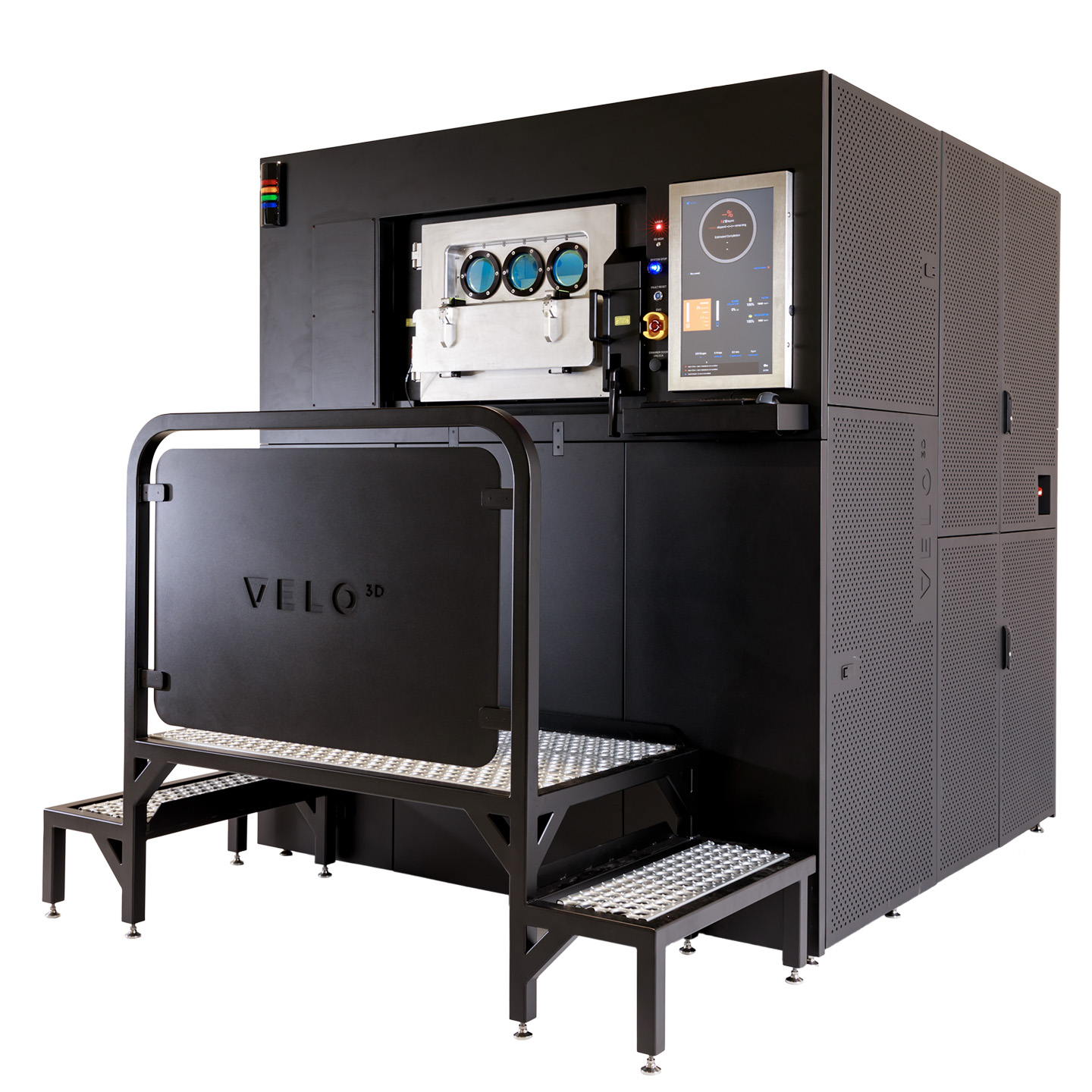
Velo3D’s Sapphire laser fusion system. Image courtesy of Velo3D.
A roughly $8 billion company in terms of 2019 revenues, TNSC is Japan’s largest industrial gas producer and one of the five leading industrial gas suppliers globally. These products range from gasses like oxygen, nitrogen and argon to the steel, electronics, auto, construction, food, chemical and shipbuilding industries to the equipment that manages those gasses, such as purification devices, air separation plants for liquid helium, and more. It also provides liquid petroleum for use in commercial vehicles and manufactures Thermos-brand products, such as stainless-steel water bottles.
Concurrently with the opening of the new facility, TNSC has said that it believes AM to be an essential technology to the development of Industry 4.0, suggesting that the technology will be necessary for making industrial society more sustainable. Metal AM in particular has been targeted as a priority for the company as a part of its “Ortus Stage 2” mid-term management plan.
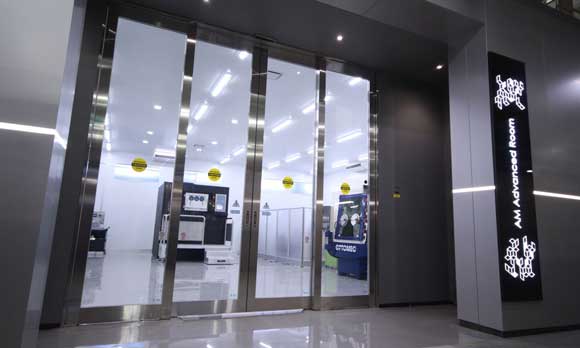
The Additive Manufacturing Advanced Room at TNSC. Image courtesy of TNSC.
As a maker of industrial gasses, the company is positioning itself as a player in supplying argon and other gasses to industrial 3D printer manufacturers and users. For this reason, the company has already partnered with one of the leading companies in metal powder manufacturing, LPW, for whom TNSC made itself a distributor.
Additionally, the Japanese group became a reseller of Optomec machines, improving the company’s form of directed energy deposition with its knowledge of gasses. TNSC moved on to align itself with service provider Sintavia, as well, to develop and commercialize gas flow processes.
Along with Sintavia and a slew of other companies—such as GE Additive, EOS, SLM Solutions, Materialise and Siemens—the Japanese group also became a co-founder of the Additive Manufacturer Green Trade Association. The AMGTA recently put out its first report analyzing the sustainability of metal 3D printing, in which it noted that, while there are many details that are not yet clear, the energy use of metal AM systems is generally higher than conventional manufacturing processes, but that this depends on the geometry of the part.
TNSC’s role in the trade group is interesting because, as a supplier of liquid petroleum, it plays its own role in the unsustainable practices of industrial society, as do other members of the consortium like GE and Siemens, who operate oil and gas divisions. Naturally, if we want to maintain any semblance of our existing industrial society, part optimization with 3D printing could be crucial; however, one wonders if emphasizing efficiency of design, particularly when it comes to gas vehicles or oil and gas infrastructure, 3D printing isn’t acting as a distraction from the actual changes that need to be made: reducing overall production and consumption and shifting to renewable energy.
Worth highlighting is the fact that Mitsubishi Chemical is a majority shareholder in TNSC, giving the Japanese manufacturing giant investments in plastic 3D printing materials (photopolymers and thermoplastics), directed energy deposition, gasses via TNSC and more.
Subscribe to Our Email Newsletter
Stay up-to-date on all the latest news from the 3D printing industry and receive information and offers from third party vendors.
Print Services
Upload your 3D Models and get them printed quickly and efficiently.













You May Also Like
Stratasys Showcases 3D Printed Automotive Applications & New Printer at IMTS 2026
Just ahead of last week’s International Manufacturing Technology Show (IMTS) in Chicago, Stratasys launched the F870, a new large-format, production-grade FDM 3D printing platform designed to drive industrial manufacturing at...
3D Printing Financials: $28M in China, U.S. Deals and a Metal AM Comeback
Money continues to go into additive manufacturing (AM). From a $30 million raise for a Chinese metal 3D printing company to new funding for naval AM and a European company...
Stratasys Wins $27.6M in Patent Case Against Bambu Lab; Bambu Challenges Verdict
Update, September 21, 2026: This article has been updated with a statement from Bambu Lab responding to the verdict, along with additional information about the company’s ongoing patent challenges against...
AMAsia Pulse: AM Investment Picks Up Across Asia-Pacific
The first half of September brought fresh investment and expansion activity across Asia-Pacific’s additive manufacturing sector. China’s Xinjinghe secured funding for an aerospace AM hub, South Korea’s Lincsolution outlined plans...