Aortica Corporation Creates 3D-Printed Alternative to Surgery for Abdominal Aortic Aneurysms

We can’t help but marvel at the capacity for just one new technology to change virtually everything about the way we live today, and in such varied ways. 3D printing makes possible, safer space travel by refining the manufacturing of rocket engine parts, allows visually impaired people to “see” artistic masterpieces with their fingertips, thanks to 3D-printed models, and it is literally saving lives in the field of medicine. Aortica Corporation in Washington, has announced a major advancement in the latter. It has developed a procedure for making patient-specific, 3D-printed devices that can be inserted into the aortas of patients experiencing abdominal aortic aneurysms (AAA).
The aorta is the main artery. It starts at the left ventricle of the heart and extends downward through the abdomen until it divides at the pelvis into two smaller arteries called the common iliac arteries. The aorta’s function is to carry oxygen in the blood from the heart to all areas of the body. It is the main conduit of newly oxygenated blood, so when something goes wrong with the aorta, the entire body is at serious risk. That is certainly the case with AAAs. When an aneurysm occurs, it means that the aorta has enlarged to 1 ½ times its normal size, resulting in a weakness in the wall of the artery. Occasionally, someone with AAA feels pain, which indicates that a rupture of the artery is imminent. If rupture does occur, there is massive internal hemorrhaging, which can cause shock and death within minutes if the patient is not treated.
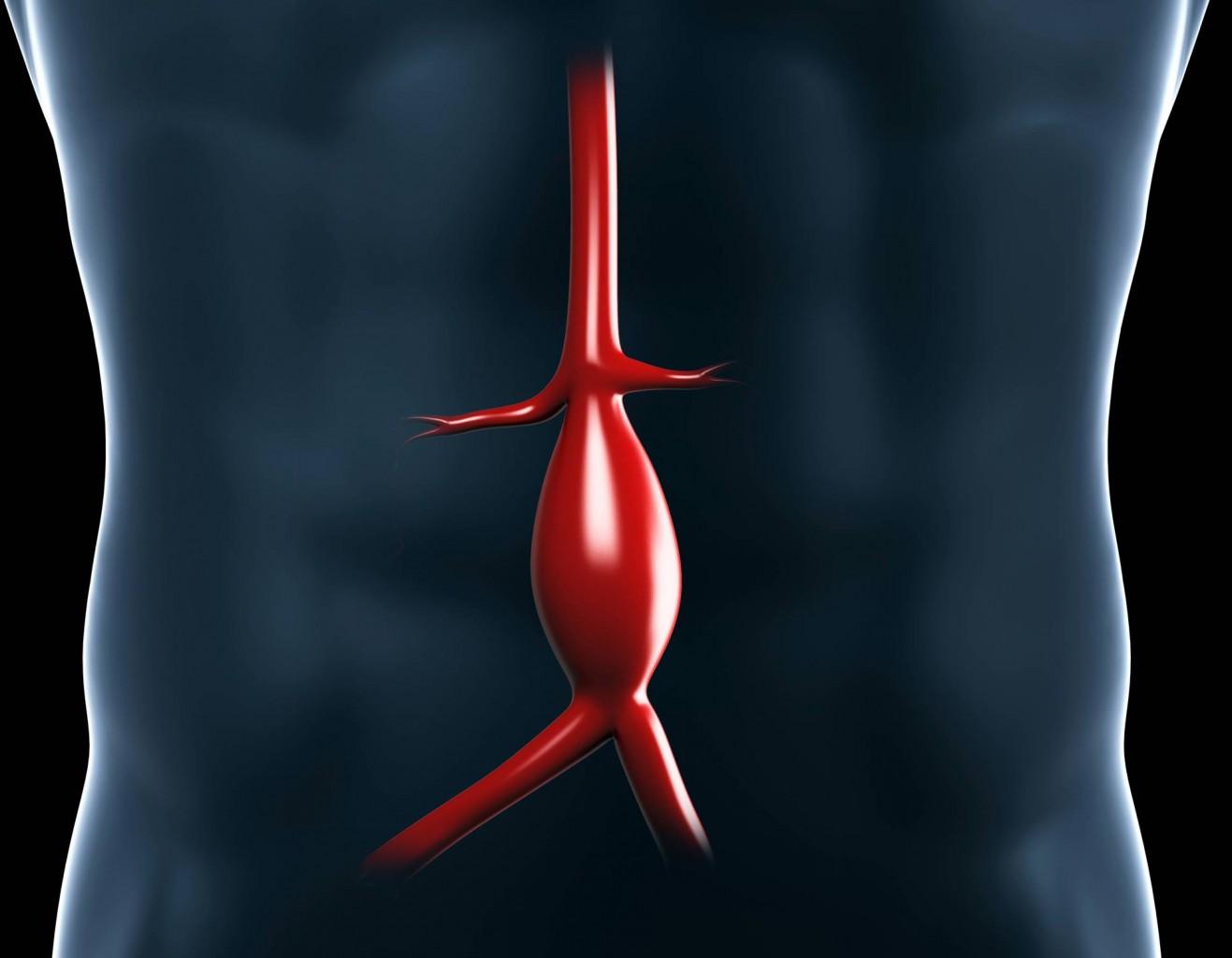 The AAA is the most common form of aneurysm. Since the ‘90s, Endovascular Aortic Repair (EVAR) has become the most common method for treated abdominal aortic aneurysms. Previously, surgeons had treated AAA with invasive, open surgery, but with EVAR, a catheter is placed in the aorta and then a stent graft, or endograft, is inserted through the catheter. The stent provides a conduit through which blood can be diverted from the aneurysm. With EVAR, the mortality rate from AAA is 6 times lower than that of the more invasive, open surgery procedure. Patients recover 75% faster with the stent placement, and hospital stays are less than half as long.
The problem with the EVAR is that as many as 40% of patients who develop aneurysms and require repair, have aortic anatomies that don’t accommodate the procedure for one reason or another. Rather than undergoing the more extensive surgery, such patients will soon benefit from Aortica Corporation, located on Mercer Island in Washington state. They have designed an alternative process that uses patients’ CT scans and 3D printing to produce custom endografts that can be used in for the EVAR procedure. This means a catheter can be used to insert the endograft and the patient avoids the more serious surgery.
Aortica Corporation has raised almost $7 million in funding thus far to help them complete an FDA study for the company’s new AAA treatment. What do you think of the potential that this 3D printing technology has for those suffering from AAA? Discuss in the AAA forum thread on 3DPB.com.
Subscribe to Our Email Newsletter
Stay up-to-date on all the latest news from the 3D printing industry and receive information and offers from third party vendors.
Print Services
Upload your 3D Models and get them printed quickly and efficiently.













You May Also Like
The “Apple Effect”: Are 3D Printers Becoming Lifestyle Products?
For most of its history, desktop 3D printing has been a technology business. Companies competed on speed, accuracy, build volume, temperature, materials and reliability. Buyers compared specifications because the machines...
Prusa Core One L+: A Worthy Upgrade?
Disclosure: The Core One L+ was provided to me by Prusa3d free of charge for the purpose of this review. I have not received any other compensation. All opinions expressed...
3D Printing Services Near $2.5B as AM Market Shifts Beyond Hardware
The additive manufacturing market may be growing again, but one of the more interesting numbers behind that recovery has little to do with selling 3D printers. AM services generated nearly...
Bambu Lab and SUSAN FANG 3D Print for London Fashion Week
At London Fashion Week, some of the more unusual pieces on the runway came from 3D printers. Chinese fashion designer SUSAN FANG presented her Spring/Summer 2027 Air-Illusion collection at the...