Twikit Showcases Mass Customized Braces and Automotive Parts at Rapid 2019

Belgian mass customization software company Twikit showcased a number of mass customization cases and applications at RAPID + TCT 2019. The Twikit team was able to show BMW Group’s Mini customized products, customized motorcycle parts and unique braces.
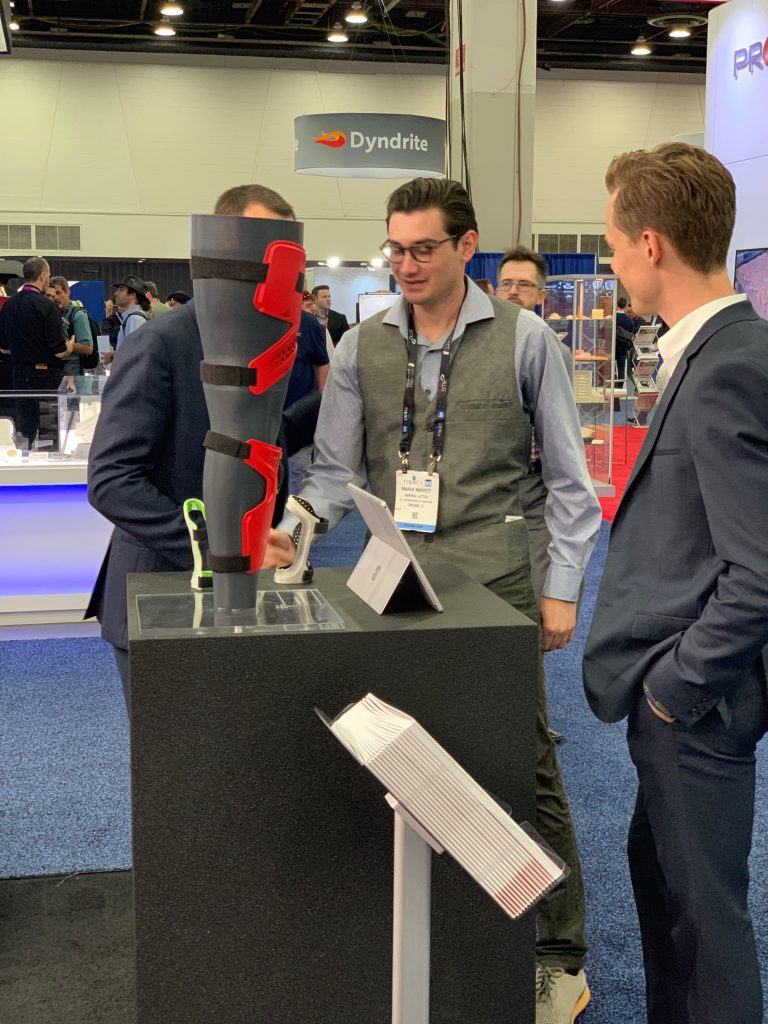
Twikit is really the only firm that has specialized individualization software that can readily mass customize unique parts for 3D printing. Whereas you could go to other firms to build custom digital supply chains to tie into your 3D printing workflow or you could cobble together half a dozen software tools to do the same in an improvised way Twikit’s is a dedicated tool. It was built from the ground up to enable the rapid parametrization of new geometries that could then made with 3D printing. Mass customization is usually a wonderful subject for conferences but most corporates shy away from actually implementing the technology. Too complex, ruffling the feathers of the supply chain and manufacturing guys and a perception that it would be hard to implement scare companies off. Whereas I’m usually very skeptical of startups I’m very optimistic about Twikit’s prospects and their tooling. The company has spent a long time pioneering deep in the darkest woods and the world has finally caught up with it.
The BMW mass customization case is, of course, the one that caught all the headlines. Thanks to Twikit Mini owners can now use an online tool to mass customize decorative items on their cars. The software connects with BMW’s internal workflow and existing management software to give a traceable manufacturable solution to the German luxury auto giant.
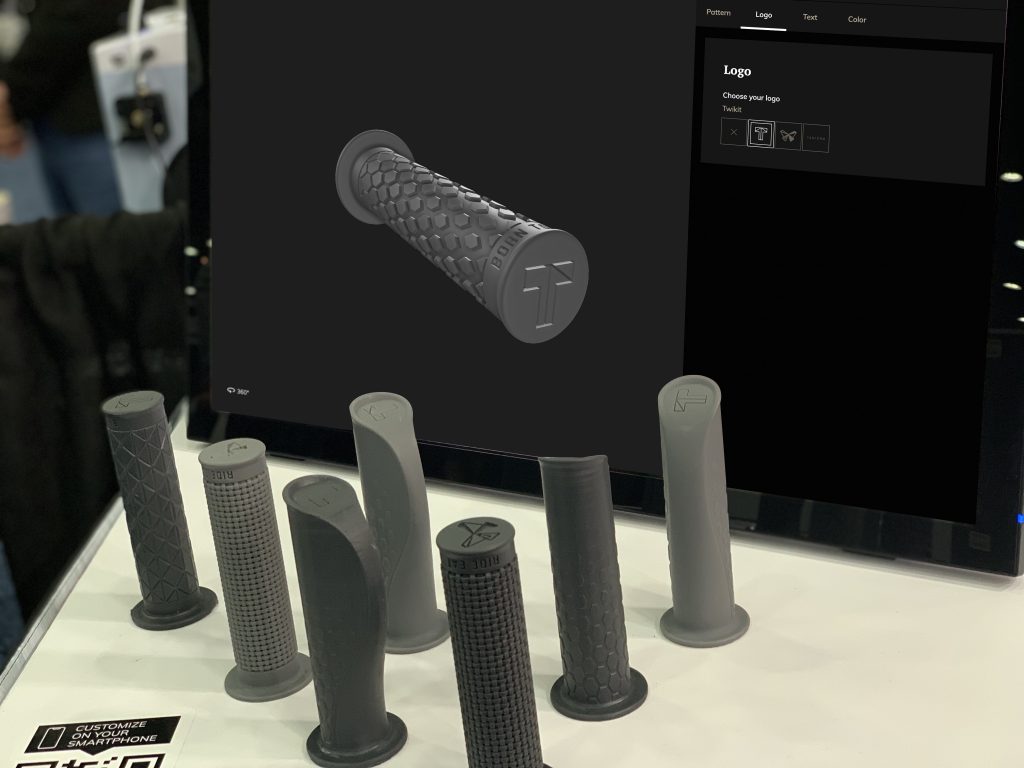
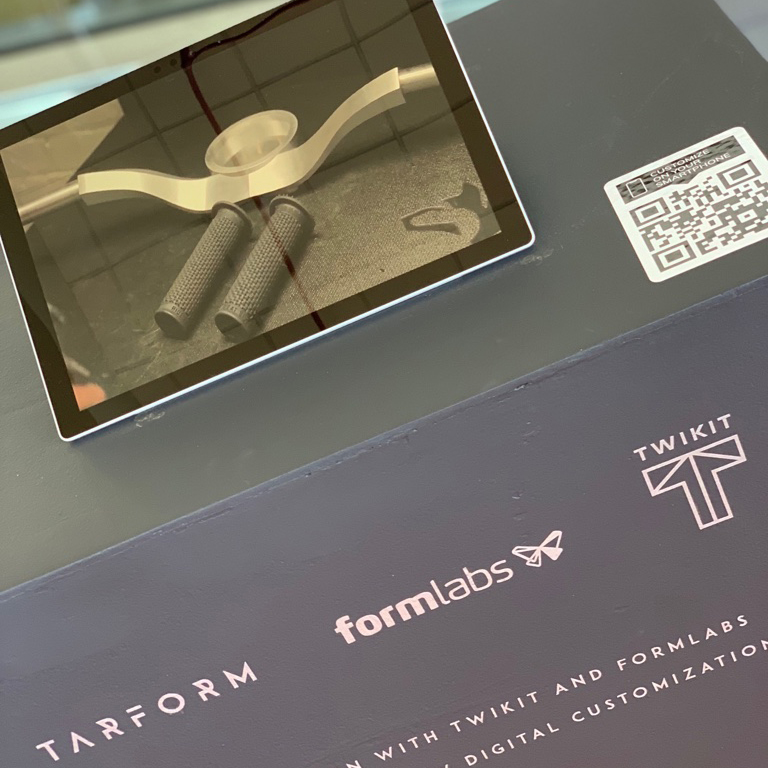
Twikit also worked together with OEM Formlabs to create customized motorcycle handles for startup Tarform. The handlebar is a central element in your control, contact with and experience with the motorcycle. I’ve personally long believed that handles for tennis rackets, golf clubs, steering wheels and all manner of things are a huge applications so I love this implementation.
“In the Twikit software platform, the customer can make his desired adjustments until he’s satisfied with the final design. This customization experience can be experienced on both smartphone and desktop. The desired and final product is saved as a 3D file and will be exported within the cloud to an stl. file which will be sent afterward to Formlabs’ 3D printer. To become the final product, Formlabs makes use of flexible resin, which allows bendable/compressible parts to be printed. Now the actual production process can be set in motion.”
I love the idea that through 3D printing you could achieve better ergonomics, or perhaps have a more comfortable ride or better control over the bike. The user’s increased satisfaction with the bike because they designed part of it will also help. You can see a video here of the process.
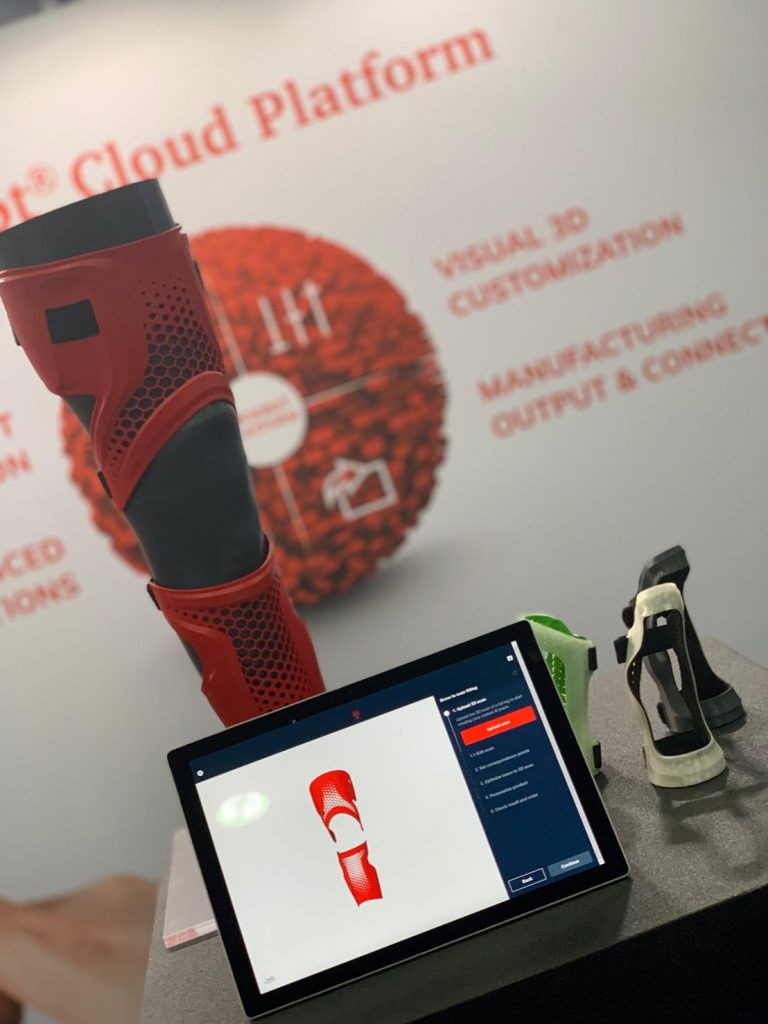
The application with the most far-reaching implications, however, was one where Twikit’s software was used to make customized braces. Through Twikit 3D scan data could be turned into a unique orthotic or prosthetic. Here the software was used to obtain a precise comfortable fit to the human body. In applications such as postoperative braces, braces and across the spectrum in orthotics and prosthetics, the need for something like this is huge. Twikit has created a key bit of technology that can really accelerate the adoption of mass customization and 3D printing. With the right partners this could be pushed out to millions of parts worldwide.
Subscribe to Our Email Newsletter
Stay up-to-date on all the latest news from the 3D printing industry and receive information and offers from third party vendors.
Print Services
Upload your 3D Models and get them printed quickly and efficiently.













You May Also Like
How Should Businesses Build New Business? Dirk Simon Weighs In — Part 1
Dirk Simon had deep experience in materials and chemistry before joining the 3D printing industry. Instrumental in BASF and Farsoon’s market introduction, Dirk has spent a lot of time thinking...
The Frankenservice Part 2: Have Your Cake and Eat it Too
This series of articles delves into a thought experiment. What if we let go of using a few machines very optimally, but instead use lots of different machines to meet...
The Additive Chicken Coop, Part IV: Lemmings
If we look at our past, we can see how making custom machines, incessantly watching ourselves, and our inability to rescope shaped our industry. We have also looked at the...
The Additive Chicken Coop, Part III: Bananas
A friend of mine, Ed Davis, once pointed out the level of strategic replication in additive. I wasn’t aware of it before and haven’t been able to unsee it since....